















A Guide to Rubber Strip Types and Their Industrial Applications
As experts in gasket solutions, we've seen firsthand how crucial the right materials are for achieving perfect seals and optimal performance in industrial applications. Today, we're diving into the world of rubber strips, exploring their diverse types and indispensable industrial uses. These components, though often overlooked, are versatile, durable, and play a vital role across numerous industries. Understanding the different types of rubber strips and their unique properties is key to selecting the ideal material for any given application. Join us as we provide a comprehensive guide to these essential components.
Key Takeaways
- Definition and Function: A rubber strip is a flexible barrier used to seal gaps between surfaces, preventing the passage of air, water, dust, or noise. Its primary functions also include vibration damping, insulation, and surface protection.
- Material Diversity: Rubber strips come in various materials, with Neoprene and EPDM being two of the most popular choices. Neoprene offers a balanced profile with good oil and chemical resistance, while EPDM excels in weather, UV, and ozone resistance, making it ideal for outdoor use.
- Property-Based Selection: The choice between rubber types depends on specific application requirements. Key properties to consider are hardness (durometer), tensile strength, temperature range, and resistance to environmental factors like chemicals, oils, and UV exposure.
- Neoprene vs. EPDM: The primary difference lies in their resistance profiles. Neoprene is the go-to for applications involving oil and grease, such as in automotive engines or industrial machinery. EPDM is superior for outdoor applications like roofing, window seals, and automotive weatherstripping due to its exceptional resistance to the elements.
- Specialized Applications: Beyond general sealing, rubber strips are critical in marine environments for waterproofing, in machinery for vibration damping, and as custom-profiled gaskets and O-rings for specialized equipment.
- Other Important Types: Nitrile (NBR) rubber is the top choice for high oil and fuel resistance, while Styrene-Butadiene Rubber (SBR) serves as a cost-effective alternative for general-purpose applications where resistance to oil and weathering is not a primary concern.
- Customization: Manufacturers can produce custom rubber strips with specific profiles, hardness levels, colors, and chemical formulations to meet the unique demands of any project, ensuring optimal performance and longevity.
What Exactly is a Rubber Strip and Why Does It Matter?
In the vast world of industrial components, the humble rubber strip stands out for its versatility and fundamental importance. From sealing massive container doors to damping vibrations in sensitive electronics, these strips are unsung heroes. But what defines them, and what makes them so crucial?
The Fundamentals of a Rubber Strip: Definition and Composition
At its core, a rubber strip is a flexible, elongated piece of rubber designed to create a barrier or seal between two surfaces. Its primary function is to prevent the ingress of elements like air, water, dust, and noise, thereby protecting, insulating, or isolating an environment. While they appear simple, their composition is a product of advanced material science.
Rubber itself is a polymer known for its elasticity—the ability to be stretched and return to its original shape. This property is central to its function as a sealant. Rubber strips can be made from two main categories of materials:
- Natural Rubber: Derived from the latex sap of the Hevea brasiliensis tree, natural rubber is prized for its excellent tensile strength, elasticity, and abrasion resistance.
- Synthetic Rubber: This category includes a wide array of materials engineered for specific properties. Common examples are Neoprene, EPDM, Nitrile (NBR), and Silicone. These are created through chemical processes that polymerize monomers into long rubber-like chains.
Beyond the base polymer, rubber compounds often include fillers like carbon black or silica to enhance strength, plasticizers to increase flexibility, and vulcanizing agents (like sulfur) to create a durable, stable final product.
Historical Context: The Evolution of the Rubber Strip
The use of rubber dates back thousands of years to ancient Mesoamerican civilizations like the Olmec and Maya, who used latex from trees to create waterproof items and balls for ceremonial games. However, the industrial journey of rubber began in earnest in 1839 when Charles Goodyear accidentally discovered vulcanization. By heating rubber with sulfur, he transformed the sticky, unstable material into a durable, elastic, and far more useful substance. This breakthrough paved the way for modern rubber applications.
The invention of the automobile in the late 19th century created an explosion in demand for rubber for tires, seals, and hoses, turning it into a cornerstone of the industrial age. The World Wars spurred further innovation, leading to the development of synthetic rubbers to overcome shortages of natural rubber. Scientists in Germany created the first patented synthetic rubber in 1909, and materials like Neoprene (1930) and Styrene-Butadiene Rubber (SBR) followed, each designed to meet specific industrial challenges like oil resistance or improved durability. This evolution from raw tree sap to a diverse family of high-performance synthetic polymers underpins the wide variety of specialized rubber strips available today.
Key Characteristics That Make a Good Rubber Strip
Not all rubber strips are created equal. The quality and performance of a strip are determined by a combination of physical and chemical properties. When selecting one, it’s critical to consider:
- Hardness (Durometer): Measured on a Shore A scale, hardness indicates how resistant the rubber is to indentation. A lower durometer (e.g., 40A) signifies a softer, more compressible rubber ideal for creating a seal with minimal force. A higher durometer (e.g., 70A) means a harder, more rigid rubber suited for high-pressure applications or abrasion resistance.
- Tensile Strength: This measures the force required to pull a rubber strip until it breaks. High tensile strength is crucial for dynamic applications where the strip is subjected to stretching and stress.
- Elasticity and Resilience: A good rubber strip must be able to deform to fill a gap and then return to its original shape once the force is removed. This resilience ensures a long-lasting, effective seal through many cycles of compression and release.
- Resistance to Environmental Factors: The application environment is a major factor. A quality rubber strip must withstand potential degradation from UV radiation, ozone, extreme temperatures, and contact with chemicals, oils, or solvents. The choice of rubber material is directly tied to the specific resistances needed.
- Compression Set: This refers to the permanent deformation of a rubber material after being held under compression for a period of time. A low compression set value is desirable, as it means the strip will continue to rebound and maintain its sealing pressure over its service life.
Exploring Neoprene Rubber Strip: A Versatile Workhorse
When it comes to synthetic rubbers, Neoprene holds a special place due to its remarkably balanced performance profile. It's not the absolute best in any single category, but its "jack-of-all-trades" nature makes it an incredibly reliable and widely used material for industrial rubber strips.
What Makes Neoprene Rubber Strip Unique?
Neoprene, also known by its chemical name polychloroprene, was first developed by DuPont scientists in 1930 as an oil-resistant alternative to natural rubber. It is created through the polymerization of chloroprene, a chemical process that results in a synthetic elastomer with an excellent combination of physical and chemical properties.
What truly sets Neoprene apart is its versatility. Unlike more specialized rubbers that excel in one area but fail in another, Neoprene provides moderate to high resistance across a spectrum of challenges, including oils, chemicals, heat, and weathering. This well-roundedness makes it a default choice for many demanding applications where a combination of different stressors is present. It is available in both solid and cellular (sponge) forms, further expanding its range of use.
Properties of Neoprene Rubber Strip: Durability and Resistance
The utility of a Neoprene rubber strip is rooted in its robust set of properties. It offers a reliable package of strength, flexibility, and environmental resistance that ensures longevity and consistent performance.
Chemical Stability and Weather Resistance for Your Rubber Strip
Neoprene's chemical structure gives it inherent stability when exposed to various substances and environmental conditions.
- Chemical and Oil Resistance: Neoprene offers good resistance to a variety of chemicals, including many acids and alkalis. Most notably, it provides moderate resistance to petroleum-based oils, greases, and solvents, a significant advantage over natural rubber. This makes it suitable for use in automotive and industrial settings where such exposure is common.
- Weather, Ozone, and UV Resistance: Neoprene exhibits excellent resistance to damage from weather, ozone, and UV radiation. Unlike some other rubbers that can become brittle and crack with prolonged sun exposure, Neoprene maintains its integrity, making it a reliable choice for outdoor applications. Its waterproof nature further enhances its suitability for marine and external sealing.
Flexibility and Strength: Mechanical Advantages of a Neoprene Rubber Strip
Neoprene strikes an impressive balance between being strong enough to withstand physical abuse and flexible enough to form effective seals.
- Tensile Strength and Elongation: Neoprene boasts a high tensile strength, typically ranging from 500 to 3000 PSI, meaning it can resist significant pulling forces before breaking. It also has a good elongation capacity, able to stretch up to 800% in some formulations, which allows it to conform to irregular surfaces and absorb movement without tearing.
- Abrasion and Tear Resistance: The material is tough and demonstrates good-to-excellent resistance to abrasion, friction, and tearing. This durability is critical for dynamic applications like belts, hoses, and seals that experience constant motion and wear.
Temperature Range and Insulation: Broad Applications for Neoprene Rubber Strip
Neoprene performs reliably across a wide service temperature range, generally from -40°C to 121°C (-40°F to 250°F). While not suited for extreme high-temperature applications where silicone might be used, this range is more than adequate for the vast majority of industrial and automotive environments.
Furthermore, Neoprene is a good thermal and electrical insulator. Its closed-cell foam variant is particularly effective at trapping air, providing excellent insulation against heat and cold. This property is why Neoprene is a primary material for wetsuits and is also used for insulating pipes and electrical enclosures.
Common Applications of Neoprene Rubber Strip Across Industries
Thanks to its balanced properties, Neoprene rubber strips are used in nearly every industrial sector.
- Automotive: Used for hoses, belts, gaskets, vibration mounts, and seals. Its ability to resist oil and engine heat while damping vibrations makes it indispensable.
- Construction: Employed as weather stripping, expansion joint fillers, and protective padding, where its weather resistance and durability are key.
- Marine: Ideal for gaskets and seals on hatches and windows due to its excellent water, salt, and UV resistance.
- Industrial & Engineering: Used to make robust seals, gaskets, and anti-vibration pads for machinery.
- Electrical: Its insulating properties make it suitable for cable jacketing and sealing electrical cabinets.
EPDM Rubber Strip vs. Neoprene Rubber Strip: Choosing the Right Material
While Neoprene is a versatile workhorse, EPDM (Ethylene Propylene Diene Monomer) rubber has carved out a niche as the champion of outdoor and weather-resistant applications. Choosing between these two excellent synthetic rubbers often comes down to the specific environmental and chemical challenges your application will face. Making the right choice is critical for ensuring the longevity and effectiveness of your seals, gaskets, and other components.
Compositional Differences: EPDM Rubber Strip vs. Neoprene Rubber Strip
The fundamental differences in performance between EPDM and Neoprene stem from their distinct chemical makeups.
- Neoprene (Polychloroprene): As previously discussed, Neoprene is a polymer of chloroprene. The presence of chlorine atoms in its molecular structure is key to its notable resistance to oil and flame, establishing it as a balanced, multi-purpose elastomer.
- EPDM (Ethylene Propylene Diene Monomer): EPDM is a type of synthetic rubber made from ethylene, propylene, and a small amount of a diene comonomer. Its chemically saturated backbone is the source of its exceptional resistance to heat, ozone, and weathering, but this same structure makes it vulnerable to non-polar hydrocarbon oils and solvents.
In essence, Neoprene is built for a balance of chemical and weather resistance, while EPDM is specifically optimized for superior durability against the elements.
Performance Showdown: Understanding the Properties of Each Rubber Strip Type
To make an informed decision, it's essential to compare their performance in key areas directly. Both materials are rugged, resist abrasion well, and dampen noise and vibrations effectively. However, their differences are what truly guide the selection process.
Weathering the Storm: UV, Ozone, and Water Resistance in Your Rubber Strip
This is the category where EPDM truly shines and is often the deciding factor for its selection.
- EPDM: It offers outstanding resistance to UV radiation, ozone, and general weathering. EPDM strips will not easily crack, harden, or degrade even after years of direct sunlight exposure, making them the superior choice for roofing, window and door seals, and outdoor electrical enclosures. It is also highly resistant to water and steam, and does not swell or leach chemicals when submerged.
- Neoprene: While it has good weather resistance, it is not as robust as EPDM in this regard. Over long periods of direct and intense UV exposure, Neoprene can eventually show signs of aging more quickly than EPDM. However, it is still considered excellent for many outdoor and marine applications. [1-23]
Winner for Weather Resistance: EPDM
Chemical and Oil Resistance: Critical Factors for Industrial Rubber Strip Use
This round goes decisively to Neoprene, thanks to the chlorine in its polymer chain.
- Neoprene: It provides good-to-excellent resistance to a wide range of oils, greases, and many chemicals. It does not swell significantly when exposed to petroleum-based fluids, making it the ideal material for automotive gaskets, fuel hoses, and industrial seals where contact with lubricants and solvents is expected.
- EPDM: This is EPDM's primary weakness. It performs poorly when exposed to petroleum-based oils, gasoline, and hydrocarbon solvents, which cause it to swell and degrade quickly.
Winner for Oil Resistance: Neoprene
Temperature Tolerance: Ensuring Optimal Performance for Your Rubber Strip
Both materials offer excellent performance across a wide temperature range, making them suitable for both hot and cold environments, but EPDM often has a slight advantage.
- EPDM: Generally offers a wider operating temperature range, performing consistently from approximately -50°C to 150°C (-58°F to 302°F). Certain formulations can handle even higher temperatures, and its resistance to steam is a notable advantage.
- Neoprene: Typically has a slightly narrower range, from about -40°C to 121°C (-40°F to 250°F). It also possesses good flame-retardant properties, which can be a critical safety feature in certain applications.
Winner for Temperature Range: EPDM (though both are excellent)
| Feature | EPDM Rubber Strip | Neoprene Rubber Strip | The Winner |
|---|---|---|---|
| Outdoor Weather/UV/Ozone Resistance | Excellent | Good to Very Good | EPDM |
| Oil and Gasoline Resistance | Poor | Good to Excellent | Neoprene |
| Water and Steam Resistance | Excellent | Good | EPDM |
| General Temperature Range | -50°C to +150°C | -40°C to +121°C | EPDM |
| Abrasion & Tear Resistance | Good | Good to Excellent | Tie / Neoprene |
| Cost | Generally Lower | Generally Higher | EPDM |
Industry-Specific Applications: Where Each Rubber Strip Excels
Based on their distinct properties, the ideal applications for each material become clear:
EPDM is the top choice for:
- Outdoor Applications: The premier material for roofing membranes and door and window sealing strips due to its unmatched weather resistance.
- Automotive: Perfect for weatherstripping, including the high-quality car window seal strip that must endure the elements while providing a tight seal. Also used for radiator hoses and brake system components.
- HVAC Systems: Used for seals, gaskets, and tubing where temperature fluctuations and moisture are common.
- Industrial: Excellent for water system O-rings, gaskets, and belts where oil is not a factor.
Neoprene is preferred for:
- Automotive: Ideal for components under the hood, like gaskets, hoses, and belts that are exposed to oil, grease, and heat.
- Industrial Machinery: The best choice for gaskets, seals, and vibration mounts on equipment where lubricants are present.
- Marine Environments: Widely used for dock fenders, seals, and gaskets that need to resist saltwater, intermittent fuel exposure, and weathering.
- Electrical Applications: Used for corrosion-resistant coatings, cable jackets, and fire-resistant seals.
Cost and Durability: Making an Informed Decision for Your Rubber Strip Project
Generally, EPDM rubber is less expensive than Neoprene. This is due to a more streamlined production process and wider availability for large-volume orders. For applications where oil resistance is not a necessity, EPDM often presents a more cost-effective solution without sacrificing durability against environmental factors.
In terms of durability, both materials are exceptionally long-lasting when used in the correct environment. EPDM can last for decades in outdoor settings, while Neoprene provides a long service life in abrasive and oil-exposed industrial conditions. The most "durable" choice is the one whose resistance profile best matches the application's demands.
Specialized Industrial Applications of the Rubber Strip
Beyond general use, rubber strips are indispensable in a host of specialized industrial applications where their unique properties provide critical sealing, protection, and performance enhancement. Their adaptability in form and material composition allows them to be engineered for some of the most demanding environments imaginable.
Sealing Solutions: Gaskets, Seals, and O-rings with a Rubber Strip
One of the most fundamental applications of rubber strips is the creation of custom sealing solutions. Their flexibility and compressibility make them perfect for forming airtight and watertight barriers.
- Gaskets and Seals: Rubber strips are often the raw material for custom-cut gaskets. A gasket is a mechanical seal that fills the space between two or more mating surfaces, generally to prevent leakage from or into the joined objects while under compression. Strips can be cut to length and joined to form a seal for large doors, enclosures, and machinery housings. The choice of rubber (e.g., oil-resistant Neoprene for an engine part, weather-resistant EPDM for an outdoor electrical box) is determined by the specific sealing requirements.
- O-rings: While typically molded as a single piece, O-ring cord sold in long strips serves a similar purpose. This cord can be cut to the exact length needed and bonded to create a custom-sized O-ring for non-standard or large-diameter sealing applications in plumbing, hydraulics, and automotive repair.
Marine Industry: The Critical Role of a Quality Rubber Strip in Harsh Environments
The marine industry presents one of the harshest environments for any material, with constant exposure to saltwater, UV radiation, temperature fluctuations, and mechanical stress. Rubber strips, particularly those made from EPDM and Neoprene, are essential for maintaining the integrity and safety of vessels.
Protective Coatings and Flooring: Extending the Life of Marine Equipment with a Rubber Strip
Rubber strips serve a vital protective function on boats and docks.
- Rub Rails and Bumpers: Thick, durable rubber strips are installed along the hull of a boat to act as "rub rails." These serve as flexible bumpers that absorb the impact of docking, preventing scratches, chips, and structural damage to both the vessel and the pier.
- Non-Slip Flooring: Textured rubber strips and mats are used on decks and walkways to provide a non-slip surface, which is crucial for safety in wet conditions. This type of rubber flooring is resistant to water and UV rays, ensuring it won't degrade or become a hazard over time.
Underwater Components and Life-Saving Equipment: Relying on a Robust Rubber Strip
In the marine world, a failed seal can have catastrophic consequences. This is why high-quality rubber strips are vital for any component exposed to or submerged in water.
- Hatch and Window Seals: EPDM and Neoprene strips are used to create watertight seals around boat hatches, doors, and windows, preventing water from entering the vessel. EPDM is often preferred for its superior UV and ozone resistance in areas with constant sun exposure.
- Life-Saving and Submersible Equipment: The reliability of rubber is paramount in safety gear. Neoprene is a key component in wetsuits and drysuits, providing thermal insulation and a waterproof barrier. It is also used to create seals on life rafts, inflatable boats, and other submersible equipment where seal integrity is non-negotiable.
Vibration Damping and Insulation: Enhancing Performance with a Rubber Strip
The natural elasticity of rubber makes it an excellent material for absorbing energy, which is why rubber strips are widely used for vibration and noise control. By placing a rubber strip between a piece of machinery and its foundation, the vibrations generated by the machine are absorbed by the rubber, rather than being transmitted into the surrounding structure.
This has several key benefits:
- Reduces noise pollution in industrial and residential settings.
- Protects sensitive equipment from the damaging effects of constant vibration.
- Improves the operational lifespan of machinery by reducing mechanical stress.
High-density rubber strips are commonly used as anti-vibration pads for pumps, HVAC units, generators, and industrial machinery.
Adhering to Standards: The Importance of High-Quality Rubber Strip for Specific Needs
In many industries, the performance of a component is not just a matter of preference but of strict regulation. Rubber strips used in critical applications must adhere to established industry standards to ensure safety, quality, and reliability.
Some examples of relevant standards include:
- ASTM International: Provides standards for rubber properties like hardness (ASTM D2240), tensile strength, and chemical resistance.
- SAE International: Sets standards for materials used in the automotive industry.
- UL (Underwriters Laboratories): Certifies materials for safety characteristics, such as flame resistance (e.g., UL 94).
- FDA (U.S. Food and Drug Administration): Regulates materials that come into contact with food, ensuring they are non-toxic.
Partnering with a manufacturer that adheres to these standards is crucial, as it guarantees that the rubber strips you receive are of a verified quality and fit for their intended purpose, mitigating risks of failure, safety hazards, and costly recalls.
Beyond Neoprene and EPDM: Other Important Rubber Strip Types
While Neoprene and EPDM are often the main contenders for many industrial applications, they are far from the only options available. Several other types of synthetic rubber offer specialized properties that make them ideal for specific jobs. Understanding these alternatives can help you find the perfect, most cost-effective material for your project.
SBR Rubber Strip: A Cost-Effective Alternative
SBR, or Styrene-Butadiene Rubber, is one of the most widely used synthetic rubbers in the world, primarily due to its affordability and good all-around physical properties. Originally developed as a substitute for natural rubber during World War II, SBR is now a go-to material for high-volume, general-purpose applications.
Key Properties of SBR:
- Excellent Abrasion Resistance: SBR is very tough and resists wear from friction and mechanical use, which is why it's a major component in car tires.
- High Tensile Strength: It is strong and impact-resistant, making it a durable choice for industrial parts.
- Cost-Effectiveness: SBR is generally cheaper to produce than more specialized elastomers like Neoprene or EPDM, making it an economical choice for large-scale production.
- Weaknesses: The primary trade-off with SBR is its poor resistance to petroleum-based oils, greases, and solvents. It also has poor resistance to ozone and UV light, making it unsuitable for most outdoor applications unless blended with other materials.
Common Applications: SBR strips are often used for indoor applications where durability and low cost are the main drivers. You can find them in conveyor belts, shock-absorbing pads, non-oil-resistant gaskets, and flooring mats.
Nitrile Rubber Strip: When Oil and Abrasion Resistance are Key
When an application requires superior resistance to oils, fuels, and chemicals, Nitrile rubber is the undisputed champion. Nitrile, also known as NBR or Buna-N, is a synthetic rubber copolymer of acrylonitrile (ACN) and butadiene. The acrylonitrile content is what gives it its powerful resistance to petroleum-based fluids.
Key Properties of Nitrile:
- Excellent Oil and Fuel Resistance: This is Nitrile's most defining characteristic. It can withstand prolonged contact with oils, gasoline, hydraulic fluids, and many other chemicals without swelling or degrading, making it essential for automotive and industrial hydraulic systems.
- High Abrasion and Tear Resistance: NBR is a mechanically tough material with excellent resistance to abrasion and tearing.
- Good Temperature Range: It performs well in temperatures from approximately -40°C to 120°C (-40°F to 248°F).
- Weaknesses: Similar to SBR, Nitrile has poor resistance to weathering, sunlight, and ozone, so it is not recommended for outdoor use.
Common Applications: Nitrile rubber strips are predominantly used in the automotive and industrial sectors. They are perfect for creating oil seals, fuel and oil handling hoses, hydraulic seals, and industrial gaskets in environments where petrochemical exposure is constant.
Considering Customization: Tailoring Your Rubber Strip to Project Demands
In many cases, a standard, off-the-shelf rubber strip might not perfectly fit the unique requirements of a project. This is where customization becomes a critical advantage. Reputable manufacturers offer extensive customization options to produce a rubber strip that is perfectly engineered for your application.
Key Customization Options Include:
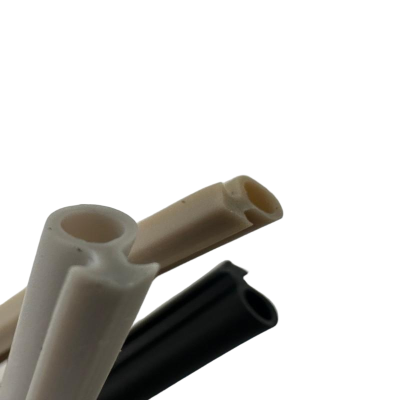
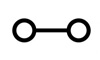
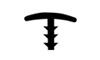
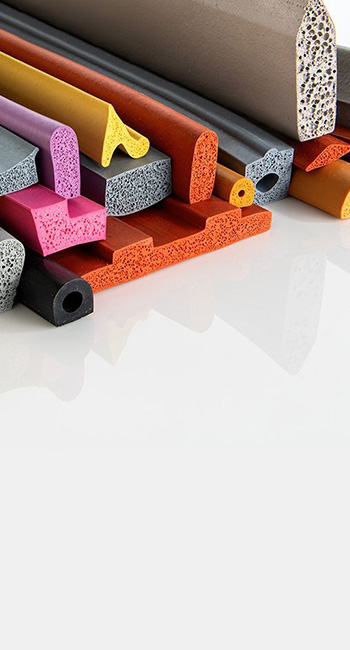
- Custom Profiles: Rubber strips can be extruded into a vast array of shapes beyond simple rectangles, such as D-strips, P-strips, U-channels, and complex geometric profiles to fit specific grooves or provide unique sealing functions.
- Material Compounding: Rubber formulations can be adjusted to enhance certain properties. For example, fillers can be added to SBR to improve its UV resistance, or the acrylonitrile content in Nitrile can be modified to balance oil resistance and low-temperature flexibility.
- Hardness (Durometer): The durometer can be specified to ensure the strip has the right balance of compressibility for sealing and hardness for durability.
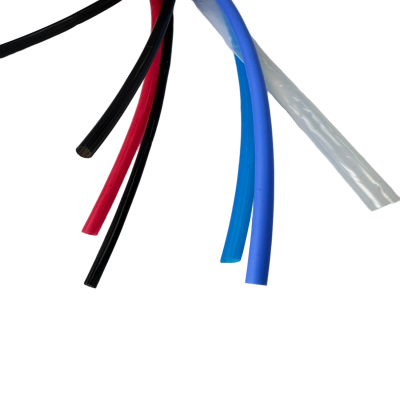
- Color Matching: While most industrial rubber is black, strips can be produced in various colors for aesthetic purposes or for color-coding components.
- Adhesive Backing: For ease of installation, pressure-sensitive adhesive (PSA) can be applied to one or both sides of a rubber strip.
By working with a manufacturer that offers these capabilities, you can ensure you get a component that is not just adequate, but perfectly optimized for performance, longevity, and ease of use.
Frequently Asked Questions (FAQs)
Q1: How do I choose the correct hardness (durometer) for my rubber strip? The right hardness depends on the application. For sealing applications where the strip needs to compress easily to fill gaps with minimal force, a softer rubber with a lower durometer (e.g., 40A-50A) is ideal. For applications requiring high durability, abrasion resistance, or support for heavy loads, a harder rubber with a higher durometer (e.g., 60A-80A) is more appropriate.
Q2: Can rubber strips be glued or bonded? Yes, rubber strips can be bonded to various surfaces (metal, plastic, wood) and to each other. Special industrial adhesives, such as cyanoacrylates (super glues) or two-part structural adhesives, are designed for creating strong bonds with rubber. For easier installation, many suppliers offer rubber strips with a pre-applied pressure-sensitive adhesive (PSA) backing.
Q3: What is the expected lifespan of a rubber strip? The lifespan of a rubber strip depends heavily on the material and the environment it's used in. When an appropriate material is chosen for the application (e.g., EPDM for outdoor use, Nitrile for oily environments), a high-quality rubber strip can last for many years, often 10-20 years or more. Incorrect material selection, however, can lead to rapid degradation within months.
Q4: What is the difference between open-cell and closed-cell sponge rubber strips? Closed-cell sponge rubber has individual, sealed cells that do not connect. This makes it waterproof and impermeable to air, so it's excellent for creating watertight seals and for thermal insulation. Open-cell sponge rubber has interconnected cells that allow air and water to pass through. It is highly compressible and soft, making it ideal for cushioning and sound absorption where a watertight seal is not required.
Q5: Which rubber material is best for high-temperature applications? For most industrial high-temperature needs, EPDM offers a great range, often up to 150°C (302°F). However, for extreme heat applications, Silicone rubber is the superior choice. Silicone can typically withstand temperatures up to 230°C (446°F) or even higher for special formulations, while remaining flexible. Its main drawback is poor resistance to oils and abrasion.
Conclusion
From sealing delicate electronic components to protecting massive marine vessels, the right rubber strip is indispensable for industrial efficiency, safety, and longevity. As we've explored, the world of rubber strips is vast and varied. Materials like Neoprene offer a fantastic all-around balance of properties, while EPDM stands as the unparalleled choice for weathering the elements. Specialized options like Nitrile and SBR provide targeted, cost-effective solutions for oil-rich or general-purpose applications. We hope this guide has illuminated the distinct advantages of each type and empowered you to make informed material choices for your projects.
Choosing the perfect rubber strip for your industrial application involves a careful consideration of its unique properties, environmental factors, and specific performance requirements. By understanding the critical distinctions between these materials, you can ensure optimal sealing, protection, and operational success. The ability to customize profiles, compounds, and hardness further guarantees that there is a rubber strip solution for nearly any challenge. For personalized guidance on your next project, don't hesitate to connect with our material experts. They can help you navigate the options and select the ideal component to meet your needs.
We encourage you to share this guide with colleagues who might benefit from it and to reach out with any further questions. Your success is our priority.