











Best Rubber Tubing Suppliers in China: Your Guide to Quality and Reliability
ELASTOMER ENGINEERING / SUPPLIER QUALIFICATION
Direct answer: the most reliable rubber tubing supplier in China is not the one with the longest customer list, but the one that can demonstrate, with traceable test data, that its compound network, cure state and extrusion process match your service environment. Everything below turns that claim into measurable criteria.
Search results for "best rubber tubing suppliers in China" usually return ranked vendor lists. Ranking without measurement is not engineering. Tubing failure is governed by polymer physics: crosslink density, viscoelastic relaxation, oxidative and ozone degradation kinetics, permeation through the wall, and the statistical capability of the extrusion line. This guide rebuilds supplier evaluation on those foundations, then maps them to documented manufacturing and laboratory evidence.
1. Introduction: Supplier Qualification as a Materials-Engineering Problem
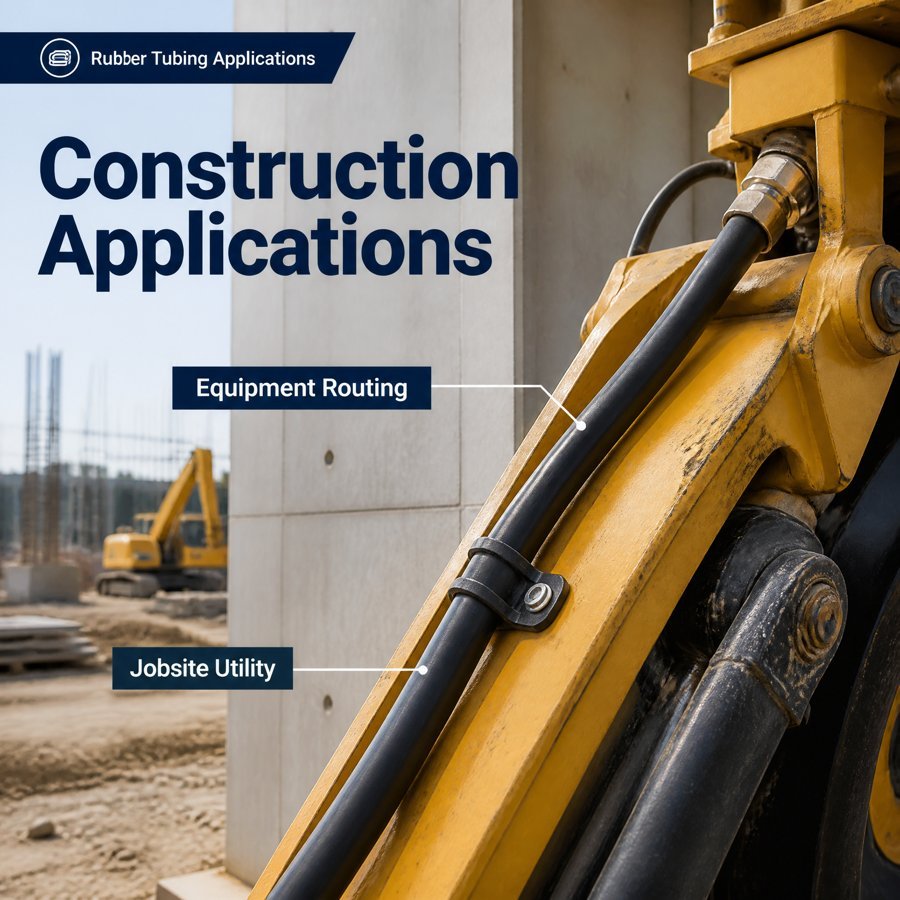
A rubber tube is a pressurised-or-not, flexible, semi-crystalline-or-amorphous polymer composite whose function is to convey or seal a medium over a defined service life. Its performance is set at three levels: the molecular network (base polymer, termonomer, cure system), the compound (fillers, plasticisers, anti-degradants), and the process (mixing dispersion, extrusion rheology, vulcanisation profile, reinforcement architecture). A supplier controls all three; a buyer can only verify them through evidence.
That is why a credible qualification framework replaces subjective "quality" language with four gates: material–environment fit, network-state evidence, degradation-life evidence, and process-capability evidence. Sections 2 to 5 develop the theory behind each gate; sections 6 to 9 convert it into an audit checklist and a documented case.
2. Polymer Network Theory: Crosslinking, Hyperelasticity and Time Dependence
2.1 Crosslink Density and Vulcanisation Kinetics
Vulcanisation converts a viscous compound into a three-dimensional network. For an ideal rubber, the shear modulus follows G ≈ νRT, where ν is the effective crosslink density, R the gas constant and T absolute temperature. Higher ν raises modulus and lowers swelling, but over-crosslinking reduces elongation at break and toughness. Crosslink density is commonly estimated from equilibrium swelling via the Flory–Rehner relation, or from the plateau modulus by DMA.
EPDM is a saturated ethylene–propylene backbone carrying a small fraction of diene termonomer (ENB, DCPD or VNB). The main chain contains essentially no double bonds, so ozone and heat attack have few reactive sites; the pendant double bonds of the termonomer serve as sulphur or peroxide cure sites. Cure kinetics are read from a rheometer curve (scorch time, t10, optimum cure t90, reversion). Under-cure leaves a loose network with high permanent deformation; over-cure or reversion embrittles the wall. A supplier should be able to state the cure system and demonstrate that the production cure window matches the compound's rheometer data.
2.2 Hyperelastic Deformation, Compression Set and Stress Relaxation
Rubber tubing rarely fails by simple tensile rupture; it fails by progressive loss of sealing force. Hyperelastic behaviour is commonly described by a strain-energy function such as Mooney–Rivlin, W = C10(I1−3) + C01(I2−3), or by Ogden models for larger strains. Under constant deformation, the network behaves as a generalised Maxwell solid: σ(t) = Σ σi exp(−t/τi). Physical relaxation comes from chain rearrangement; chemical relaxation comes from oxidative chain scission and additional crosslinking during service.
Compression set (ISO 815, ASTM D395) integrates both effects into a single, reproducible number: the residual deformation after a defined strain, temperature and dwell. For tubing used as a seal or as a push-fit connection, compression set is the strongest early predictor of long-term reliability. Ask for the exact test conditions, not just a pass mark.
2.3 Glass Transition, Plasticiser Loss and Low-Temperature Flexibility
Below the glass transition temperature Tg, segmental motion freezes and the tube loses compliance. Tg is measured by DSC or DMA; time–temperature superposition (WLF) links short high-temperature tests to long low-temperature behaviour. Silicone (VMQ/PMQ) owes its very low Tg and wide service window to the Si–O backbone; EPDM achieves low-temperature flexibility through ethylene/propylene ratio and plasticiser selection. Plasticiser migration or extraction shifts Tg upward over time, so low-temperature qualification should be performed after ageing and fluid immersion, not only on fresh samples.
3. Degradation Kinetics: Ozone, Thermal Ageing and Mass Transport
3.1 Ozone Attack and the Saturated-Backbone Advantage

Ozone reacts rapidly with carbon–carbon double bonds, forming ozonides that decompose into chain scission. In unsaturated rubbers (NR, SBR, NBR), surface cracks initiate at strained regions and grow perpendicular to the tensile strain direction once a critical strain is exceeded. Protection relies on antiozonants and blooming wax films, which can be depleted. EPDM's saturated main chain removes the primary reaction site, which is why it is the default choice for outdoor, weather-exposed and ozone-rich service. Verification is standardised in ISO 1431-1: specify strain, ozone concentration, temperature and exposure duration when comparing supplier data.
3.2 Thermal-Oxidative Ageing and Arrhenius-Based Lifetime Extrapolation
Oxidation is thermally activated; its rate is commonly modelled as k = A exp(−Ea/RT). Accelerated ageing (ISO 188) exposes samples to elevated temperatures and tracks hardness, tensile strength and elongation retention. Time–temperature superposition then shifts the data into a master curve for lifetime estimation.
This is a model, not a guarantee. Extrapolation is valid only while a single dominant mechanism operates; at higher temperatures, diffusion-limited oxidation, additive depletion or a change in rate-controlling step can invalidate the Arrhenius fit. A scientifically rigorous supplier reports raw retention data at each temperature and states the extrapolation assumptions, rather than quoting an unqualified "20-year life".
3.3 Permeation, Swelling and Coolant Compatibility (Solution–Diffusion Model)
Fluid transport through a tube wall follows Fickian diffusion, J = −D ∂c/∂x, with permeability P = D · S combining diffusivity and solubility (the solution–diffusion model). In liquid-cooling loops, permeation drives coolant loss and water-vapour ingress; swelling changes modulus and dimensions; extractables can deposit on cold plates and microchannels. These mechanisms, rather than a headline temperature rating, determine long-term loop stability.
RESRUB's PC liquid-cooling rubber tube is specified with an evaporation rate as low as 0.2% (manufacturer data), a metric that directly reflects permeation control. It must still be validated against the actual coolant chemistry, loop temperature and service duration: material compatibility is a system property, not a catalogue number.
4. Material Selection Matrix: EPDM, Silicone and Specialty Elastomers
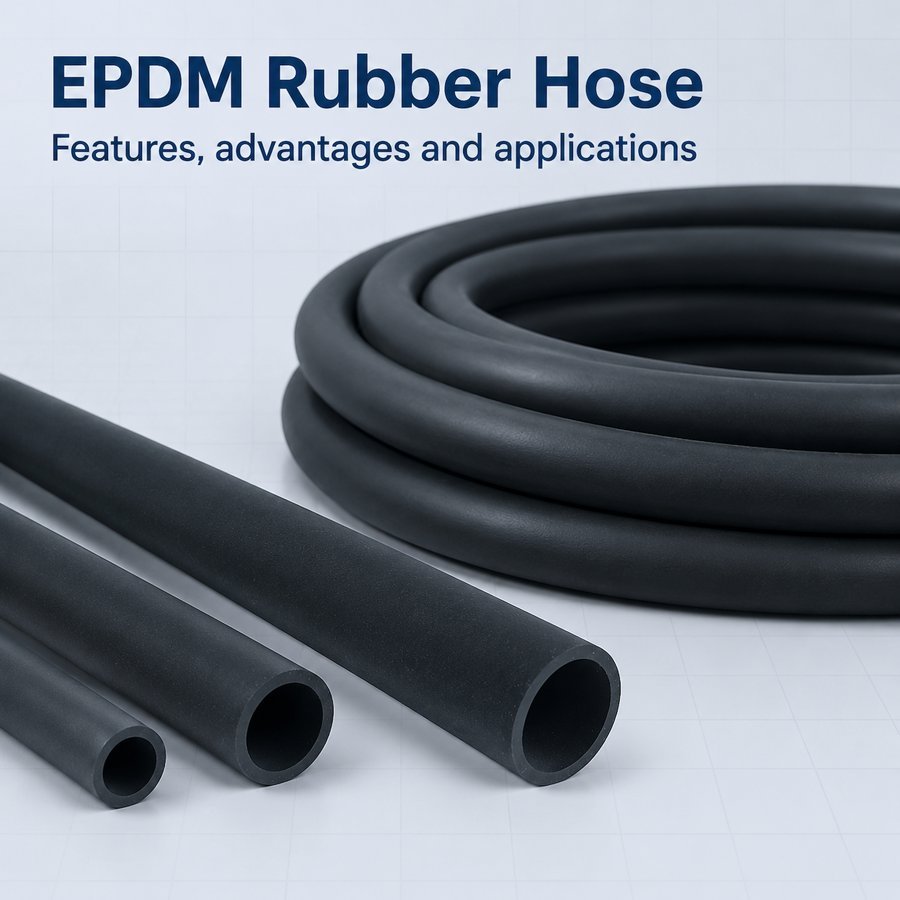
Material choice should follow the dominant degradation mechanism of the service environment. The matrix below is a qualitative engineering map rather than a rating table; numeric limits depend on the specific compound, cure system and reinforcement and must be confirmed on the supplier's data sheet.
| Polymer system | Network chemistry | Dominant strength | Dominant limiting mechanism | Typical service focus |
|---|---|---|---|---|
| EPDM | Saturated hydrocarbon backbone; diene cure sites; sulphur or peroxide crosslinks | Ozone, UV, weather, hot water and polar-fluid resistance | Hydrocarbon oil and fuel swelling | Outdoor seals, coolant and water circuits, automotive, appliance connections |
| Silicone (VMQ / PMQ) | Si–O inorganic backbone; platinum or peroxide cure | Very low Tg, wide temperature window, flexibility | Lower tear/abrasion resistance; permeation; mechanical reinforcement needed | High-purity fluid transfer, wide-temperature flexible connections |
| NBR | Unsaturated butadiene–acrylonitrile; polar nitrile groups | Mineral oil and fuel resistance | Ozone and thermal-oxidative attack on double bonds | Oil-contact industrial lines (shielded from ozone/weather) |
| CR (Neoprene) | Chloroprene backbone; polar C–Cl groups | Weather, flame and moderate chemical resistance | Low-temperature stiffening; compound-specific ageing | Industrial and outdoor general-purpose profiles |
| FKM | Fluorocarbon backbone; high C–F bond energy | Aggressive chemical and high-temperature resistance | Cost, low-temperature flexibility, compound complexity | Specialty chemical and high-temperature fluid service |
| TPV / TPE / TPR / PVC | Physically crosslinked or thermoplastic phases, no vulcanisation | Recyclability, colourability, high extrusion throughput | Stress relaxation and creep at elevated temperature | Profiles, seals and cost-sensitive tubing |
Material behaviour above describes typical industry reference behaviour for standard compounds. Actual performance depends on formulation, cure state, reinforcement and application; always verify against the supplier's current data sheet and lot test report.
5. Process Science: Compounding, Extrusion and Reinforcement
5.1 Rheology, Die Swell and Dimensional Capability
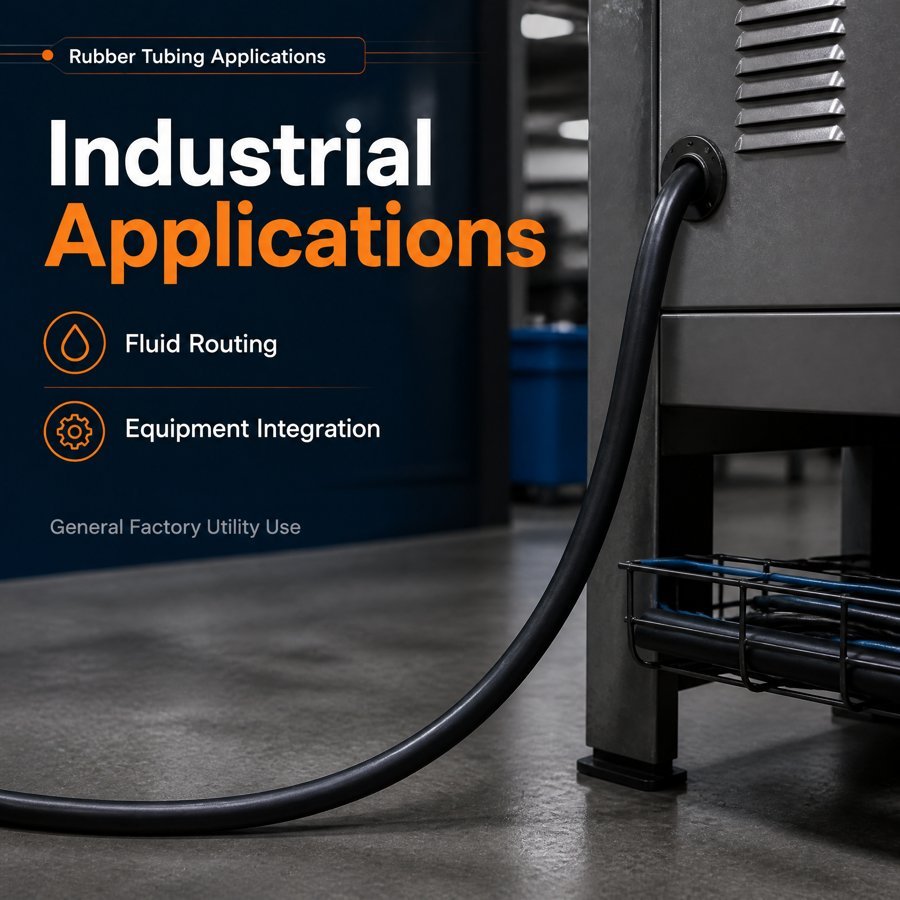
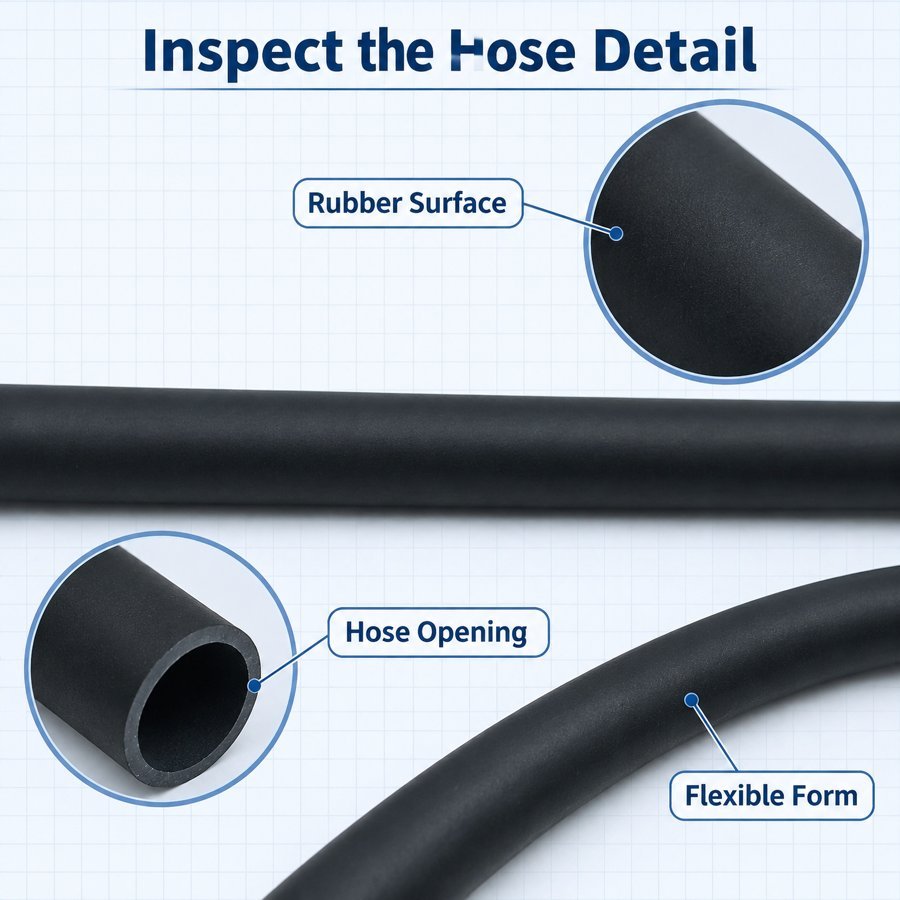
An uncured compound is a viscoelastic, shear-thinning fluid. On leaving the die it exhibits die swell (the Barus effect) as stored elastic strain recovers, so final OD, ID and wall thickness depend on die geometry, line speed, melt temperature and the onset of vulcanisation. Continuous vulcanisation must be synchronised so the tube holds shape before it is handled or braided. Dimensional consistency is therefore a process-capability question: request Cp/Cpk data on the critical dimensions rather than a single nominal tolerance.
XINGFEIYU (RESRUB) operates a 6,500 m² plant in Changping, Dongguan, with nine automated extrusion lines and an in-house laboratory; multi-variety, small-batch production with MOQ 1 piece, tooling in about two hours, free R&D design and custom colours is a deliberate process configuration, not only a commercial offer. Short runs make lot-level dimensional verification especially important.
5.2 Braided Reinforcement Architecture and Mechanical Integrity
Where a tube requires a reinforcement layer, braid angle and yarn material determine the balance between axial and hoop stiffness. A dedicated braiding workshop with ten automated braiders supports the middle-fibre-reinforced rubber liquid-cooling hose developed on the 2024 production line. Reinforcement changes bend behaviour, kink resistance and dimensional stability under load; these must be validated against the application's own requirements, and no generic rating should be assumed from a reinforcement description alone.
6. Qualification Evidence: Test Methods, Standards and Traceability

6.1 Mechanical and Physical Characterisation
A defensible qualification pack includes tensile strength and elongation at break (ISO 37 / ASTM D412), indentation hardness (ISO 48-4 / ASTM D2240, Shore A), tear resistance (ISO 34), abrasion, compression set and fatigue-life testing. XINGFEIYU's own laboratory covers physical, chemical and mechanical testing, which allows compound-level and lot-level comparisons instead of relying on a generic certificate.
6.2 Ageing, Ozone and Chemical Resistance Protocols
Accelerated thermal ageing (ISO 188), ozone resistance (ISO 1431-1) and immersion testing in the actual service medium form the degradation-evidence set. Results should be reported as property retention percentages with the exposure conditions attached. A supplier that reports only "passes" has not supplied evidence that can be modelled.
6.3 Quality Systems and Compliance Documentation
System certifications establish that measurements are repeatable and traceable: IATF 16949:2016, ISO 9001:2015 and ISO 14001:2015, together with REACH and RoHS compliance declarations. Automotive supply-chain experience with BYD, Changan, Changan Ford and Yutong, plus 13 utility-model patents (including a PC liquid-cooling braided hose), indicate engineering depth. Buyers should verify current certificate scope, validity and any application-specific approvals directly with the supplier before release.
7. A Weighted Decision Model for Chinese Rubber Tubing Suppliers
Once evidence types are defined, supplier comparison becomes a weighted scoring problem. The weights below are a starting framework; adjust them to the consequence of failure in your application.
| Gate | Measurable evidence to request | Physics / engineering basis | Suggested weight |
|---|---|---|---|
| Material–environment fit | Compound family, fluid compatibility and immersion data | Solubility parameter, swelling and Tg shift | 20% |
| Network state | Cure system, rheometer curve, compression set with test conditions | Crosslink density ν, stress relaxation | 20% |
| Degradation life | ISO 188 / ISO 1431-1 retention data, Arrhenius assumptions | Oxidation kinetics, ozone cracking, permeation | 20% |
| Dimensional capability | Cp/Cpk on OD, ID and wall; tolerance records | Die swell, cure synchronisation, SPC | 15% |
| Quality system | Valid IATF 16949 / ISO 9001 / ISO 14001 certificates, REACH/RoHS declarations | Measurement traceability and repeatability | 10% |
| In-house validation | Lab scope, lot test reports, sample retention policy | Evidence verifiability | 10% |
| Flexibility & traceability | MOQ, tooling time, custom colour, lot coding | Small-batch process control, recall capability | 5% |
Under this model, a vendor cannot be ranked "best" without measurements. A low unit price with no retention data is an unknown risk, not a saving.
8. Application Mapping: Matching Compound to Service Environment
- Liquid cooling (PC workstations, AI servers): the dominant risks are permeation, extractables and thermal ageing. EPDM and specialty compounds are selected for low evaporation; RESRUB's PC liquid-cooling tube is specified at 0.2% evaporation, with a middle-fibre-reinforced variant produced on the 2024 line.
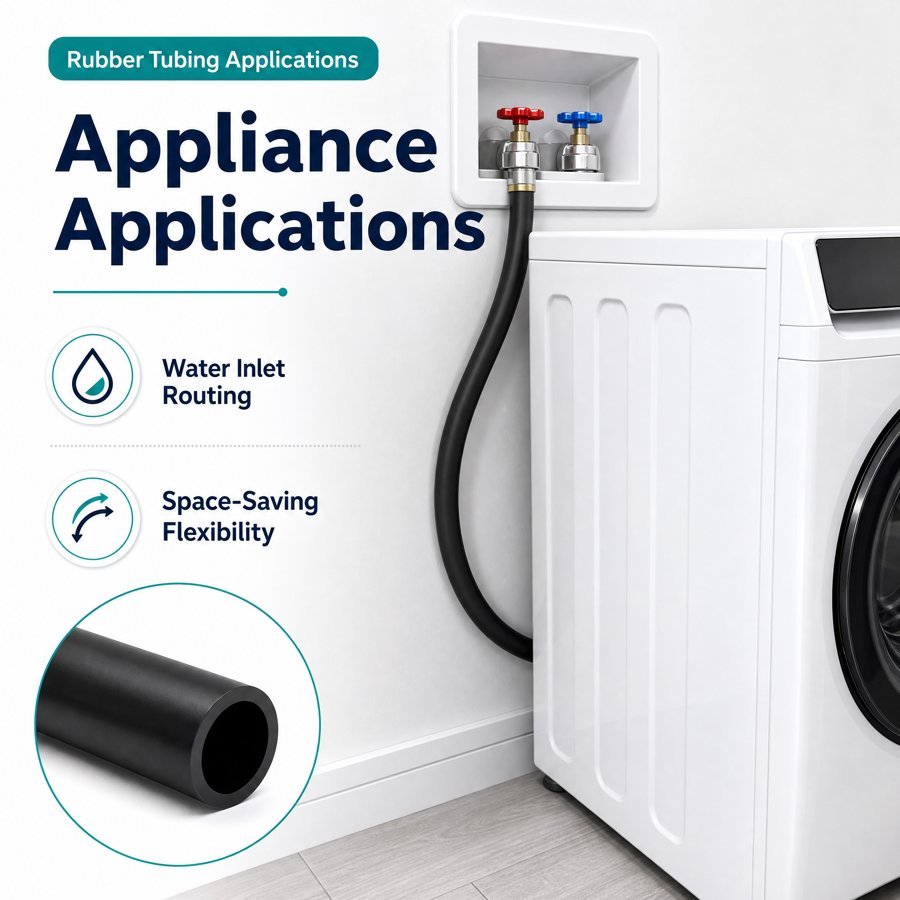
- Household appliances: internal connections and door seals in dishwashers, washers and refrigerators face hot water, detergents and repeated compression cycles; compression set and immersion data matter more than peak temperature.
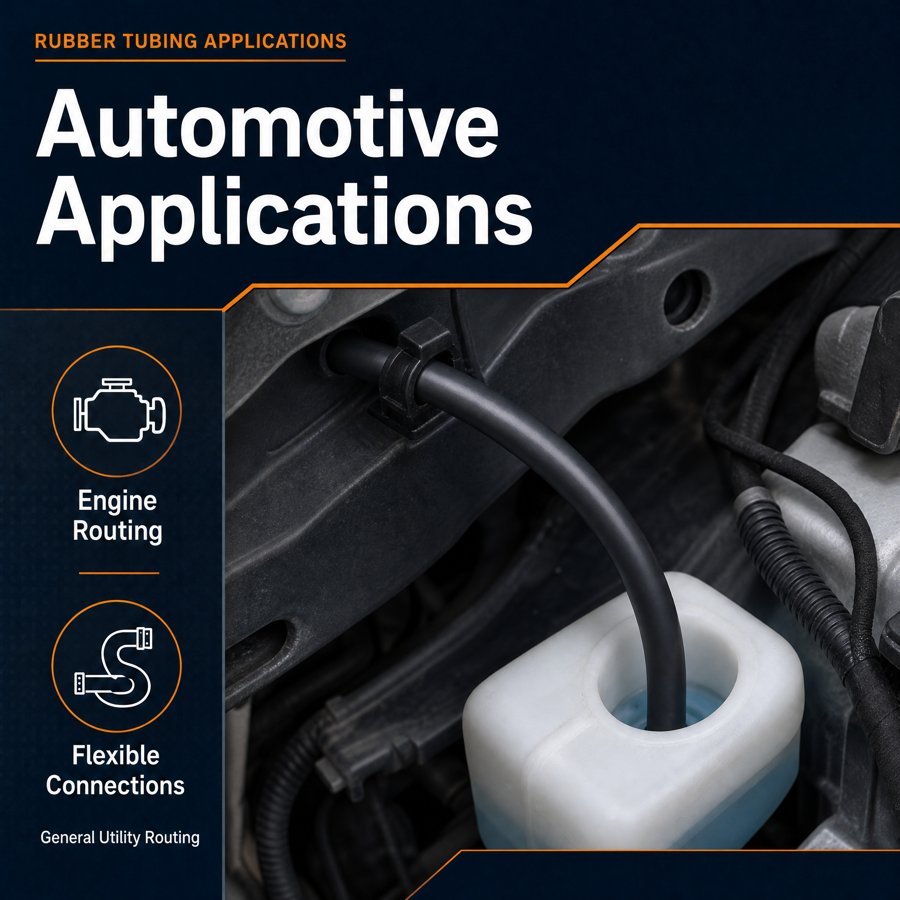
- Automotive: washer and coolant circuits, sealing strips and wiper systems combine ozone exposure, vibration and thermal cycling. IATF 16949 process discipline is a practical filter here.
- New energy: battery-module electrolyte transfer, pack sealing and thermal-management loops require compound compatibility verified against the actual electrolyte and coolant.
- Industrial and electrical enclosures: weather, ozone and long-term sealing force dominate; EPDM profiles are the usual starting point.
Pressure, temperature and chemical compatibility are application-specific. They must be taken from the relevant product specification and validated for the intended use; no general rating is implied by this guide.
9. Case Evidence: XINGFEIYU (RESRUB) Validation Chain
Dongguan Xingfeiyu Rubber And Plastic Products Co., Ltd. (overseas brand RESRUB, www.resrub.com) was established in 2011 and manufactures extruded rubber hose and tubing, sealing profiles and moulded parts. Documented evidence relevant to the model above includes:
- Systems: IATF 16949:2016, ISO 9001:2015, ISO 14001:2015, REACH and RoHS declarations.
- Capacity: 6,500 m² plant, two workshops, nine automated lines, ten automated braiders, monthly capacity of roughly 300 tonnes of compound or 6 million metres of tubing.
- Laboratory: in-house physical (tensile, hardness, tear, abrasion), chemical (acid/alkali, high-temperature ageing, ozone) and mechanical (fatigue life) testing.
- Differentiation: PC liquid-cooling tube with evaporation rate as low as 0.2%, server liquid-cooling low-evaporation tubing, middle-fibre-reinforced construction, 13 utility-model patents.
- Flexibility: multi-variety small-batch short lead times, MOQ 1 piece, tooling in about two hours, free R&D design, custom colours.
- Track record: automotive supply-chain experience with BYD, Changan, Changan Ford and Yutong; exports to North America, South America and Europe.
Readers can review the company and quality profile, examine the rubber tubing and sealing product range, or request compound and test data for a specific application.
10. Engineering FAQ: Rubber Tubing Supplier Qualification
How does crosslink density influence compression set in EPDM tubing?
A denser, well-cured network recovers more completely after deformation, so compression set falls. Under-cure leaves unreacted chains that rearrange under load; over-cure or oxidative post-crosslinking raises modulus but reduces elasticity. Because both extremes raise set, the value must be read together with hardness and elongation retention.
Why does EPDM resist ozone better than NBR in outdoor service?
Ozone attacks carbon–carbon double bonds. NBR's butadiene units present many such sites along the main chain; EPDM's backbone is saturated, with unsaturation confined to pendant diene cure sites. The degradation pathway is therefore largely absent, which is why EPDM is preferred for weather-exposed tubing and profiles.
Can accelerated ageing tests predict service life in liquid-cooling loops?
They can support a bounded estimate, not a guarantee. An Arrhenius fit extrapolates a higher-temperature degradation rate to service temperature, but only while the same mechanism controls. Coolant chemistry, additive depletion and diffusion-limited oxidation can change the mechanism. Request raw retention curves and the stated assumptions, then validate with loop-level testing.
Is silicone always better than EPDM for high-temperature service?
No. Silicone offers a wider temperature window and very low Tg, but generally lower tear and abrasion resistance and different permeation behaviour. EPDM often gives a better balance for hot water, coolant and outdoor exposure. Selection should follow the medium and the mechanical load, not a single temperature figure.
What evidence should a Chinese rubber tubing supplier provide before a custom order?
At minimum: compound identity and cure system, compression-set data with test conditions, ageing/ozone retention data, dimensional Cpk records, valid quality-system certificates, and a lot-level test report from an in-house or accredited laboratory. Sample validation against the real medium should precede release.
Conclusion: Specify by Evidence, Source by Capability
- Treat "best supplier" as a verification result, not a ranking: reliability emerges from network structure, cure state, degradation kinetics and process capability.
- Translate each requirement into a measurable quantity: crosslink density, compression set, retention after ISO 188 / ISO 1431-1, permeability, Cpk.
- Prefer suppliers that publish raw test conditions and operate their own laboratory, because evidence you cannot audit is not evidence.
- Match compound to the actual medium and mechanical load, and confirm application-specific pressure, temperature and compatibility from the product specification.
For engineering teams sourcing custom EPDM or silicone tubing, XINGFEIYU (RESRUB) combines certified systems, an in-house laboratory and small-batch flexible extrusion. Share your service conditions to receive compound and validation data.
Appendix: Supplier Evaluation Checklist and Data Sources
| Criterion | What to verify | Evidence to request |
|---|---|---|
| Certifications | IATF 16949 / ISO 9001 / ISO 14001 scope and validity; REACH / RoHS declarations | Current certificates and declaration documents |
| Material & cure | Polymer system, termonomer, cure package, t90 window | Compound data sheet, rheometer curve |
| Ageing evidence | ISO 188 / ISO 1431-1 property retention | Raw retention data with exposure conditions |
| Dimensional control | OD / ID / wall tolerance capability | Cp/Cpk and lot inspection records |
| Testing capability | In-house physical, chemical, fatigue testing | Lab scope and sample test report |
| Flexibility | MOQ, tooling time, custom colour, lot traceability | Quotation and lot-coding procedure |
| Track record | Automotive and export references | Verifiable supply-chain history |
Material behaviour and numerical values quoted in this guide are typical industry reference ranges or manufacturer-declared data for standard compounds; actual performance depends on formulation, cure state, reinforcement and application, and should be verified against current supplier data sheets and lot test reports. Background sources: elastomer handbooks and ISO/ASTM test-method references; company profile of Dongguan Xingfeiyu Rubber And Plastic Products Co., Ltd.; TrendForce; ResearchNester; Straits Research; CCID Consulting / National Business Daily; Sina Finance; AVC / Xinhua; Business Research Insights.