









Braided Hose Assembly Guide: Specifying Pressure, Bend Radius and OEM Fittings
Braided Hose Assembly: A Practical Sourcing Guide for OEM Buyers
Braided hoses sit at the intersection of two demands that rarely coexist in rubber components: high burst pressure and tight bend radius. The braid — usually nylon or polyester yarn over an extruded inner tube — carries the hoop stress, while the inner tube keeps the media contained. The result is a hose that holds shape inside a crowded enclosure without kinking.
This guide covers what actually matters when you specify braided hose: construction, pressure and temperature limits, fitting options, and the OEM data a factory needs to quote accurately. It is written for buyers sourcing braided tubing for liquid cooling, pneumatics, and fluid routing.
1. How Braided Hose Is Built
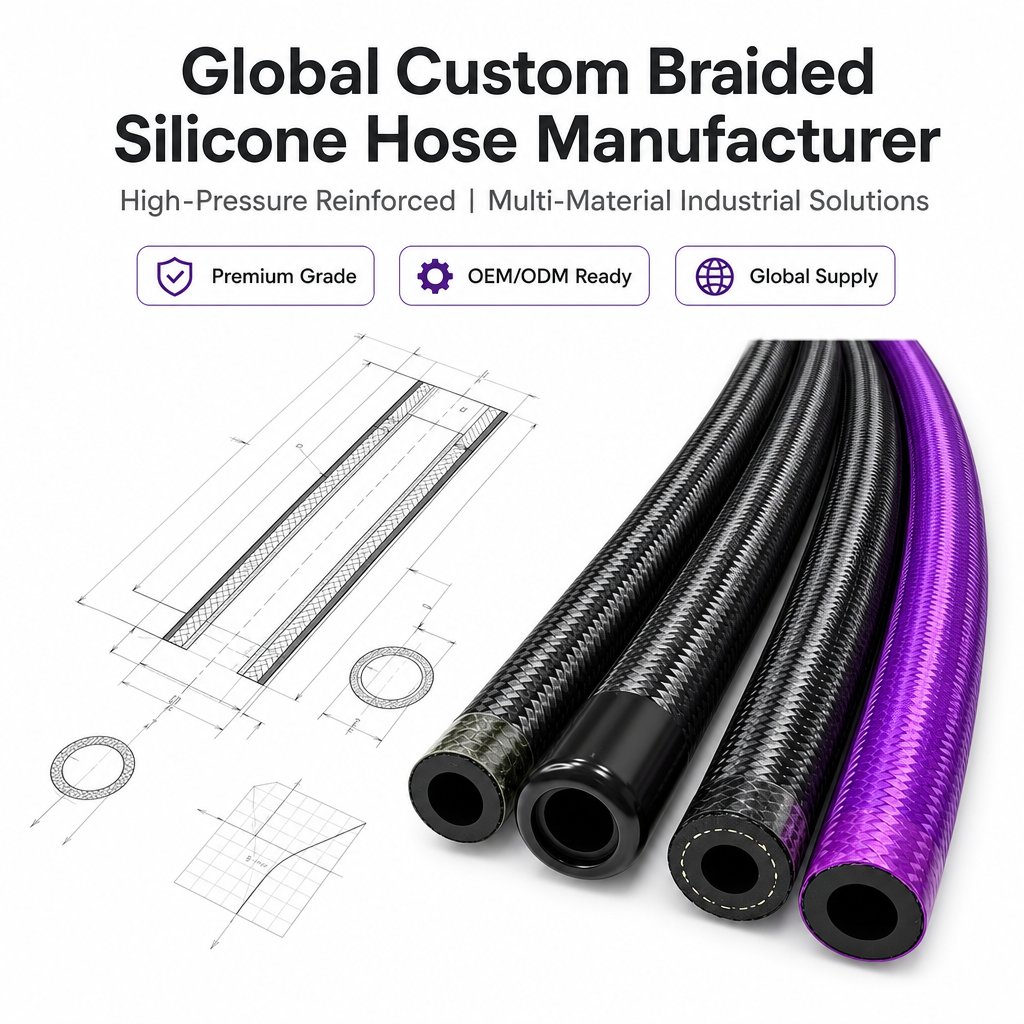
A braided hose is a three-layer composite. Understanding the layers tells you which specification you can loosen and which you cannot.
- Inner tube — extruded EPDM, silicone, TPV, or PVC. This is the only layer that touches the media, so chemical compatibility is decided here.
- Reinforcement braid — counter-woven nylon or polyester yarn at a controlled pick density. Higher picks per inch means higher burst pressure and less elongation under load.
- Outer jacket (optional) — a thin abrasion-resistant sheath, or none at all when the braid itself is the visible finish.
Because the braid handles pressure, the inner tube can stay thin and flexible. That is why a braided hose with a 2 mm wall can outperform a much heavier unreinforced hose of similar outer diameter.
2. What The Braid Actually Buys You
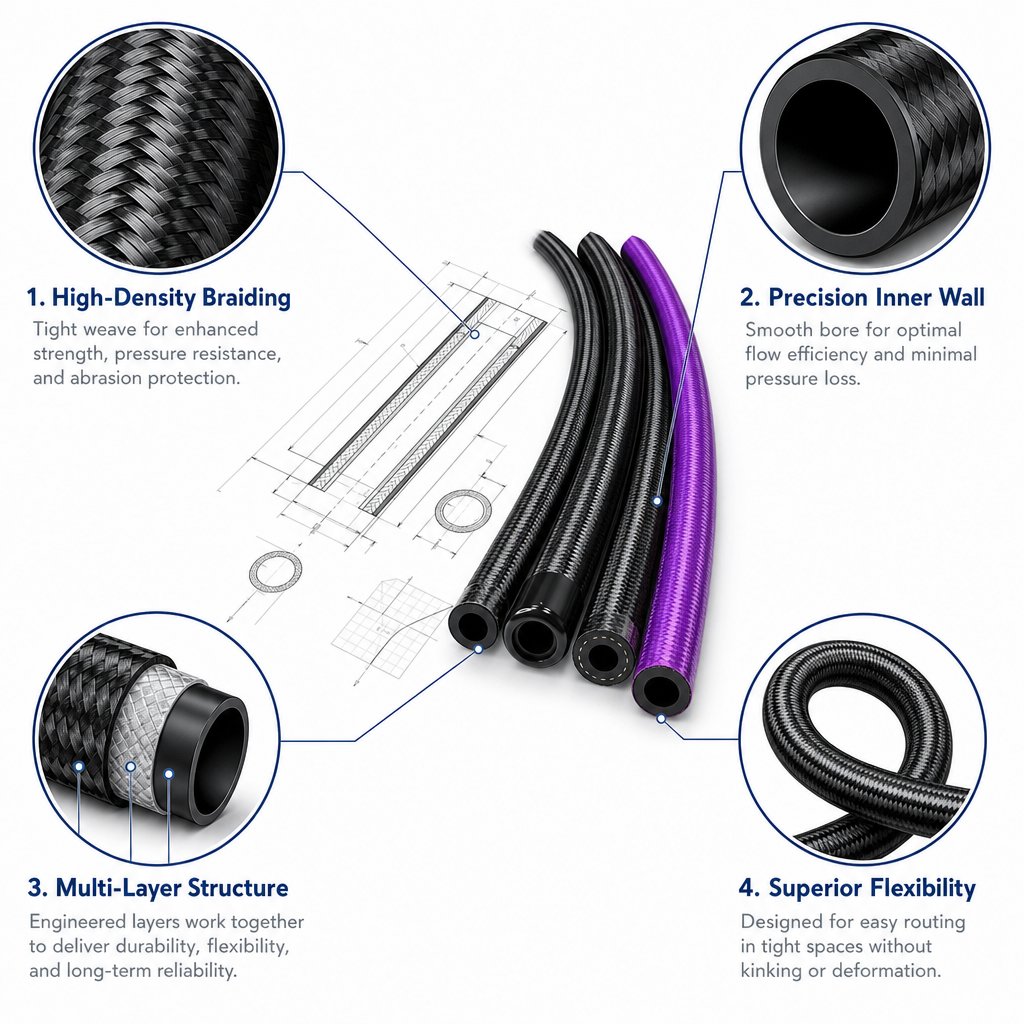
Four performance gains come directly from the reinforcement layer:
- Burst resistance — braided construction typically multiplies working pressure several times over the same unreinforced tube.
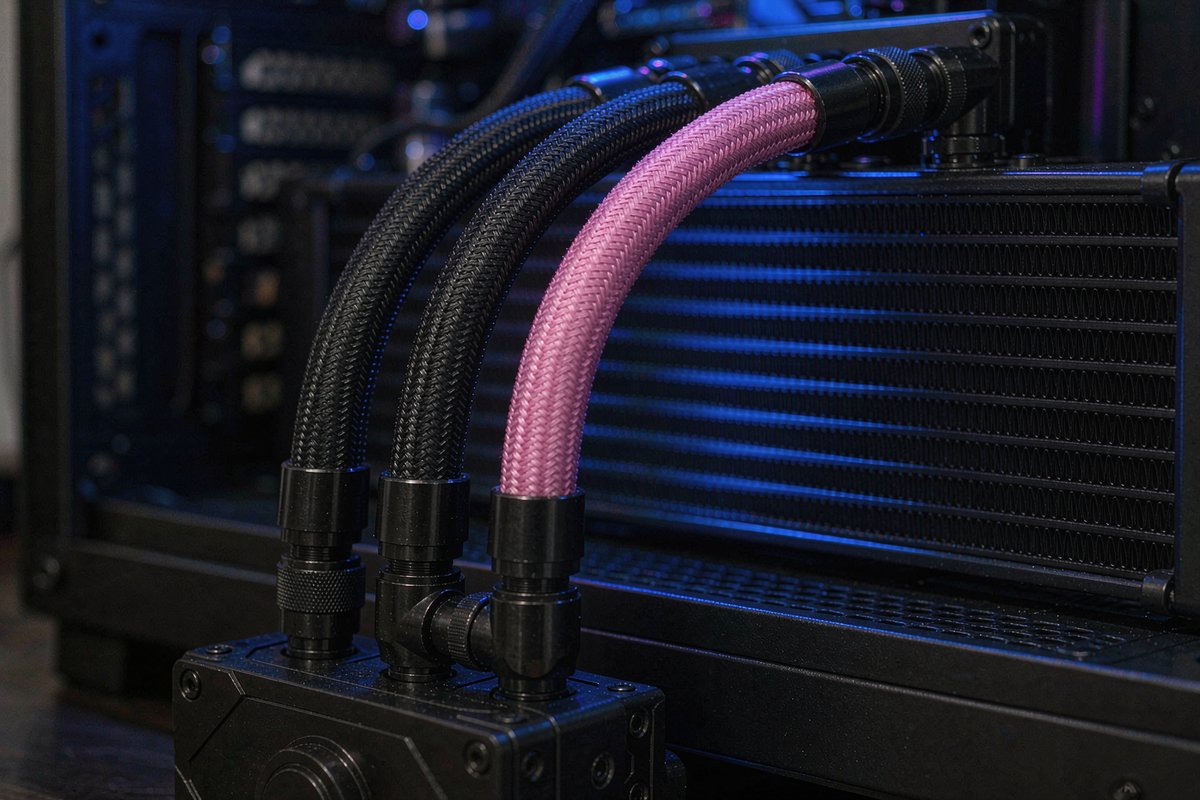
- Anti-kink behaviour — the braid limits ovalisation, so the hose keeps flowing through tight 180° bends.
- Dimensional stability — low elongation under internal pressure means routing stays where you planned it.
- Abrasion protection — the braid shields the tube from vibration wear against metal panels and frames.
If your assembly passes near a fan, a pump, or a sharp sheet-metal edge, the braid is doing structural work, not decoration.
3. Where Braided Hose Earns Its Cost
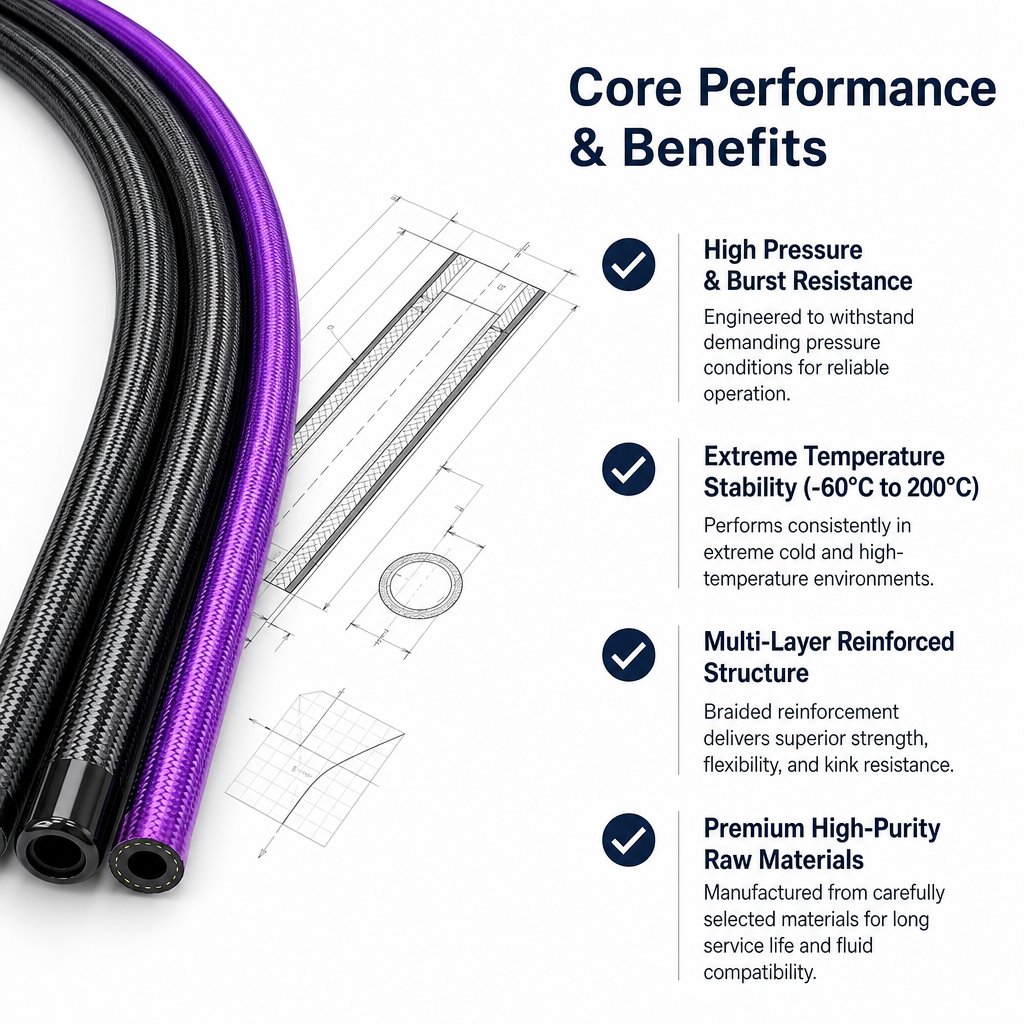
The economics only work when the application punishes a plain tube. The three most common cases:
Liquid cooling and thermal loops
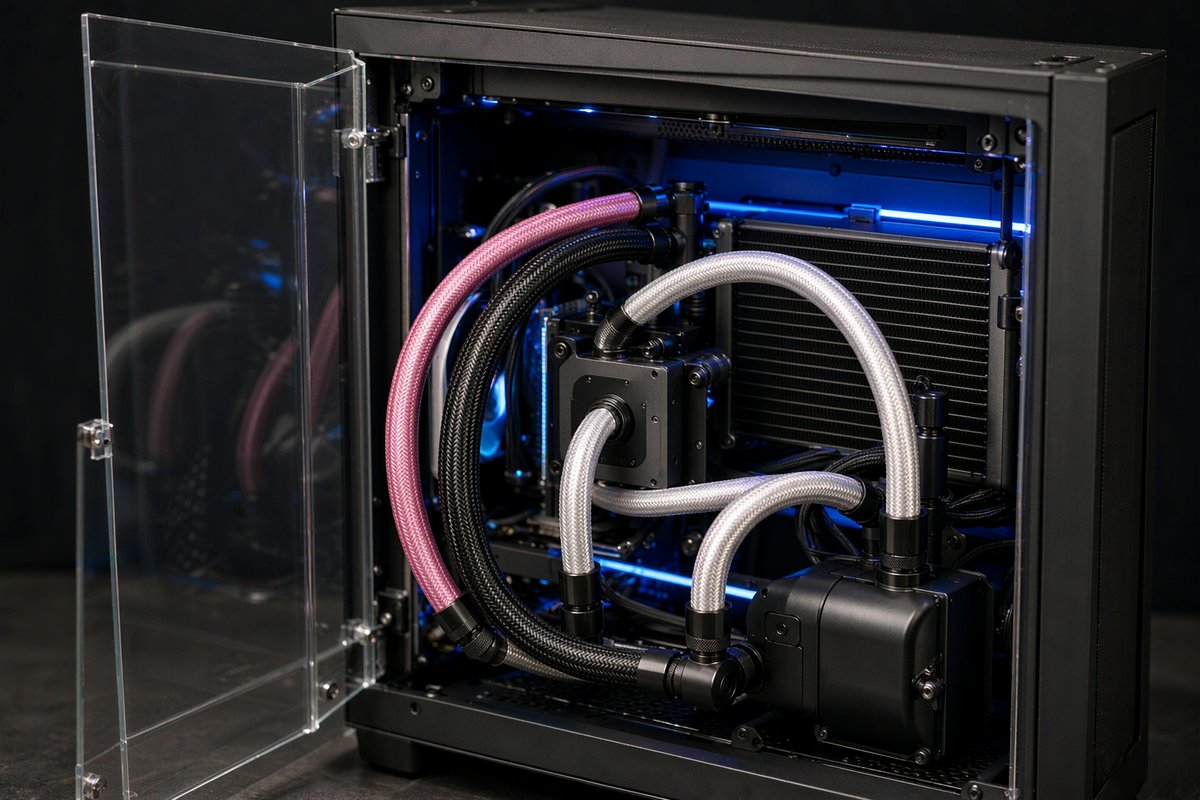
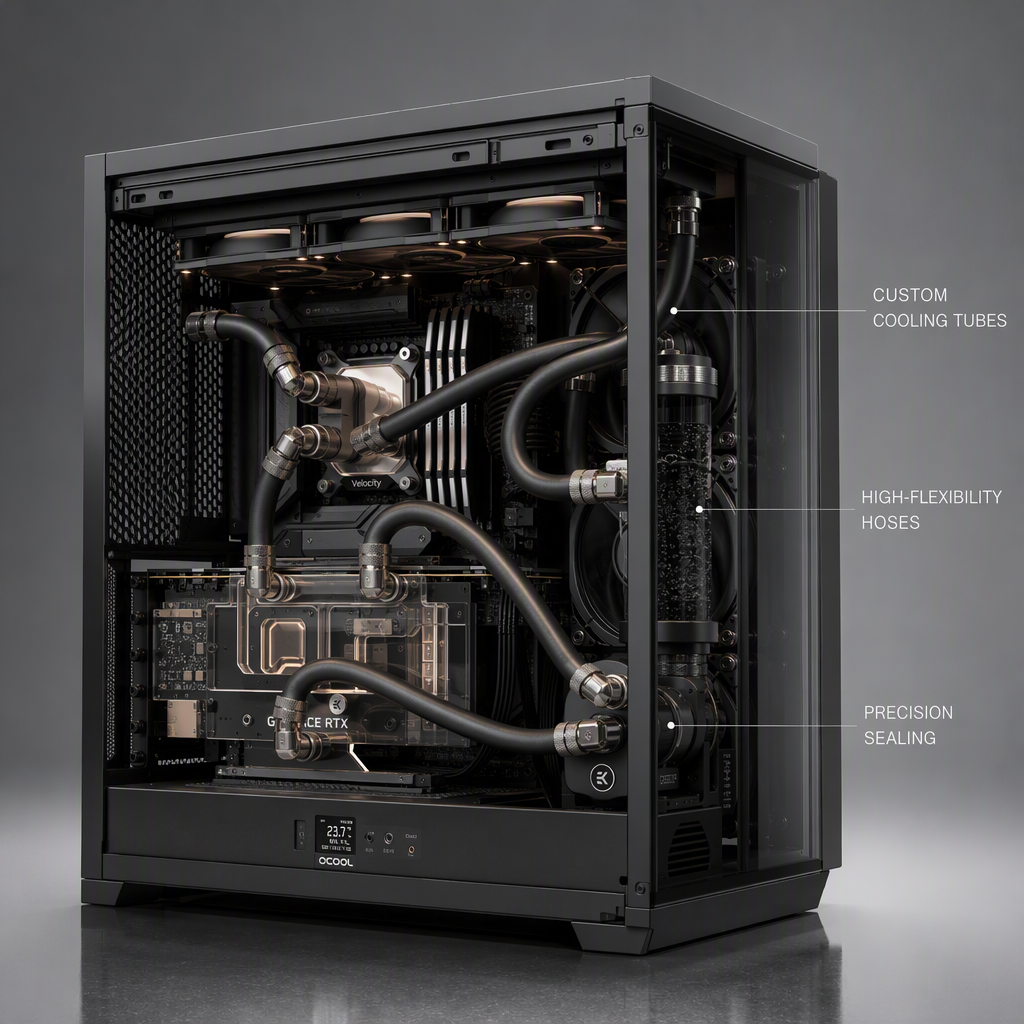
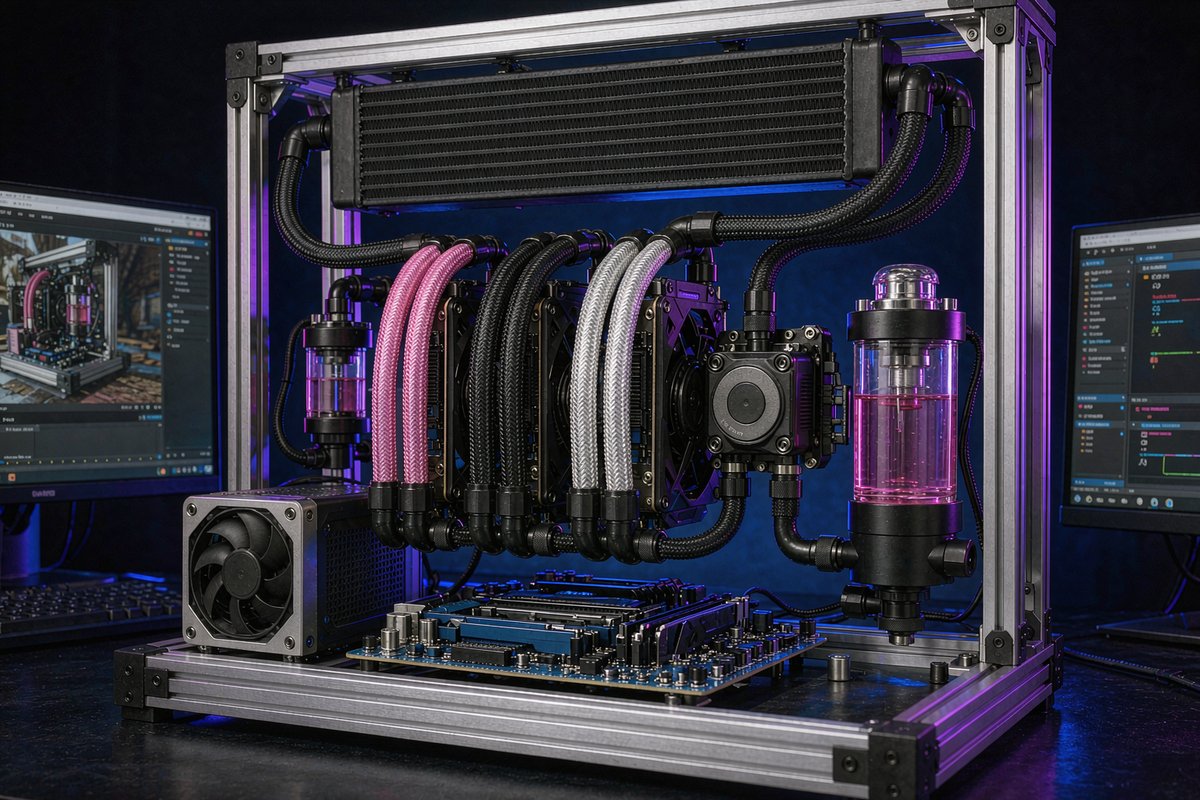
PC builders and equipment makers choose braided hose for coolant loops because it resists kinking at the CPU block and holds a clean radius. See our PC liquid cooling tube solutions for gaming PC cases for the routing detail.
Pneumatics and compressed air
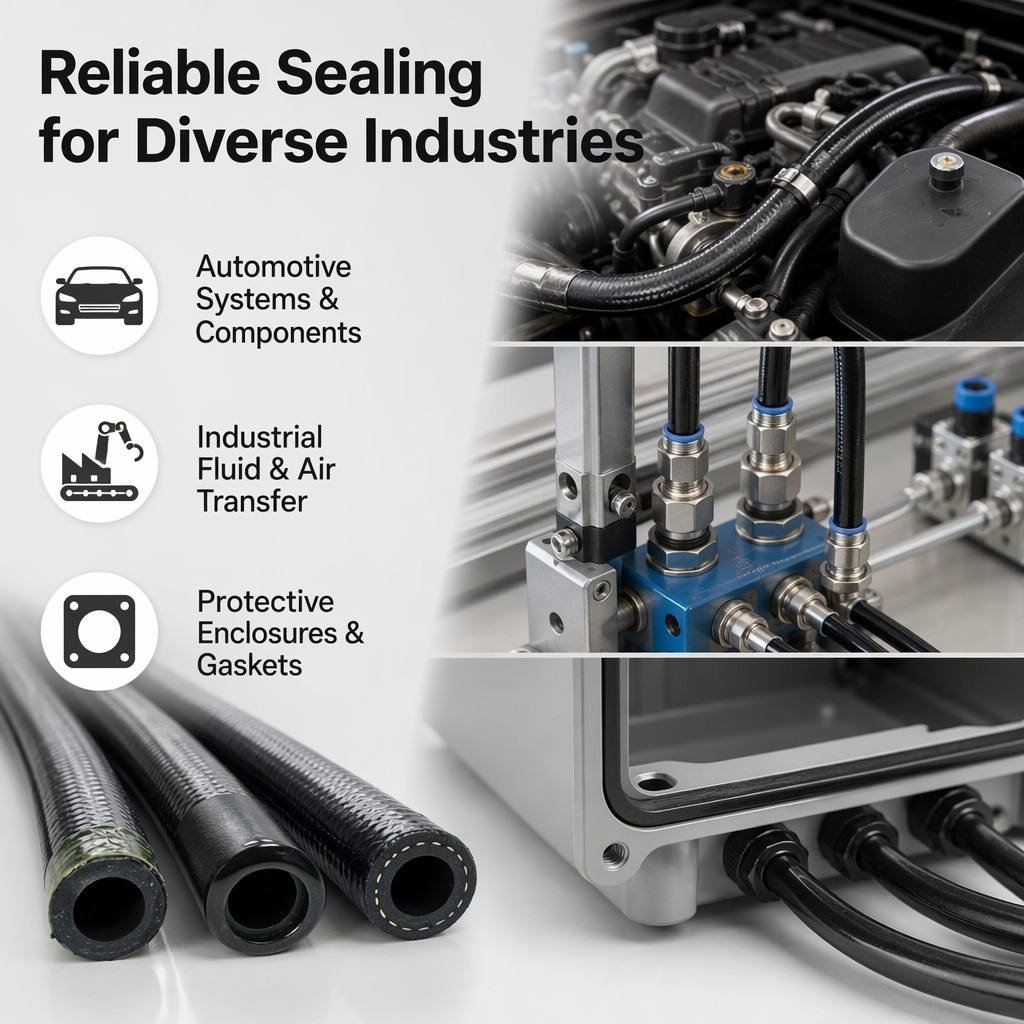
Braided construction keeps the tube round under pressure pulses, so flow stays predictable and fittings stay sealed.
Fluid transfer in tight enclosures
Where a hose must snake through a chassis, machinery frame, or appliance interior, anti-kink behaviour is the deciding factor.
4. Braided vs Plain vs Reinforced Hose — Which To Specify
| Requirement | Plain extruded tube | Textile reinforced | Braided hose |
|---|---|---|---|
| Working pressure | Low | Medium | High |
| Kink resistance | Poor | Fair | Excellent |
| Flexibility | Excellent | Good | Good |
| Abrasion resistance | Poor | Fair | Excellent |
| Cost per metre | Lowest | Medium | Highest |
The trade is simple: you pay more per metre and accept slightly stiffer handling in exchange for pressure capacity and a hose that will not collapse in a tight bend. Specify braid only when at least one of those two matters — otherwise a plain tube is the cheaper, correct answer.
5. Choosing The Inner Tube Material
The braid is standard across suppliers; the inner tube is where most assemblies succeed or fail. Match the tube to the media and the temperature:
- EPDM — hot water, coolant, glycol mixes, steam. Wide temperature window and strong ageing resistance. The default for thermal loops.
- Silicone — the widest temperature range and the best flexibility at low temperature; the right choice for high-temperature air and food-grade paths.
- TPV / TPE — good chemical resistance with easier processing, often a cost-competitive middle ground.
- PVC — economical for low-pressure, ambient-temperature fluid transfer where clarity or colour matters.
Our factory extrudes all four in-house. The full list of materials and the processes behind them is on the materials, process and service capabilities page.
6. Fittings, Assembly And Leak-Free Joints
Most field failures are joint failures, not hose failures. Two decisions dominate: how the hose is cut, and how it is terminated.
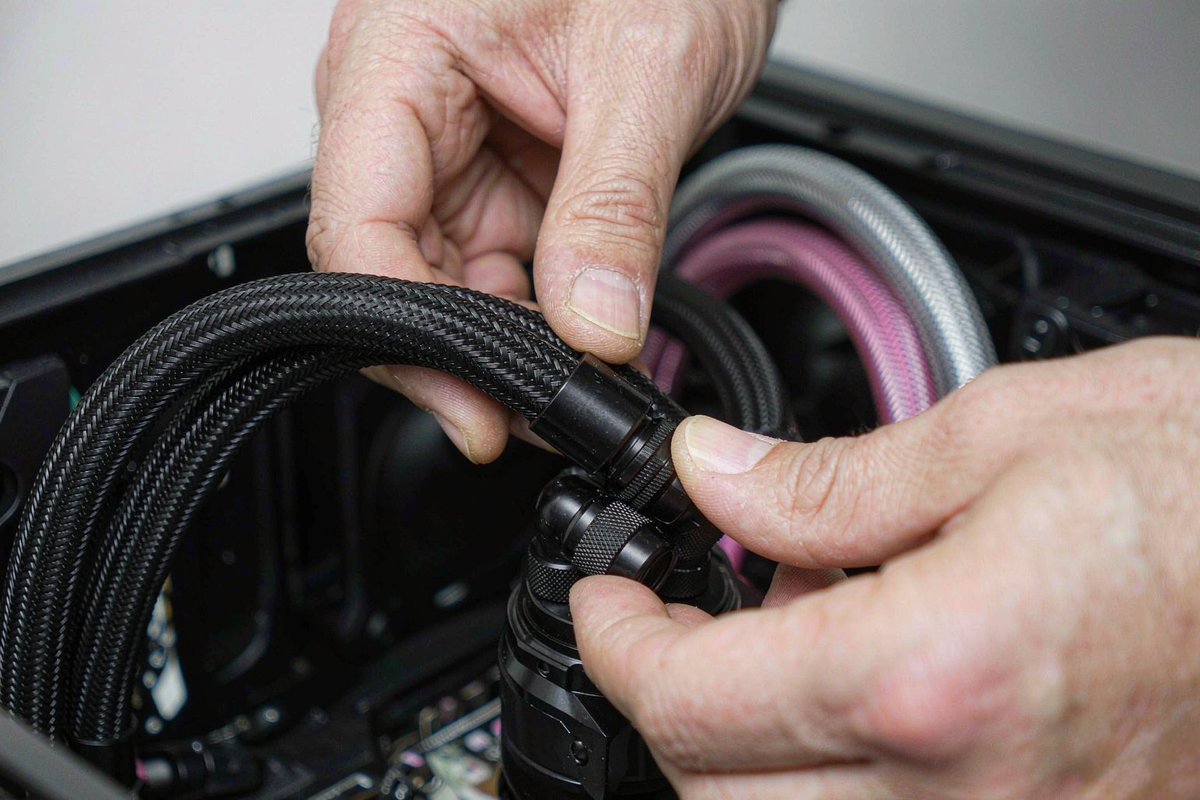
- Cut method — square, clean cuts. A ragged cut lets the braid unravel and creates a leak path under the ferrule.
- Barbed fittings — lowest cost; best with a hose clamp and matched barb diameter.
- Compression / ferrule fittings — higher pressure rating and vibration resistance; the standard for coolant loops.
- Push-to-connect — fastest assembly; requires a dimensionally accurate OD.
Send your fitting drawing with the hose specification — bore tolerance and braid thickness both change what will actually seal.
7. Sizing: ID, OD And Bend Radius
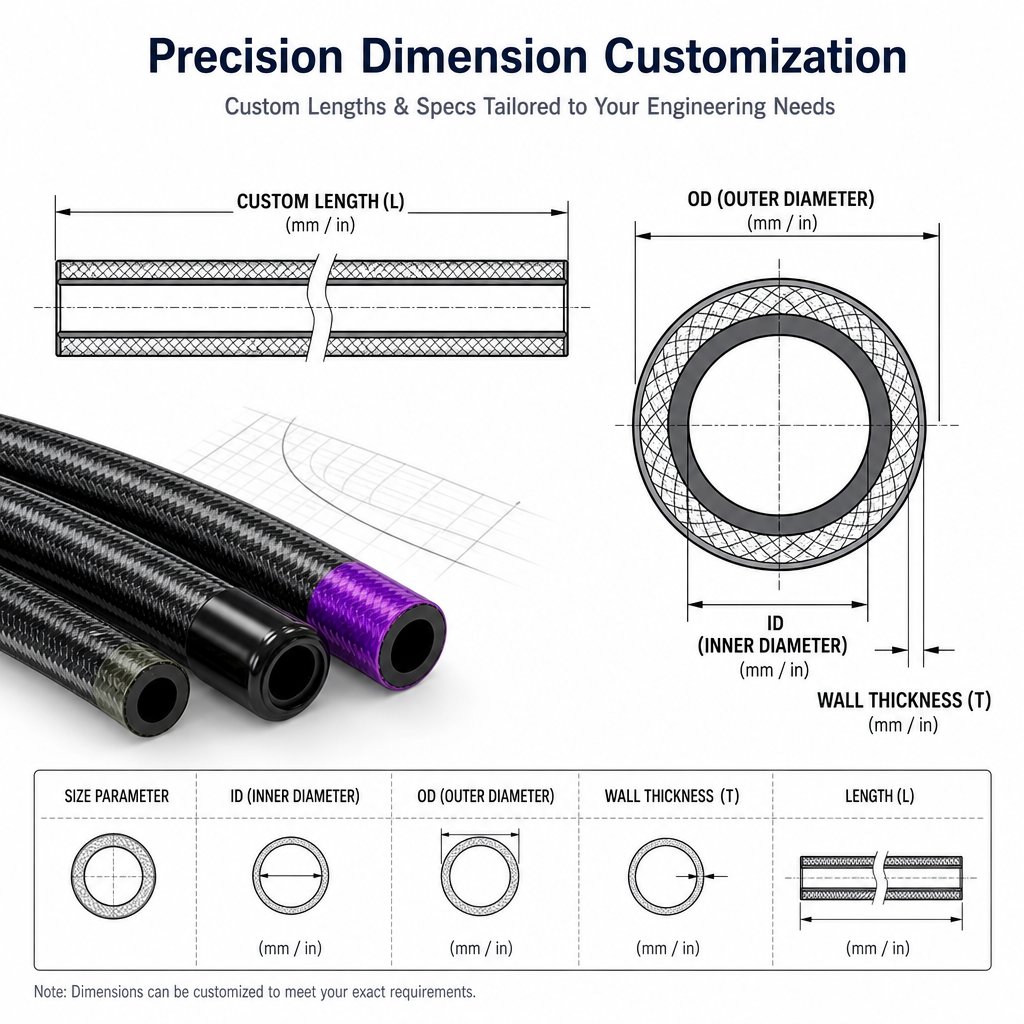
Three numbers drive both flow and fitment, and they must be specified together:
- Inner diameter (ID) — sets flow rate. Size for the flow you need, not the fitting you have on the shelf.
- Outer diameter (OD) — sets clearance in the enclosure and clamp sizing. Braided OD runs larger than plain tube at the same ID.
- Minimum bend radius — the tightest bend the hose tolerates without kinking. Plan routing against this number, not against how the hose looks hand-held.
A hose specified by ID alone is the single most common cause of a returned sample. Always quote ID + OD + wall thickness.
8. Colour, Sleeving And Brand Customisation
Braided hose is visible in most installations, so cosmetic specification is a legitimate engineering requirement, not an afterthought:
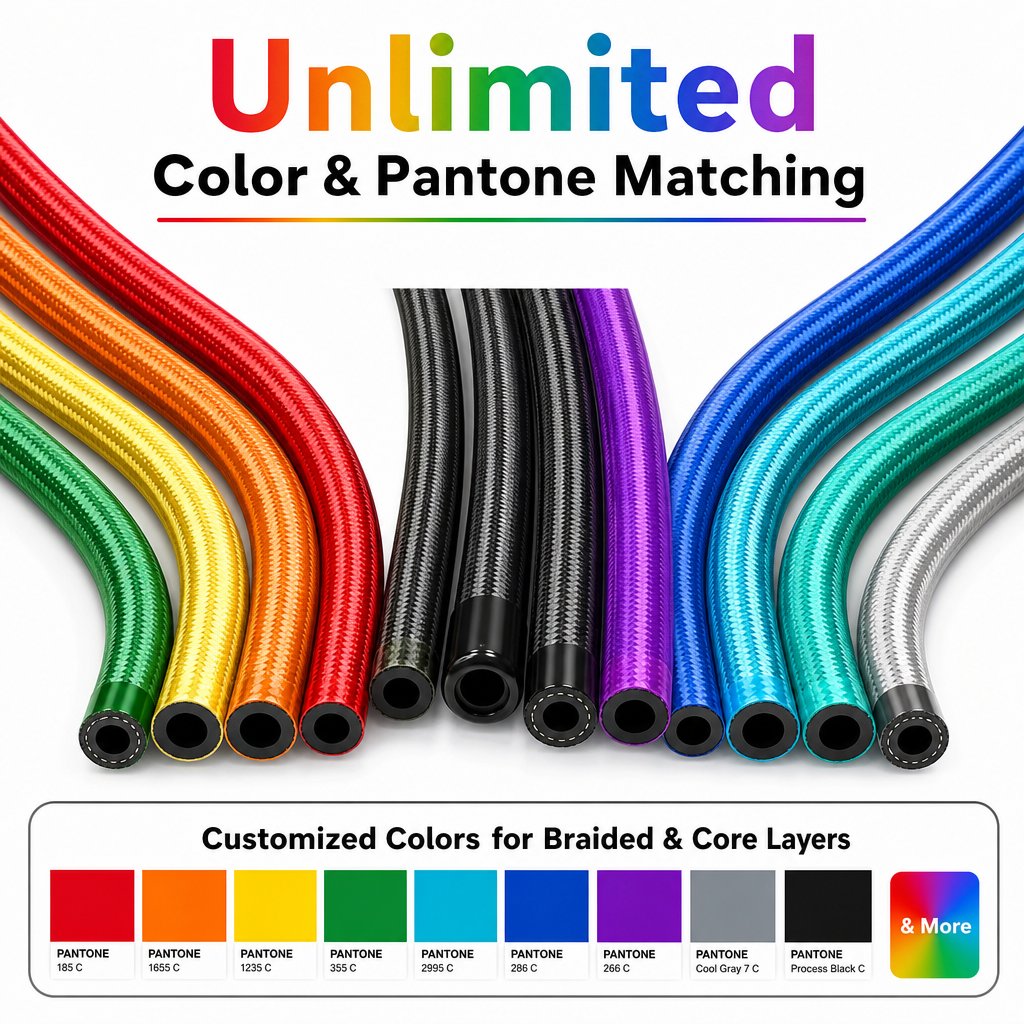
- Braid colour and sleeve colour — match a brand colour, or code different circuits in one machine.
- Printing and marking — size, pressure rating, batch and brand printed along the hose.
- Cut lengths and coil lengths — supply to your assembly length to cut your own labour.
- Kitted assemblies — hose plus fittings, pre-assembled and pressure-tested.
Custom colour runs and private-label marking are handled through our custom rubber solution service.
9. Quality Control And Export Packaging
For OEM programmes, ask for the test regime before you ask for the price. A credible supplier will state:
- Burst pressure test results per production batch, not just a catalogue figure.
- Working pressure and safety factor stated separately.
- Temperature range verified on the actual compound, not the material family.
- Coil length and cut-length tolerances in writing.
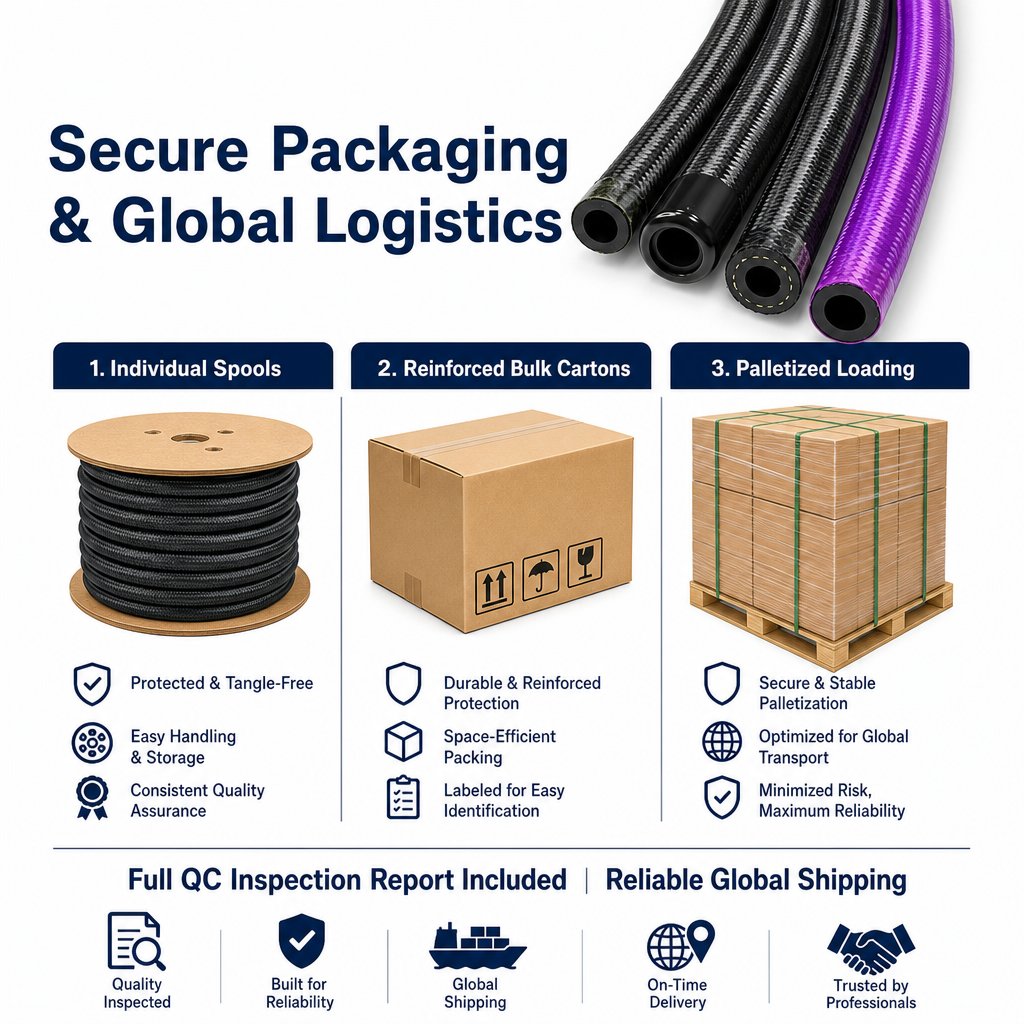
- Cartons marked for export, with coil protection that survives container shipping.
Braided hose is prone to braid snagging in transit — packaging quality is a real cost driver on returns.
10. What To Send For An Accurate Quote
A braided hose enquiry turns into a firm quotation fastest with these six items:
- Inner tube material (or the media it will carry).
- ID, OD and wall thickness — or an existing sample reference.
- Working pressure and peak/ surge pressure.
- Continuous operating temperature and any peaks.
- Fitting type, thread or barb drawing, and whether you need assemblies.
- Annual volume, target cut/coil length, and packing requirement.
Once we have these, we can confirm the braid pick density and compound, then issue a sample for your own pressure and leak test. Start from the rubber hose product range, or contact our team with your drawing.
Bottom Line
Braided hose is not a premium version of plain tube — it is a different component for a different job. Specify it when the assembly must hold pressure, survive a tight bend, or resist abrasion, and specify the inner tube by media rather than by habit.
Get the construction, the three dimensions, and the fitting drawing right at enquiry stage, and the rest of the programme runs without surprises. Talk to our engineering team about your braided hose specification.