









Custom Rubber Sealing Strips: How to Choose the Right Profile and Material
Custom Rubber Sealing Strips for Industrial Applications
A practical guide to choosing the right profile, material, size and production partner for reliable sealing performance.
What Is a Custom Rubber Sealing Strip?
A rubber sealing strip is an engineered profile used to close gaps, cushion contact surfaces and protect equipment from dust, water, vibration and air leakage. Unlike a simple flat gasket, an extruded strip can be designed with lips, bulbs, channels, hollow sections or fixing features to match the installation geometry.
For OEM projects, the most important point is not simply selecting a rubber material. The profile cross-section, compression behavior, tolerances and mounting method must work together in the final assembly.
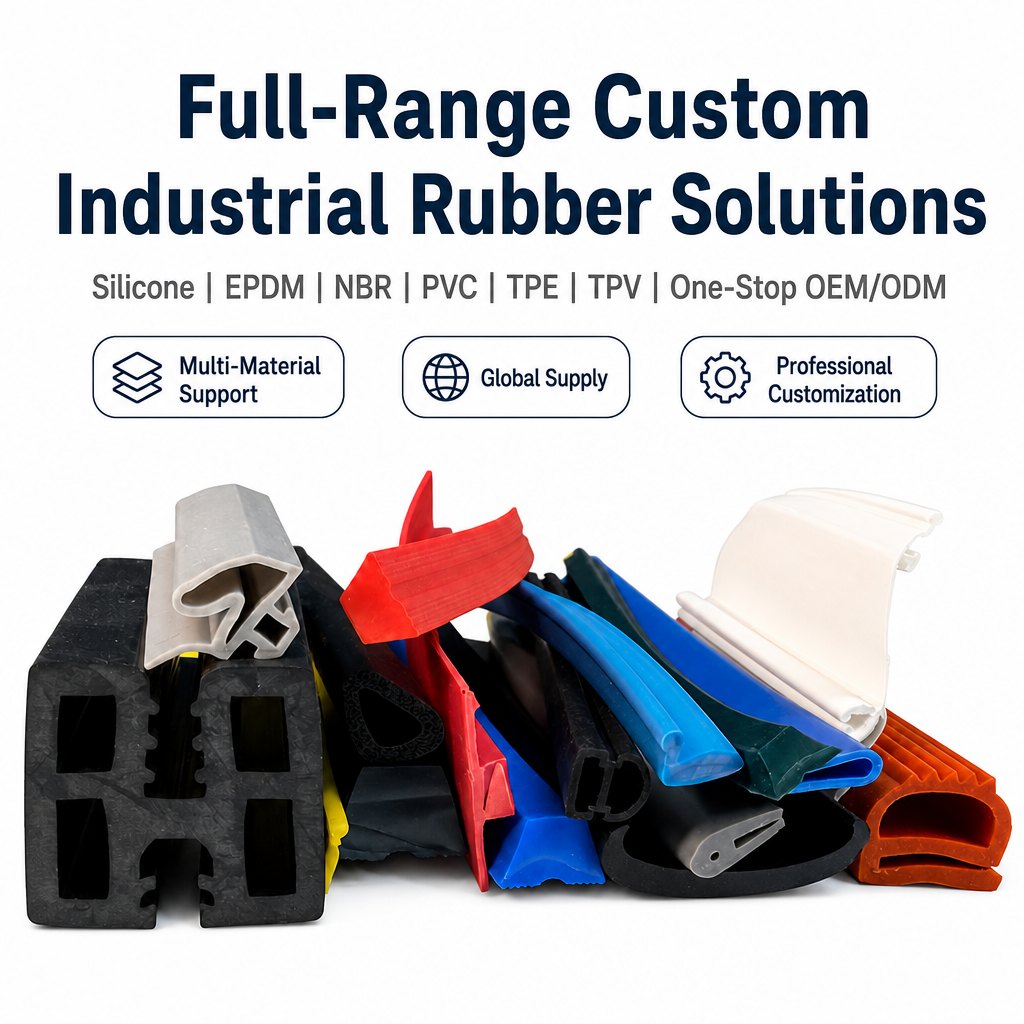
Custom industrial rubber sealing profiles
Start With the Profile and Installation Method
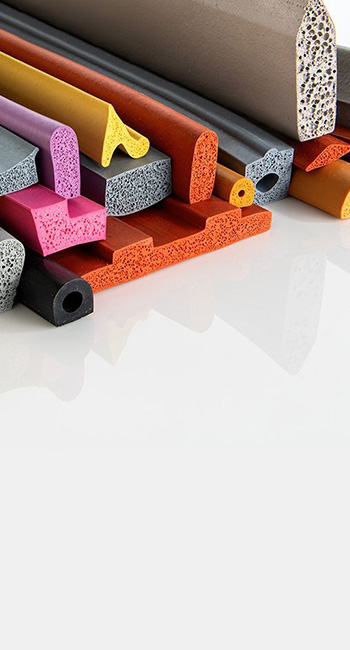
Profile design determines how the strip is fitted and how it loads the mating surface. Common options include push-on edge trim, channel-mounted profiles, self-adhesive strips, bulb seals and custom solid or sponge sections.
- Measure the available groove or edge before selecting a profile.
- Define the required compression and recovery space.
- Check corners, joints and cut lengths early in the design.
- Use a drawing, sample or 3D model to reduce trial-and-error during tooling.
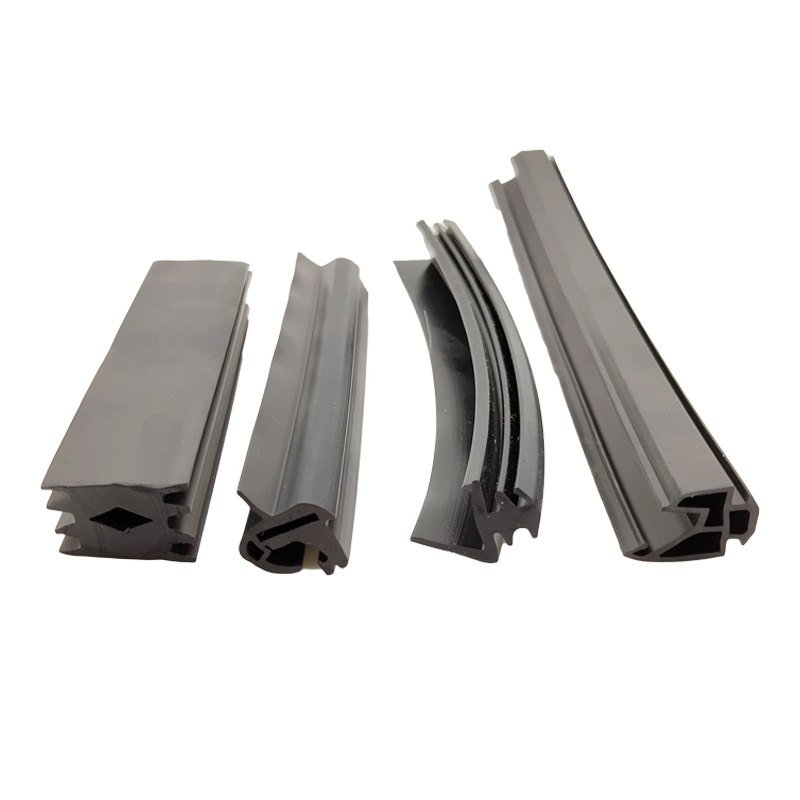
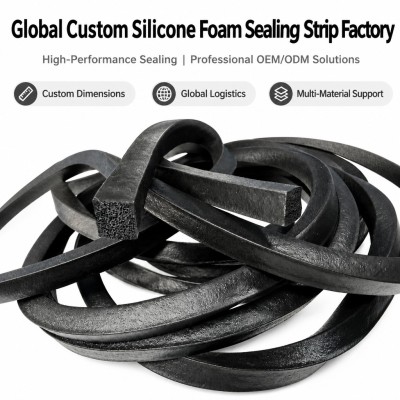
Black custom rubber sealing profile cross-section
Select the Material for the Working Environment
The material should be selected according to temperature, weather exposure, chemical contact, hardness and required service life. EPDM is commonly used for outdoor weathering, ozone and water resistance. Silicone is suitable for wider temperature ranges and demanding clean or high-temperature applications. NBR may be considered where oil resistance is a priority, while PVC, TPE or TPV can suit specific flexible extrusion and cost requirements.
Material selection should be confirmed against the actual environment rather than based on the appearance of the strip alone.
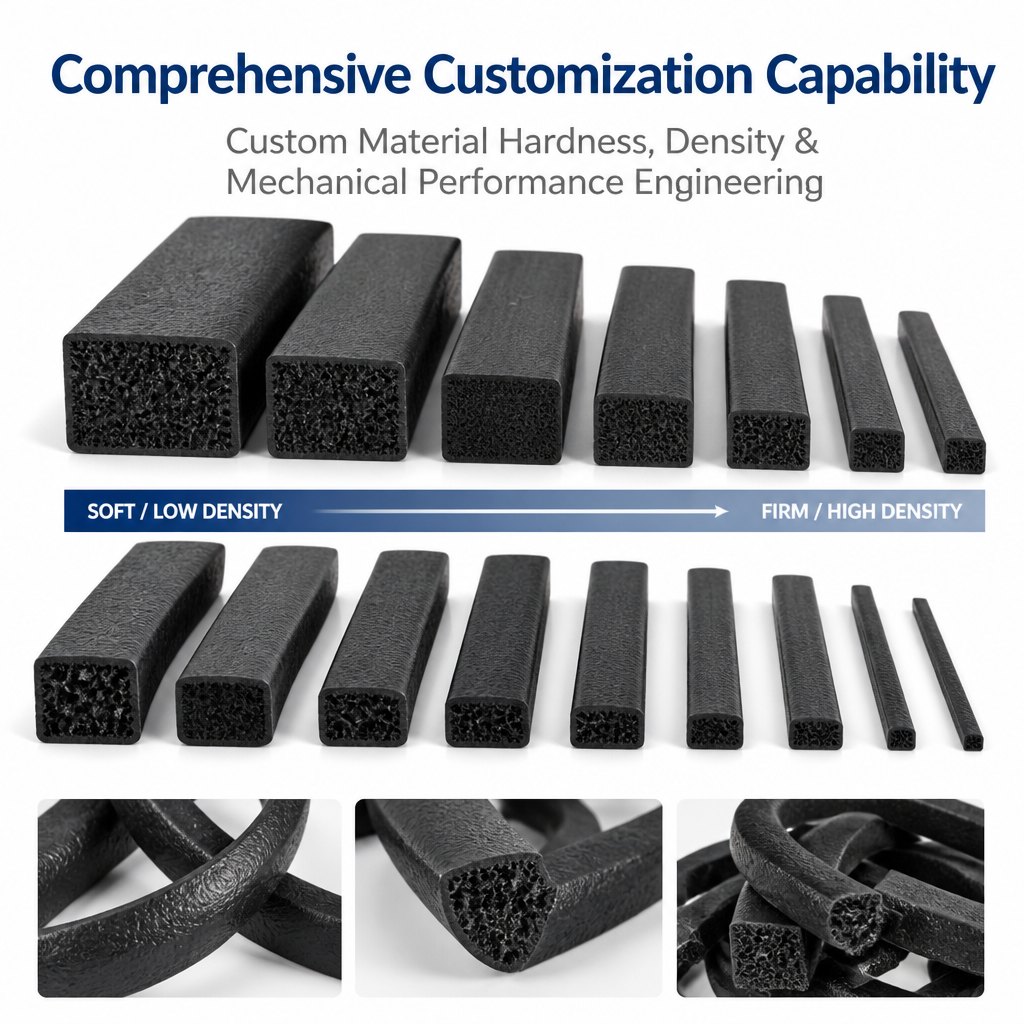
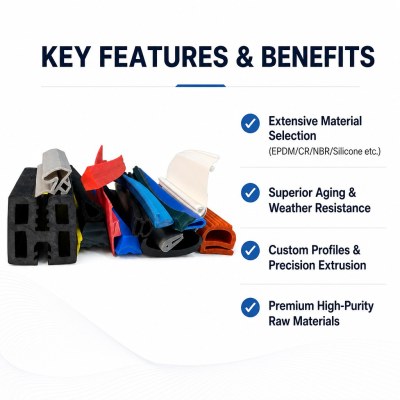
Custom rubber sealing strip material and density options
Control Width, Height, Wall Thickness and Tolerances
Small changes in width, height or wall thickness can change installation force and sealing pressure. A production-ready specification should include the key dimensions, allowable tolerances, hardness, density where applicable, cut length and any surface or color requirements.
For hollow or sponge profiles, also specify cell structure or density targets when they affect compression and recovery. A sample approval step is recommended before mass production.
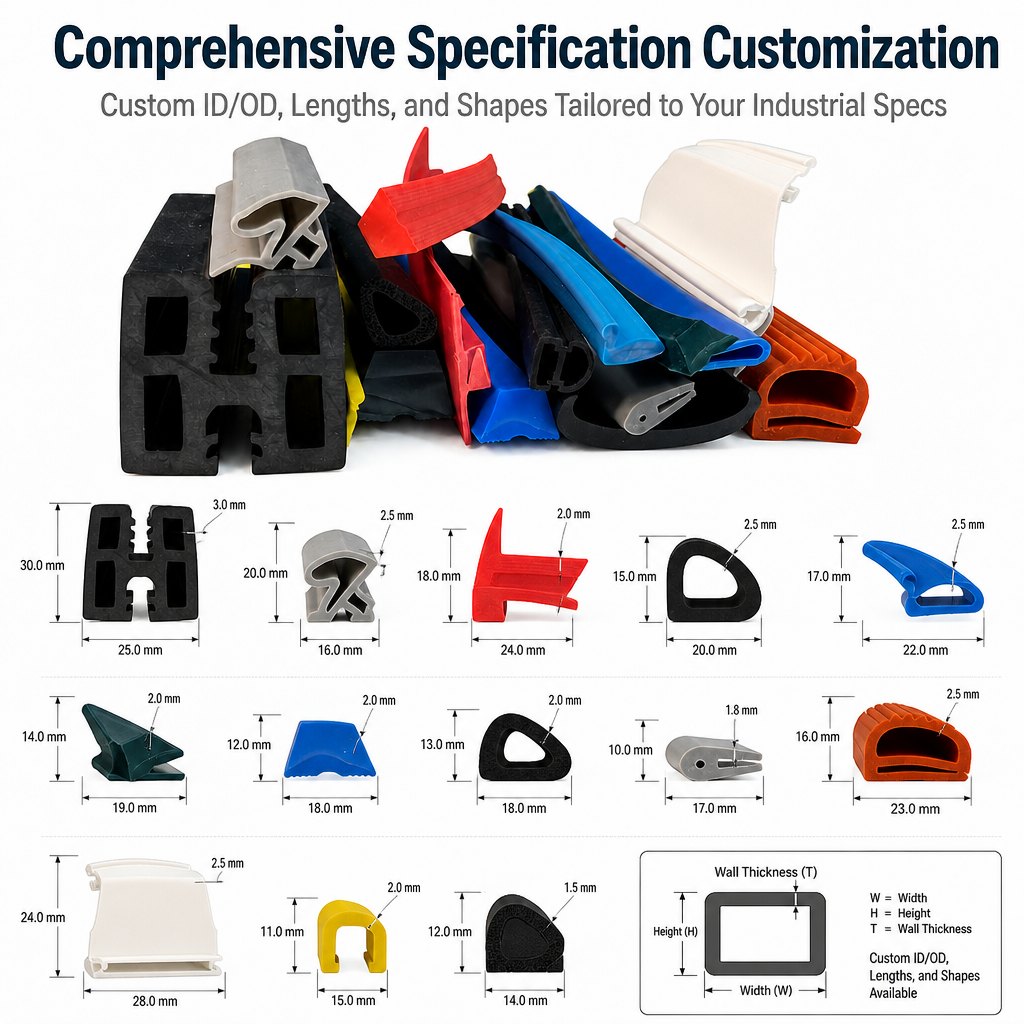
Custom rubber sealing profile size and dimension guide
Match the Seal to the Application
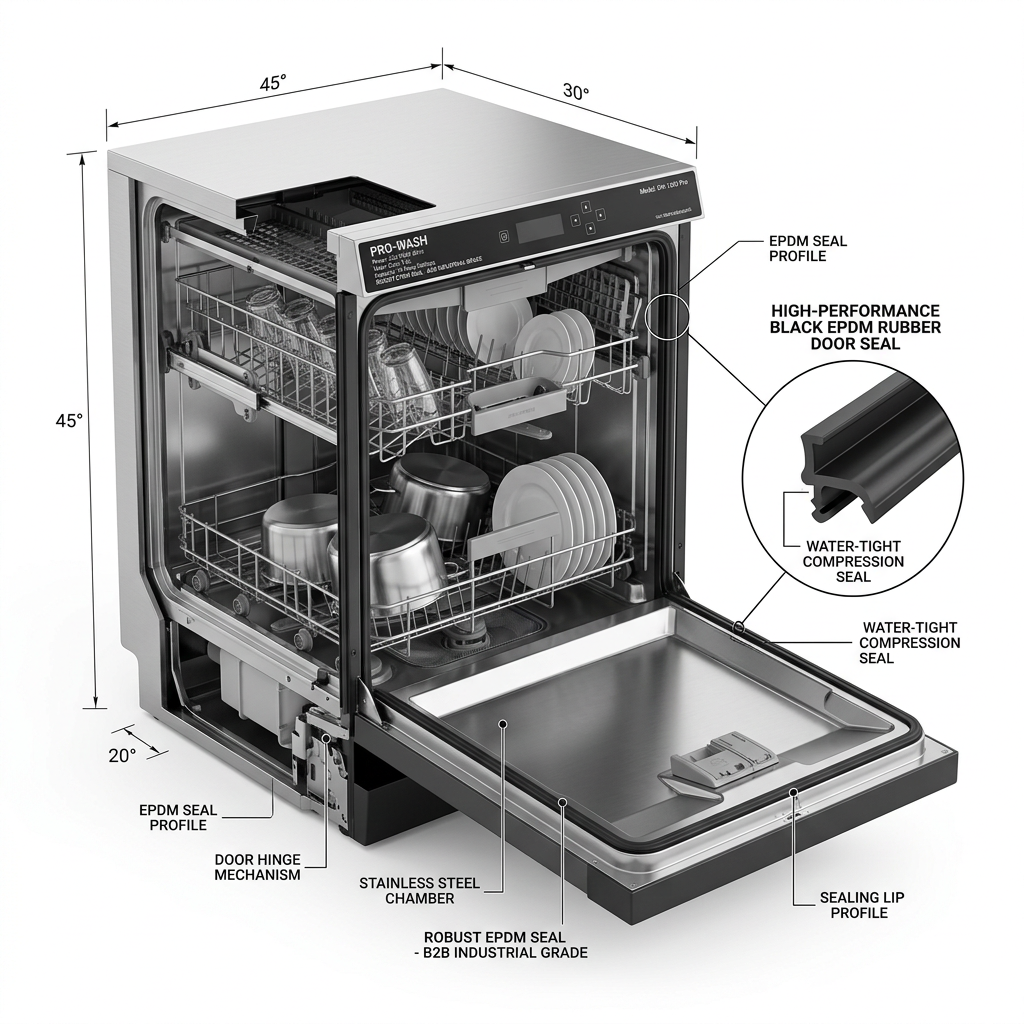
Typical applications include doors and access panels, enclosures, machinery guards, vehicles, cabinets, windows, industrial equipment and protective edge finishing. The best profile is the one that maintains contact under movement, vibration and temperature change without creating excessive closing force.
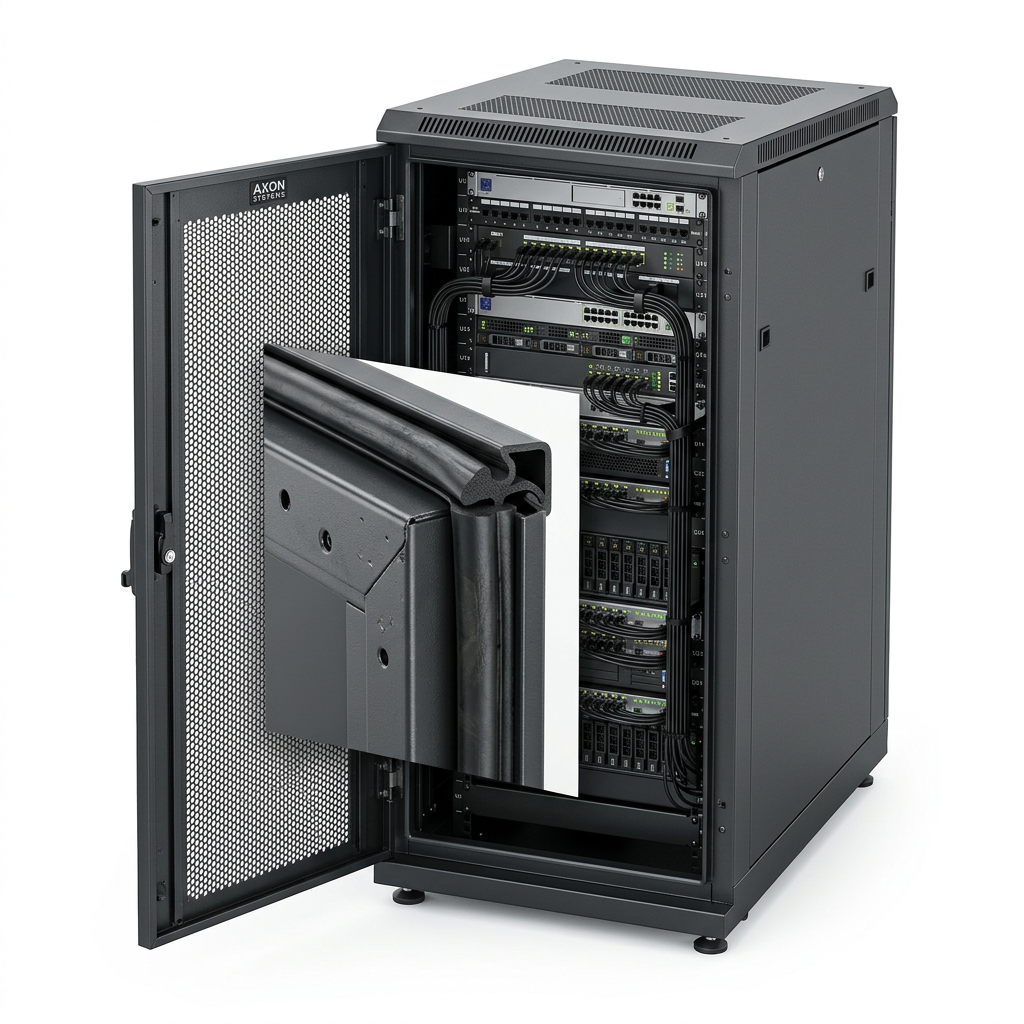
For door or frame sealing, pay particular attention to corner behavior, joining method and whether the profile must be removable for maintenance.
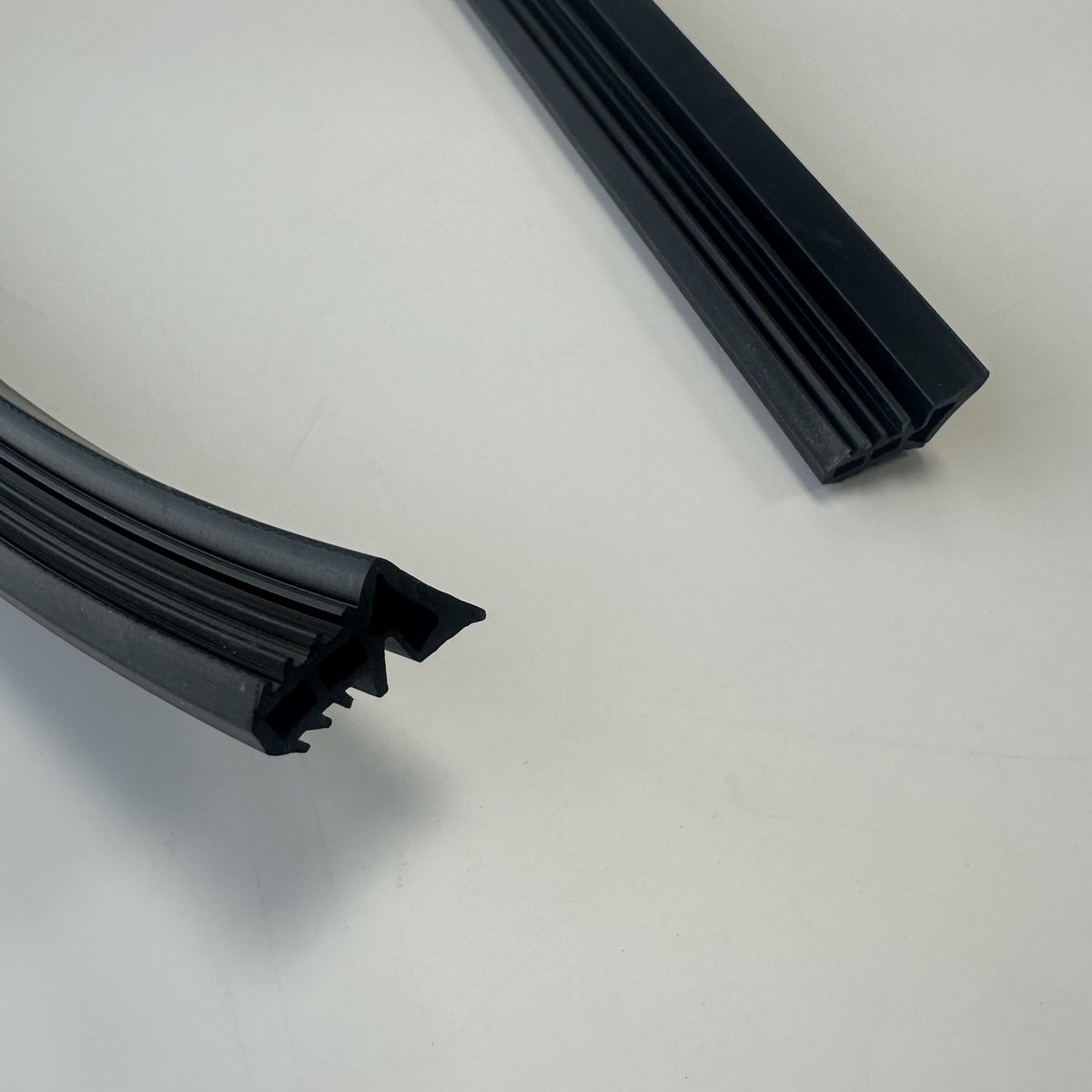
Black rubber door and frame sealing strips
A Clear OEM/ODM Workflow Reduces Project Risk
A reliable custom sealing project usually follows a structured sequence: requirement review, material and profile selection, prototype or sample approval, order confirmation, production and shipment.
- Share drawings, dimensions, target application and annual demand.
- Confirm material, hardness, color, surface finish and packaging.
- Review samples or prototypes before final tooling approval.
- Keep inspection criteria consistent from first article to mass production.
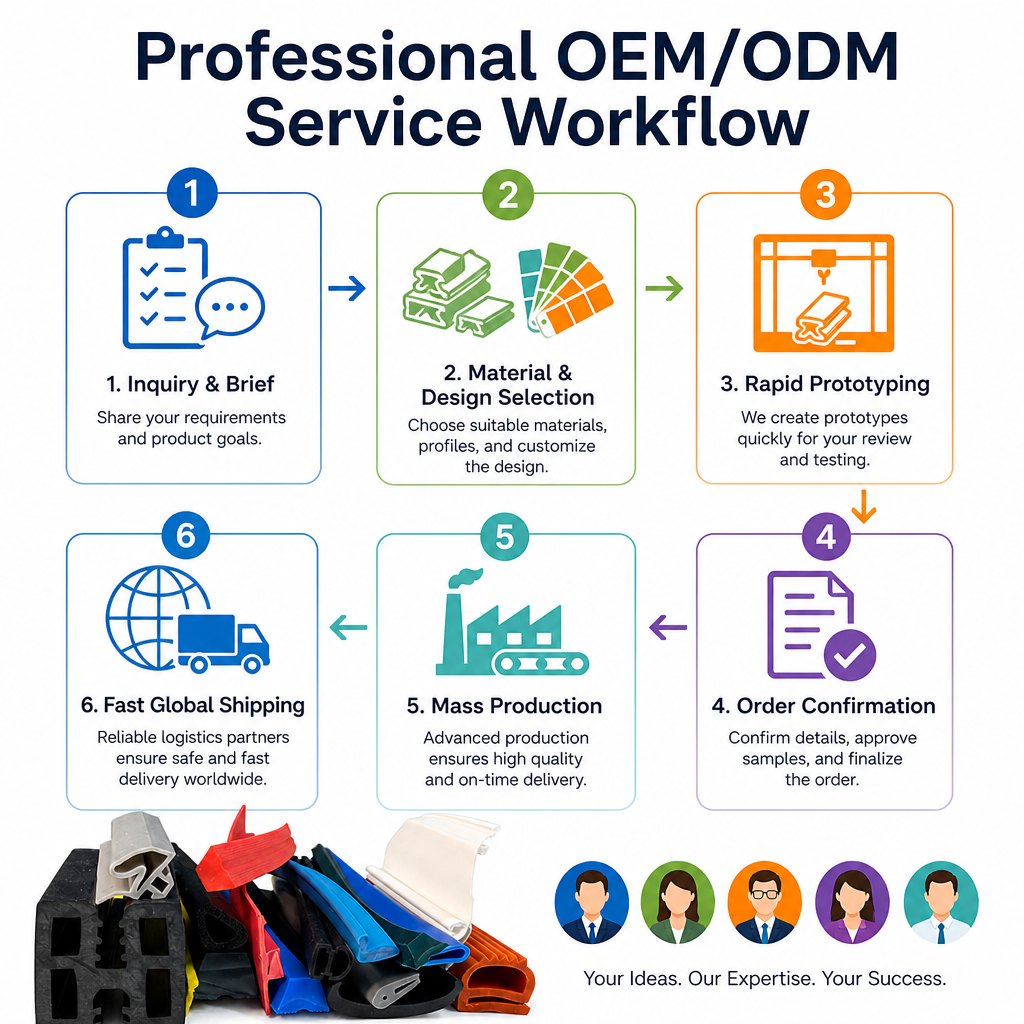
Professional OEM/ODM rubber sealing strip workflow
Questions to Confirm Before Ordering
- What are the groove, edge or mating-surface dimensions?
- What temperature, weather, oil or chemical conditions will the seal face?
- Is the strip solid, sponge, hollow, adhesive-backed or mechanically retained?
- What hardness, color, tolerance and packaging requirements apply?
- Will you need samples, custom tooling or repeat production support?