












Dishwasher Tub Seal & Door Gasket Failures in the EU and US: A Selection Guide for Appliance Manufacturers
Dishwasher Tub Seal & Door Gasket Failures in the EU and US: A Selection Guide for Appliance Manufacturers
A technical and financial guide to dishwasher door-gasket and hose selection for appliance manufacturers
By RESRUB Technical Content Team (Dongguan Xingfeiyu Rubber And Plastic Products Co., Ltd.) | For the appliance manufacturing industry
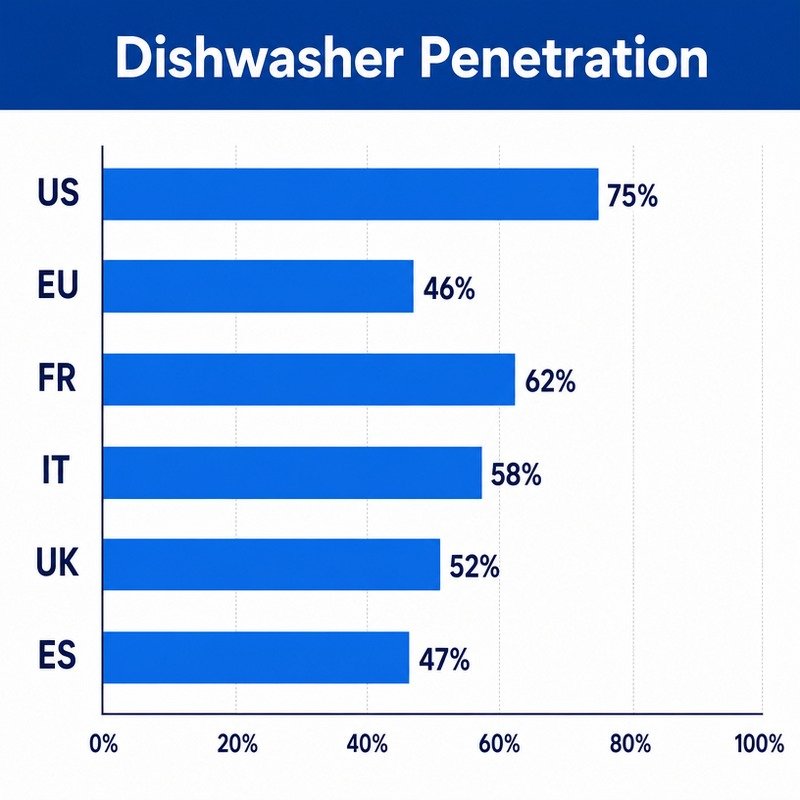
Dishwashers are a household staple in Europe and North America. About 75% of US households own one (EIA 2024 RECS; AHAM), and European penetration sits near 46% while still growing at roughly 4.8% CAGR (Emergen Research). But here is the uncomfortable truth for OEMs: as the EU tightens its energy-label rules and the "right to repair" era makes 10-year spare parts mandatory, a component most spec sheets treat as trivial—the door tub seal and the inlet/outlet hoses—has quietly become a make-or-break variable for energy compliance, after-sales cost and brand equity.
This article dissects dishwasher seal selection from both technical and financial angles: what recent field failures tell us, what the latest EU/US regulations now demand, and how the right material, dimension and process turn a hidden risk into a reliability advantage—mapped, point by point, to what RESRUB delivers.
1. Dishwasher Market in Europe and the US: Why the Tub Seal Matters for Appliance OEMs
MarketHigh penetration means a large base over which seal failures can scale. Key figures:
- United States: ~75% of households own a dishwasher (2024 RECS: 99.47 million homes, Axis Intelligence calculation on EIA data); 94% of new homes include a built-in dishwasher (NAHB). The US residential dishwasher market was ~$3.5B in 2024, projected to $5.2B by 2034 at a 3.8% CAGR (Emergen Research).
- Europe: overall penetration ~46% (Market Reports World); by country, France 62%, Italy 58%, UK 52%, Spain 47% (2024, Market Data Forecast). Europe holds 29.7% of the global residential dishwasher market and grows at 4.8% CAGR—the fastest regional clip.
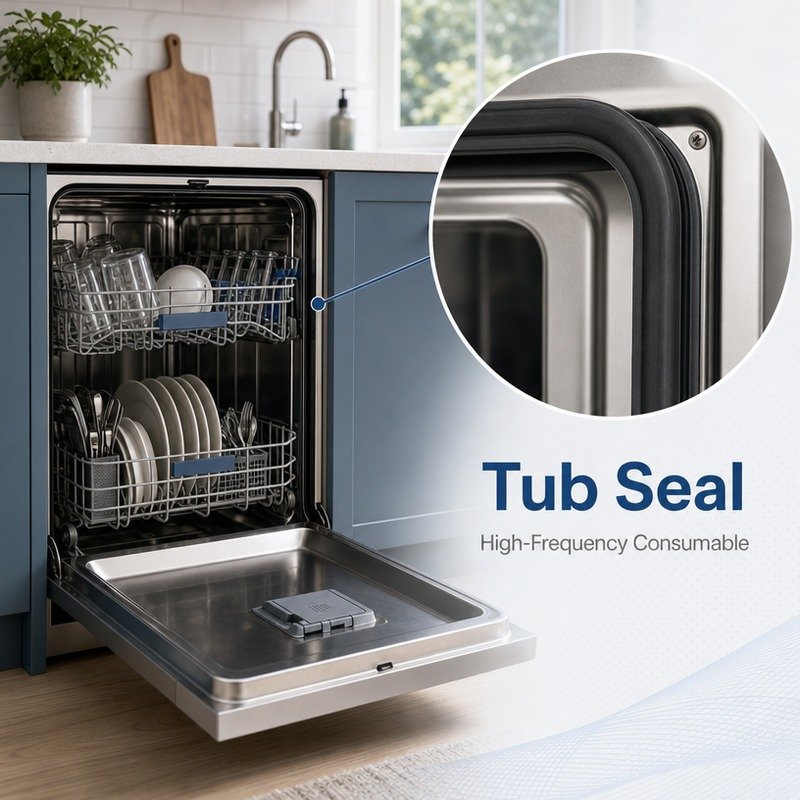
- Harsh duty cycle: inside a dishwasher there is both high temperature (up to 70°C+) and high-pressure spray, plus detergent corrosion and 1–2 cycles per day. The tub seal endures constant compression, hot steam and detergent; the inlet/outlet hoses and pump dampers endure hot-water cycling and mechanical vibration—a "full-spectrum" demand on sealing and tubing.
2. Common Dishwasher Door Gasket Failures: What Field Data Reveals
Field dataRepair and consumer-care data from the past few years converge on the same pattern: the tub seal and hoses are recurring, predictable failure points—not random bad luck. Three signals stand out.
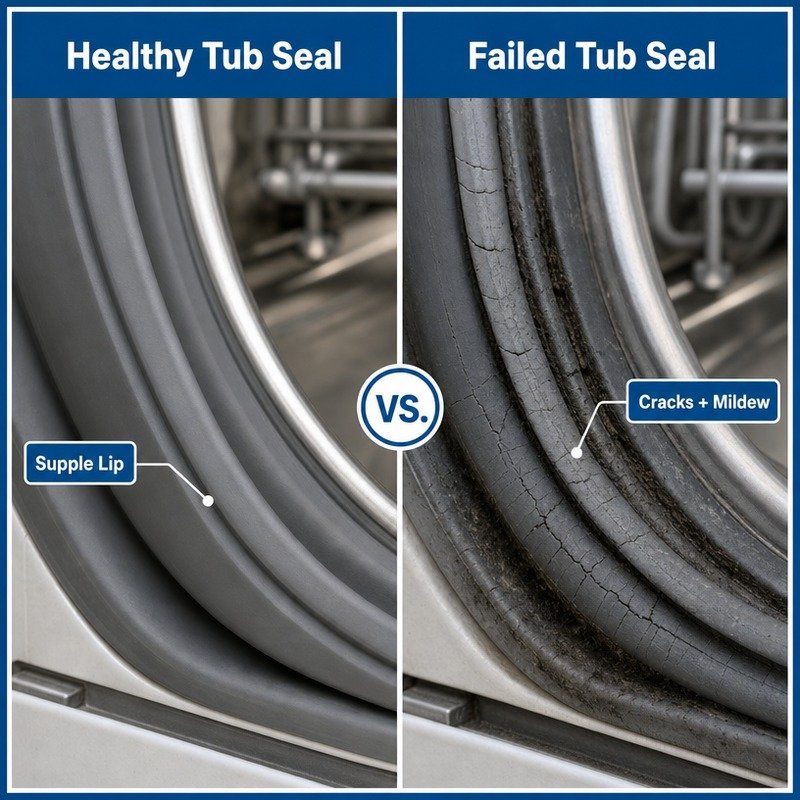
- Mold and odor at the gasket lips: Consumer Reports notes mold can grow on the "lips of the gasket seal" and recommends periodic inspection; independent appliance-care outlets list gasket-fold mildew as a leading cause of dishwasher odor.
- Aged gasket = the No.1 door-leak cause: repair data shows an aged, hardened gasket (hot water + detergent attack + repeated compression) is the leading cause of door leaks, around 70% of cases; another ~15% come from the gasket pulling out of its channel. Fold-trapped mold then accelerates rubber breakdown—a "leaks more as it ages" loop.
- Reliability pressure is rising, not falling: tighter energy-label thresholds and longer mandatory spare-part windows mean a single seal-related failure now carries a larger warranty, compliance and reputational footprint than a decade ago—so getting the seal right early is far cheaper than fixing it later.
3. EU Ecodesign 2019/2022 and US Efficiency Rules for Dishwasher Door Seals and Hoses
RegulationThe EU's ecodesign framework is turning "seal performance" and "spare-part availability" into mandatory requirements.
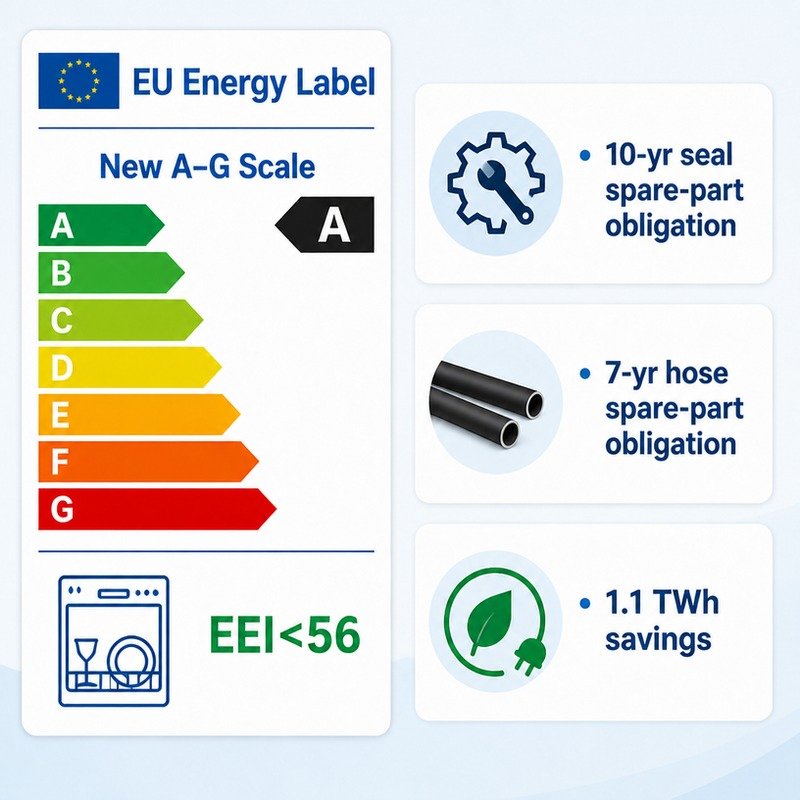
- EU Ecodesign Regulation (EU) 2019/2022: in force since March 2021; the Energy Efficiency Index (EEI) threshold tightened to < 56 from March 2024 (for ≥10 place settings). The EU energy label was rescaled to A–G in March 2021. The European Commission estimates the regulation will save 1.1 TWh of electricity per year by 2030 (equivalent to ~300,000 households, per Emergen Research).
- "Repairability / spare-parts" obligation (the key part): Annex II of the same regulation requires manufacturers, for at least 7 years after the last unit is placed on the market, to make available to professional repairers "piping and related equipment including all hoses, valves, filters and aquastops"; and to both professional repairers and end-users, "door hinge and seals, other seals" for at least 10 years.
- United States: DOE updated efficiency standards in 2021 (≤ 3.5 gallons per cycle); ENERGY STAR certified 2,847 dishwasher models in 2023 (89% of available models); 94% of new homes include a built-in unit.
What this means for manufacturers: seal performance ties directly to two hard constraints—① heat loss / energy compliance: a poor tub seal → heat and steam escape → drying and EEI drop → the machine may miss the high energy label or even fail the ecodesign threshold; ② 10-year spare-part availability: once a model sells well, the supplier must sustain 10-year supply and flexible replenishment, or the OEM faces a delisting/compliance risk.
4. How to Choose a Dishwasher Tub Seal: Material, Dimension and Process
4.1 EPDM vs Silicone: Choosing the Right Gasket Material
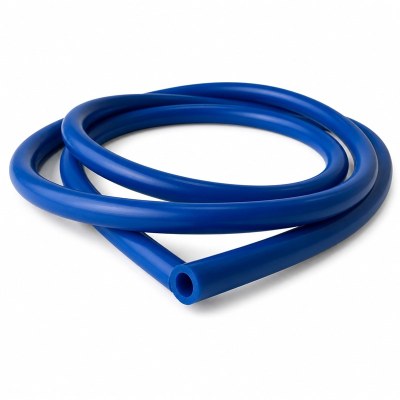
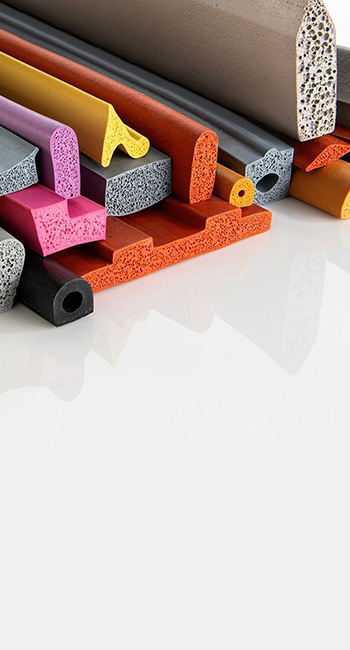
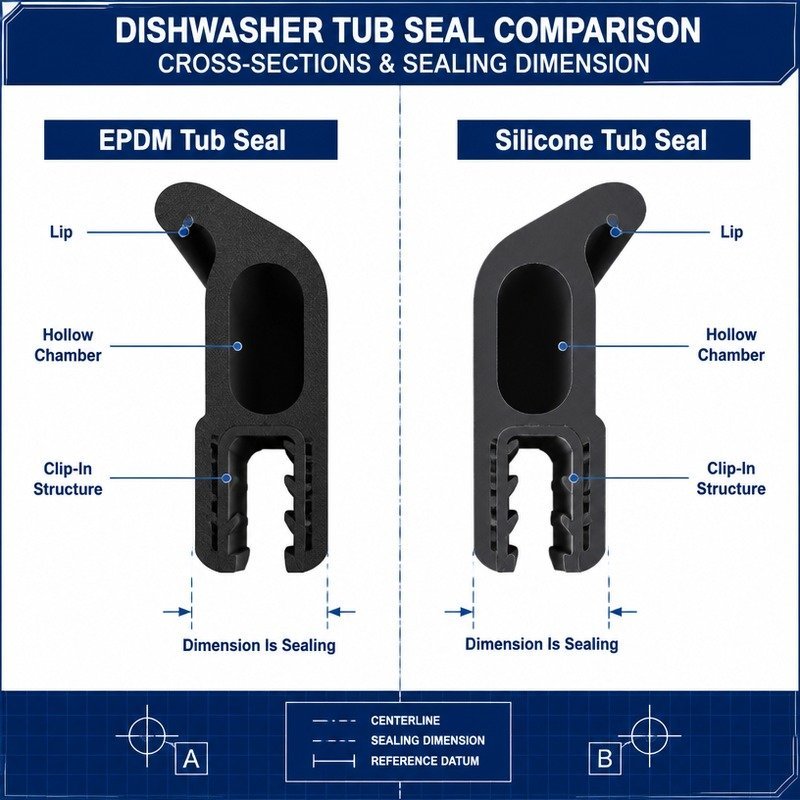
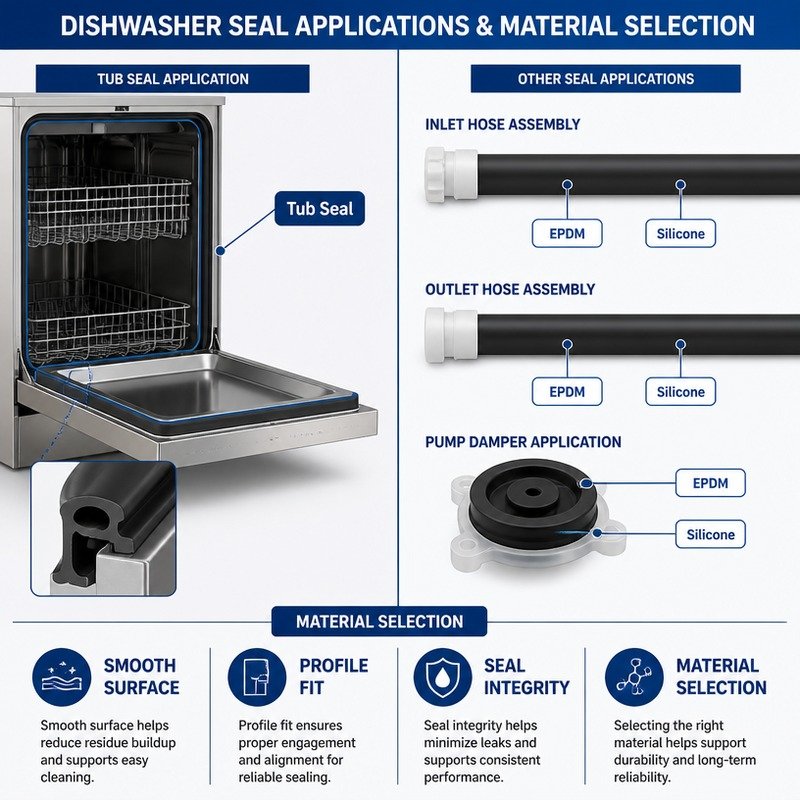
- Mainstream: EPDM (ethylene propylene diene monomer) and silicone rubber (high-end lines). EPDM resists hot water/steam, ozone and weathering, shows low compression set and is cost-effective—the default for tub seals and hoses. Silicone offers higher temperature tolerance, food-contact safety, very low compression set and excellent rebound, typically used in premium lines.
- Red line: latex is not used (not in our production scope, and latex performs poorly in hot-water/aging service); materials must meet REACH / RoHS compliance.
4.2 Tub Seal Cross-Section and Dimensional Tolerance (0.1–0.3 mm)
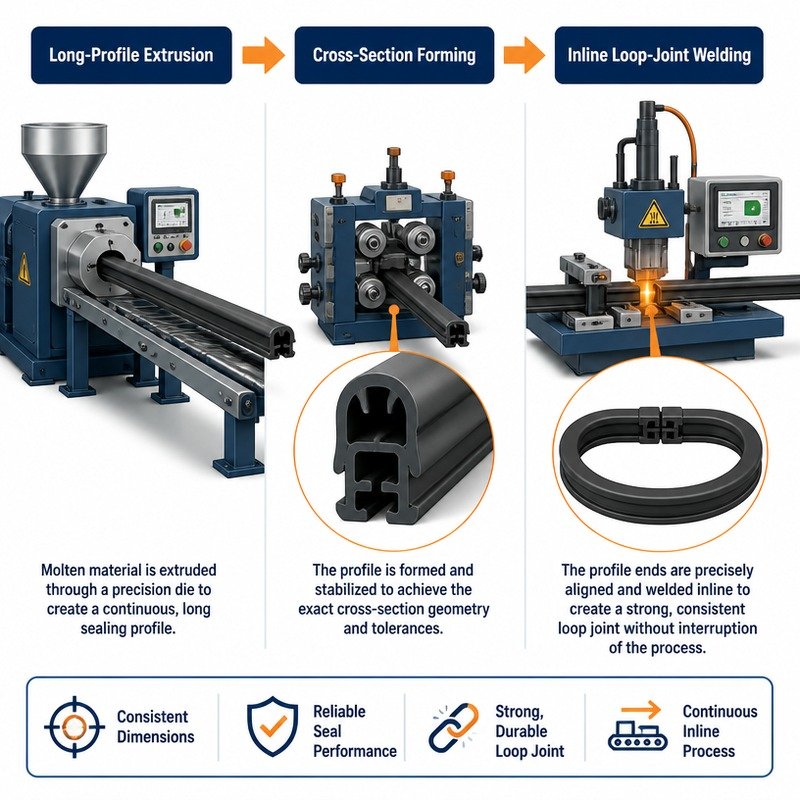
- Tub seals are typically "long extruded profiles with a special cross-section," and are often joined inline into a loop (door gasket loop).
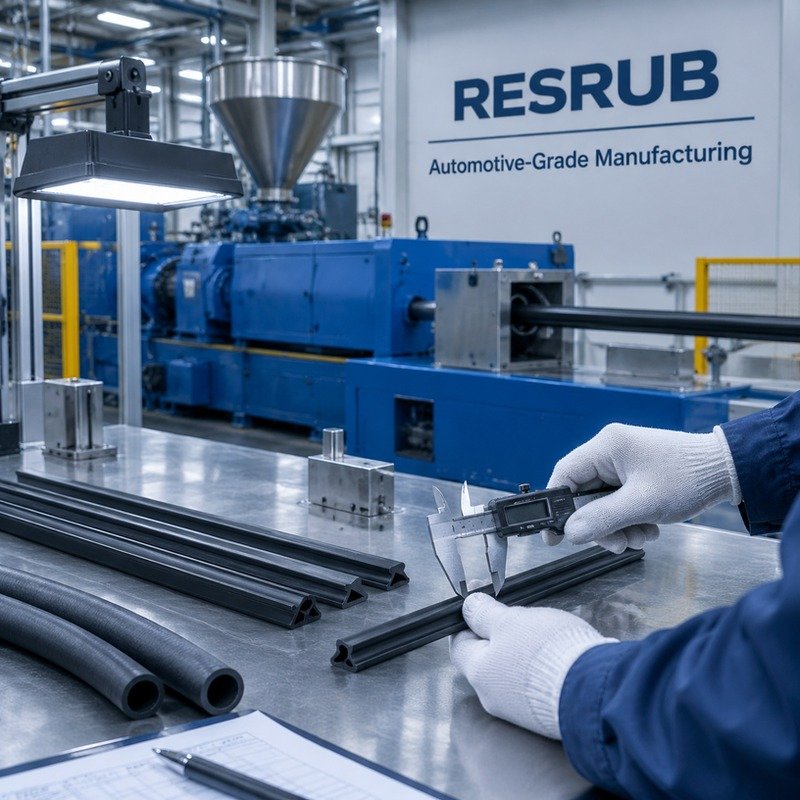
- Cross-section geometry (lip angle, hollow chamber, clip-in structure) determines compression and grip. A dimensional deviation of even 0.1–0.3 mm can cause under-compression (gap leak) or over-compression (accelerated set and early hardening).
4.3 Process & Testing for Seals and Inlet Hoses: Compression Set, Burst Pressure, Hot-Water Aging
- Extrusion stability and dimensional consistency; vulcanization uniformity; inline loop weld strength and flatness.
- Key metrics: compression set (CS), hot-water aging (70°C+ long-term), detergent / ozone resistance, tensile and tear strength.
- Hoses: braided-reinforced EPDM / silicone construction. The industry commonly executes burst-pressure and 70°C+ long-term hot-water-aging tests on inlet/outlet connection hoses (specific ratings are provided per product data sheet).
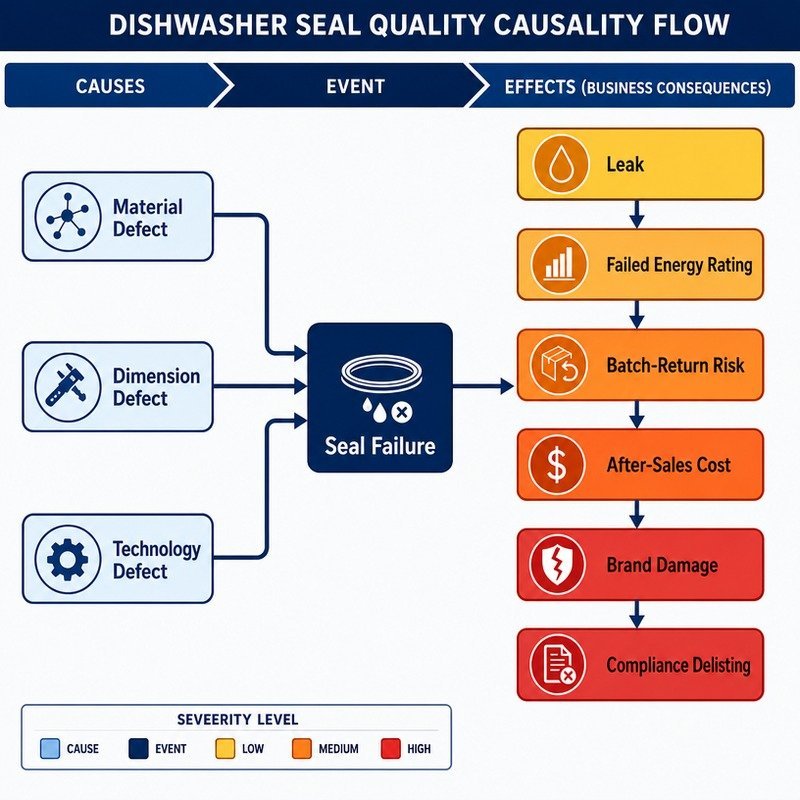
5. The Cost of Poor Dishwasher Seal Selection: Technical, Financial and Compliance Risks
① Technical dimension
Seal failure → leak / heat-steam escape → drying and EEI drop, failing the EU <56 threshold and the A–G label → the product is blocked from the EU market. Hot, humid conditions plus detergent then accelerate material aging and compression set, creating a "leaks more as it ages" vicious cycle.
② Financial dimension
- After-sales and claims: US insurers pay out roughly $12 billion per year for water-damage claims (Worldmetrics). A dishwasher-leak repair averages about $1,200; an appliance leak (dishwasher/washer) often runs $6,000–$8,000 (First & Last Restoration); equipment leaks including dishwashers average $3,800–$6,200 for minor-to-moderate cases (RepairingWaterDamage). And 25% of water-damage claims are denied for "lack of proper maintenance"—meaning the brand often has to bear the cost itself.
- Recall / batch-return risk: when a seal-related defect reaches a product line, the direct costs (field repairs, batch returns, brand damage) can far exceed the price of the seal itself; repair costs can exceed the machine's residual value, forcing premature replacement and warranty erosion.
- Hidden cost: under the 10-year spare-part obligation, a supplier interruption exposes the OEM to delisting risk.
③ Compliance / brand dimension
The EU's 10-year seal obligation and REACH/RoHS compliance are mandatory; non-compliance means delisting, fines and reputation loss. In the EU/US "green deal / energy efficiency" context, the energy rise and recalls caused by seal failure directly hit ESG performance and brand equity.
6. Why RESRUB EPDM and Silicone Seals Solve These Dishwasher Problems
| Industry pain (hazard) | RESRUB corresponding capability | What it solves for the customer |
|---|---|---|
| Material not resistant to hot water/aging; high compression set | EPDM + silicone dual line for seals and hoses; system certifications IATF 16949 + ISO 9001 + ISO 14001; materials compliant with REACH/RoHS; in-house laboratory for full testing of hot-water aging, compression set, ozone, tensile and tear | Turns "is the material right?" from experience into data-backed proof, lowering early-hardening and leak risk |
| Cross-section inaccurate; tolerance out of control causing leak/over-compression | 9 automated extrusion lines + custom special cross-sections; supports inline loop joint (door gasket loop) and precision geometry; 2-hour rapid tooling, free R&D design, custom color | Matches OEM needs for "multi-variety, small-batch, short lead time" and "10-year spare parts" flexible supply; MOQ 1 pc lowers the trial barrier |
| Process unstable; joint/reinforcement unreliable | Automotive supply-chain heritage (BYD / Changan / Changan Ford / Yutong) reliability flowing into appliance seals; liquid-cooling hose evaporation rate as low as 0.2% demonstrates material/process control; medium-fiber reinforced line + 10 automated braiders support stable braided-reinforced hose manufacturing | Improves consistency and long-term reliability; supports dishwasher inlet/outlet hose assemblies / pump dampers for leak-proof and hot-water-aging resistance |
| Supplier interruption; 10-year parts unsecured | Automotive-grade system + flexible capacity, supporting long-term stable supply and rapid replenishment | Meets EU 10-year seal / 7-year hose compliance, avoiding delisting risk |
7. Dishwasher Tub Seal Selection Checklist for Appliance Manufacturers
- Has the material been aging-validated for 70°C+ hot water and detergent? Is there a third-party test report?
- Is the cross-section geometry simulated/measured for compression; is tolerance held within 0.1–0.3 mm?
- Are compression set (CS), burst pressure (hoses), ozone and other test data available?
- Can the supplier provide IATF / ISO system certification and REACH/RoHS compliance?
- Does it support small-batch trials + long-term (10-year) stable supply and rapid reorder?
- Does it have inline loop-joint and special cross-section customization capability?
Conclusion
The dishwasher tub seal and inlet/outlet hoses are "small parts with big responsibility." Under the EU's energy-efficiency rules and the rising "right to repair" trend, the seal has been promoted from a hidden consumable to a compliance- and brand-critical variable. Choosing a partner with material systems, dimensional precision, process depth and flexible supply is the precondition for an OEM to convert "leak risk" into a "reliability selling point." RESRUB (Xingfeiyu) is ready to be your strategic seal partner, with automotive-grade systems and 10-year supply elasticity.
Materials, Process & Service Capabilities — EPDM, silicone and custom extrusion.
EPDM & Silicone Seal Products — browse the catalog.
Custom Rubber Solutions — from drawing to sample.
PC Liquid Cooling Tube Solutions — related extrusion expertise.
Contact RESRUB — talk to our sealing engineers.
References / Data Sources (actual articles)
- Commission Regulation (EU) 2019/2022 — Ecodesign requirements for household dishwashers (EEI <56 from 2024; 10-yr seal / 7-yr hose spare parts). EUR-Lex / legislation.gov.uk. https://data.europa.eu/eli/reg/2019/2022/oj/eng
- Annex II Spare-parts availability (door seals 10 yr; hoses/valves/filters 7 yr). Swedish Energy Agency PDF. energimyndigheten.se (Annex II)
- Consumer Reports — "How to Keep Your Dishwasher From Smelling" (gasket mold/mildew). consumerreports.org
- Emergen Research — Residential Dishwasher Market (US 75% penetration; EU 29.7% share, CAGR 4.8%; 1.1 TWh savings). emergenresearch.com
- Axis Intelligence — US RECS 2024: dishwasher 75.0% (99.47M homes). axis-intelligence.com
- Market Data Forecast — Europe Dishwasher Market (FR 62% / IT 58% / UK 52% / ES 47%, 2024). marketdataforecast.com
- Worldmetrics — Water Damage Statistics 2026 (dishwasher leak ≈$1,200; US insurers ≈$12B/yr; 25% denied). worldmetrics.org
- First & Last Restoration — avg water-damage payout $11k–14k; appliance leak $6k–8k. firstandlastrestoration.com
- RepairingWaterDamage — appliance leak payout $3,800 (ACV) / $6,200 (RC). repairingwaterdamage.com
- Heima / ApplianceCareHub — door gasket as most common failure point (~70% wear; mold in folds). heima.com
src will be replaced with TradeW CDN URLs through the blog-publisher workflow.