












EPDM Rubber Hose: The Complete Guide - What It Is, What It Is Used For, and EPDM vs NBR vs Silicone
EPDM rubber hose is the quiet workhorse of flexible rubber tubing. It is the black hose on a car's cooling system, the drain line inside a dishwasher, and the water line running through an industrial plant. If you are sourcing hose and keep meeting the same phrase, this guide answers the two questions buyers ask most — what is EPDM hose, and what is EPDM hose used for — then goes further: how to specify size, wall thickness and reinforcement, and how EPDM really compares with NBR and silicone.
Written for procurement engineers, importers and OEM buyers who need to choose a material once and get it right.
What this guide covers:
1. What is EPDM rubber hose? ·
2. How it is made ·
3. Six key properties ·
4. What it is used for
5. EPDM vs NBR vs silicone ·
6. How to choose ·
7. When EPDM is wrong ·
8. FAQ
What Is EPDM Rubber Hose?
EPDM stands for ethylene propylene diene monomer — a synthetic rubber in the M-class (saturated) family. An EPDM hose is a flexible tube extruded from an EPDM compound: EPDM polymer blended with fillers, process oils, activators and a cure system, then vulcanised so the finished wall stays elastic year after year instead of hardening or cracking.
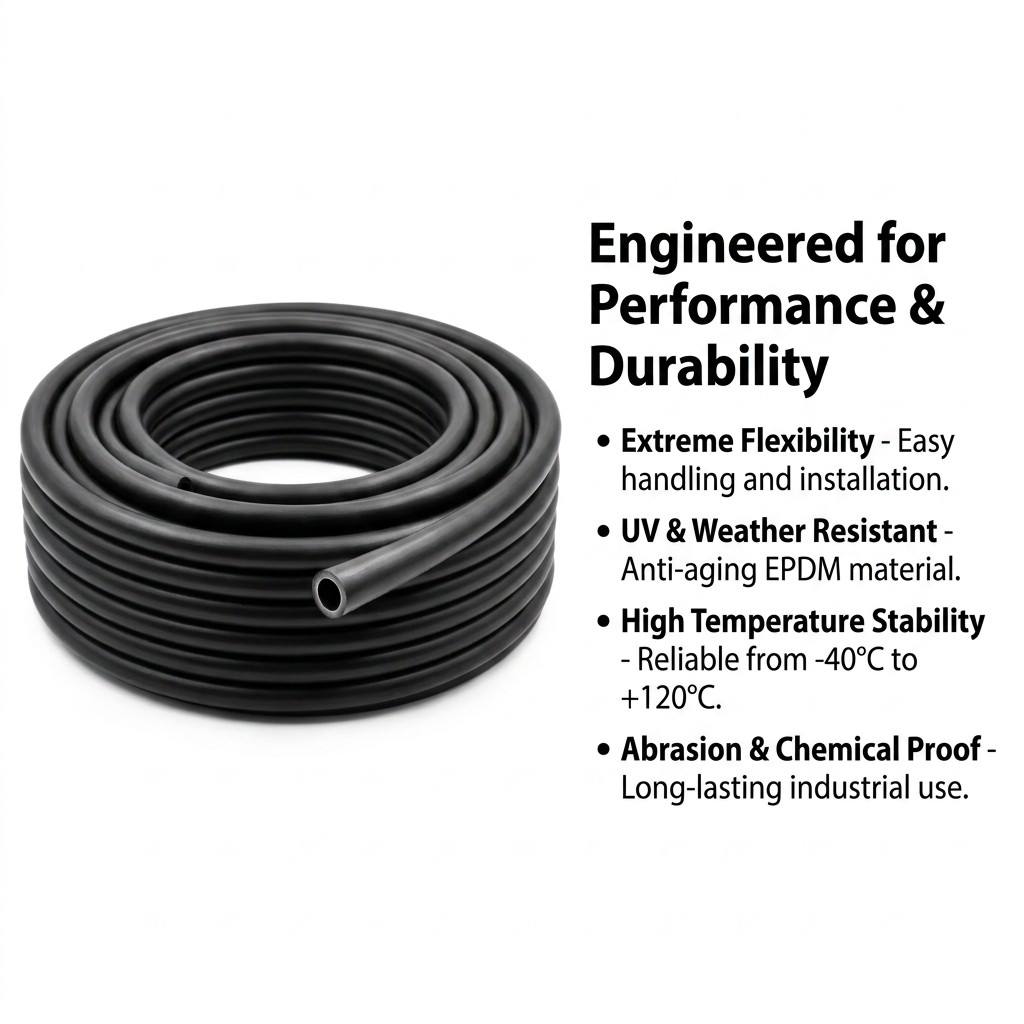
The reason EPDM behaves so differently from natural rubber, SBR or NBR comes down to one structural detail: its polymer backbone is saturated, carrying very few reactive double bonds. Oxygen, ozone and ultraviolet light attack exactly those double bonds — so with almost none to attack, EPDM resists weathering, ozone cracking and UV degradation better than nearly any other general-purpose rubber.
That single property explains why EPDM became the default material for anything that lives outdoors or carries hot water, and why your rooftop HVAC line and your car's coolant hose are almost certainly both EPDM.
Typical EPDM hose specification:
- Hardness: 50–90 Shore A
- Service temperature: −40 °C to +120 °C continuous; many compounds tolerate short excursions to +150 °C
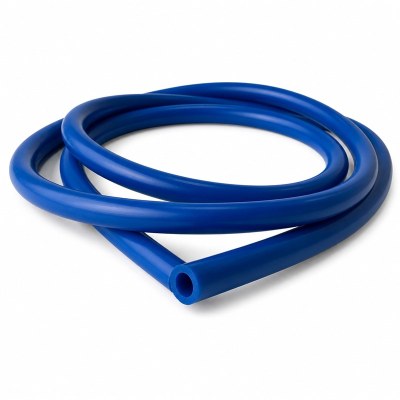
- Colour: black standard; coloured compounds available (grey, blue, red, white)
- Construction: smooth bore or mandrel-wrapped; unreinforced, textile-braided or spiral-reinforced
- Standard bore range at RESRUB: 3 mm to 100 mm inside diameter
How EPDM Hose Is Made: From Polymer to Finished Hose
Understanding the four production steps helps you judge a supplier, because most hose failures trace back to one of them.
Step 1 — Compounding
EPDM polymer is mixed with carbon black or mineral fillers, plasticisers, activators, accelerators and sulphur or peroxide cure agents. The recipe decides hardness, temperature ceiling and fluid resistance. Two suppliers quoting "EPDM" can be quoting very different materials.
Step 2 — Extrusion
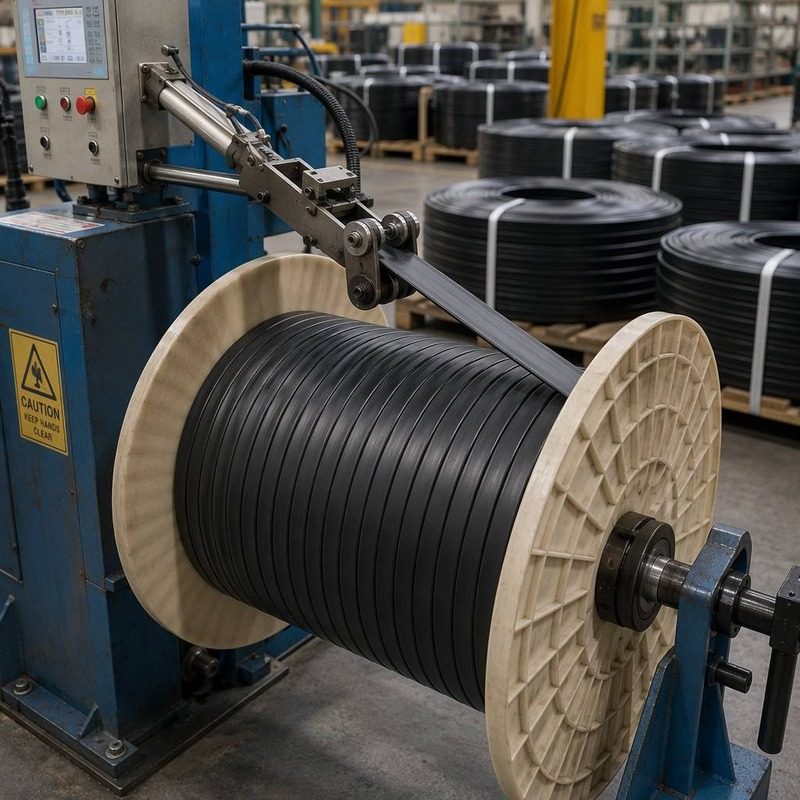
The compound is forced through a die to form a continuous tube. Die and mandrel control the inside diameter, outside diameter and concentricity — the reason wall thickness is uniform on a good hose and lopsided on a bad one.
Step 3 — Vulcanisation
Heat and pressure cross-link the polymer chains, locking in elasticity and converting a soft, sticky extrusion into a durable rubber hose. Under-cured hose feels fine at first and then cracks early in service.
Step 4 — Finishing
Cutting to length, printing, braiding or spiral reinforcement, end fitting, coil-wrapping and inspection. This is where your part number, coil length and custom marking get applied.

Why Engineers Choose EPDM: Six Key Properties
1. Outstanding weather, ozone and UV resistance
Decades of outdoor exposure without the surface cracking that destroys NBR or natural rubber. This is EPDM's signature advantage and the reason it dominates outdoor and automotive applications.
2. Wide, practical temperature window
Comfortable from −40 °C to +120 °C, with many compounds rated to +150 °C for intermittent service. That covers hot water, steam flash, engine bays and cold-climate installations in one material.
3. Excellent water, hot water and steam performance
EPDM resists swelling in water better than almost any other general-purpose rubber, which is why it is used for potable water lines and dishwasher hoses.
4. Good resistance to acids, alkalis and glycols
Mild acids, bases, detergents, water-glycol coolant and many water-based fluids are handled well. This makes EPDM the standard for coolant and wash lines.
5. Strong electrical insulation
High dielectric strength and low water absorption suit EPDM for cable protection and insulated conduit, not just fluid transfer.
6. Lower cost than silicone and FKM
For the large segment of applications that do not need extreme temperature or chemical resistance, EPDM delivers most of the performance at a fraction of the material cost.
What Is EPDM Hose Used For? Six Main Applications
This is the question most buyers type into a search bar, so here is the direct answer: EPDM hose is used wherever a flexible line must carry water, coolant, air or mild chemicals while surviving weather, heat and time. In practice that means six application families.
1. Automotive cooling, heater and vacuum lines
Radiator and heater hose, coolant bypass lines, EV battery and motor cooling loops, windscreen washer and vacuum hose. EPDM holds up to glycol coolant and the heat cycling of an engine bay; automotive grades are commonly specified to SAE J20R1/R2/R3 or OEM drawings.
2. Household and commercial appliances
Dishwasher drain and inlet hose, washing machine lines, water filter and coffee machine tubing. Here EPDM's resistance to hot detergent water matters more than anything else.
See RESRUB EPDM Hose product range →
3. Industrial water, air and coolant transfer
Coolant return lines, pneumatic air hose, low-pressure hydraulic return, chemical dosing lines, agricultural and machine wash-down hose. Reinforced EPDM constructions handle higher working pressures and mechanical abuse.
4. PC liquid cooling and data-centre loops
Custom EPDM and silicone tubing for gaming PC loops, server rack cooling and liquid-immersion infrastructure — chosen for long-term stability, low plasticiser leaching and clean appearance.
PC liquid cooling tube solutions →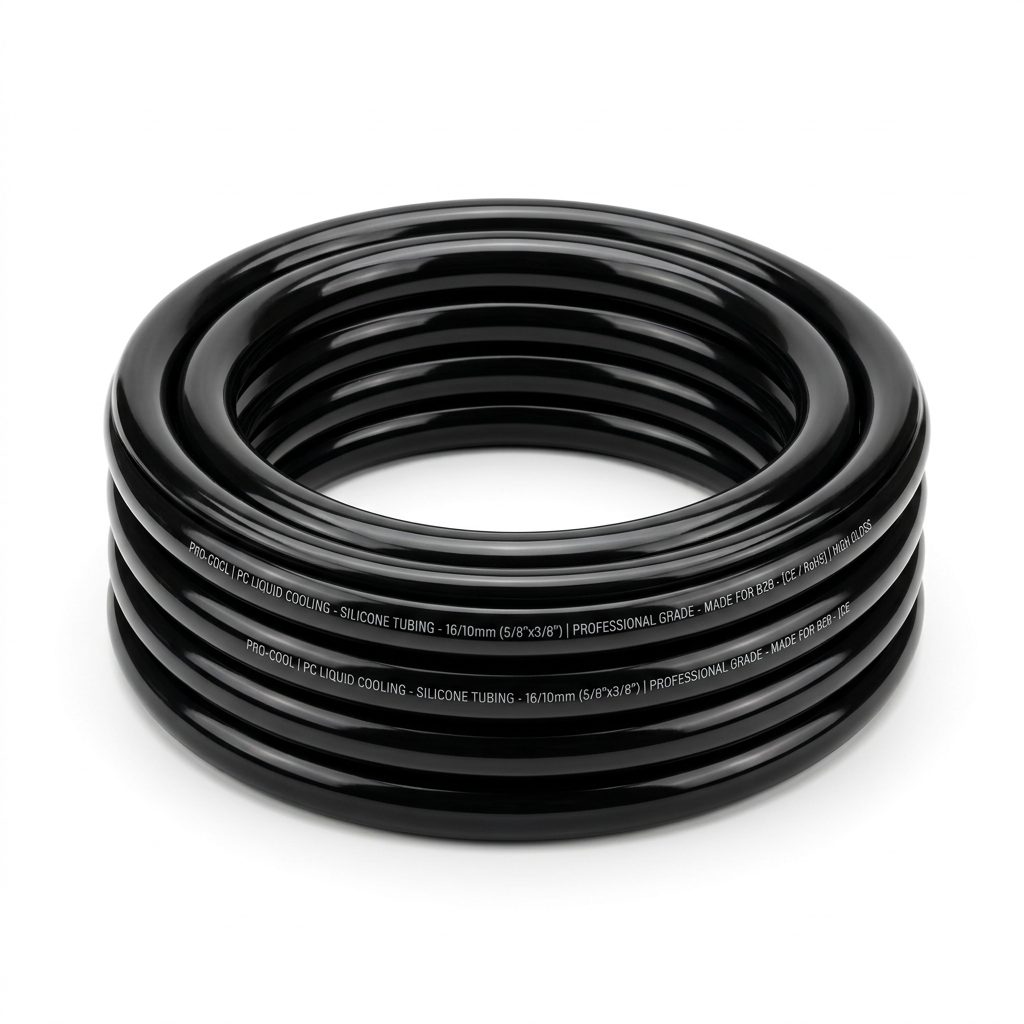
5. Solar, HVAC and heat pump systems
Solar thermal collector lines, heat pump and chiller hose, condensate drain lines, rooftop HVAC connections. Outdoor UV and ozone exposure is exactly where EPDM outlasts the alternatives.
6. Food and potable water grades
EPDM compounds formulated to FDA 21 CFR 177.2600 and NSF/ANSI 61 are used for drinking water lines, beverage transfer and food processing — the key requirement is a peroxide-cured, low-extraction compound rather than a general-purpose one.

EPDM vs NBR vs Silicone Hose: Which Rubber Hose Do You Need?
EPDM is the best all-round outdoor and hot-water material, but it is not universal. If your line carries oil, fuel or grease, EPDM is the wrong answer — that is NBR territory. If you need sustained high temperature or food-grade purity, silicone wins. The table below is the fastest way to decide.
| Property | EPDM | NBR (Nitrile) | Silicone |
|---|---|---|---|
| Weather / ozone / UV | Excellent | Poor — cracks outdoors | Excellent |
| Oil, fuel and grease | Poor — swells | Excellent | Fair |
| Water and hot water | Excellent | Good | Good |
| Service temperature | −40 to +120 °C | −30 to +100 °C | −60 to +200 °C |
| Steam resistance | Very good | Fair | Good |
| Flexibility at low temperature | Good | Fair | Excellent |
| Food / potable water grades | Available (FDA, NSF-61) | Limited | Excellent (platinum-cured) |
| Mechanical tear strength | Good | Very good | Fair |
| Relative cost | Low | Low–medium | High |
Quick pick: carrying water, coolant, air or steam outdoors → EPDM. Carrying oil, fuel, hydraulic or lubricant → NBR. Running above +120 °C, needing extreme flexibility in the cold, or requiring food-grade purity → silicone.
Want the material-by-material breakdown instead? Compare the EPDM Hose and NBR Hose product ranges side by side.

How to Choose EPDM Hose: Size, Wall Thickness, Reinforcement
Once EPDM is the right material, four decisions define the part you receive.
Step 1 — Fix the inside diameter first
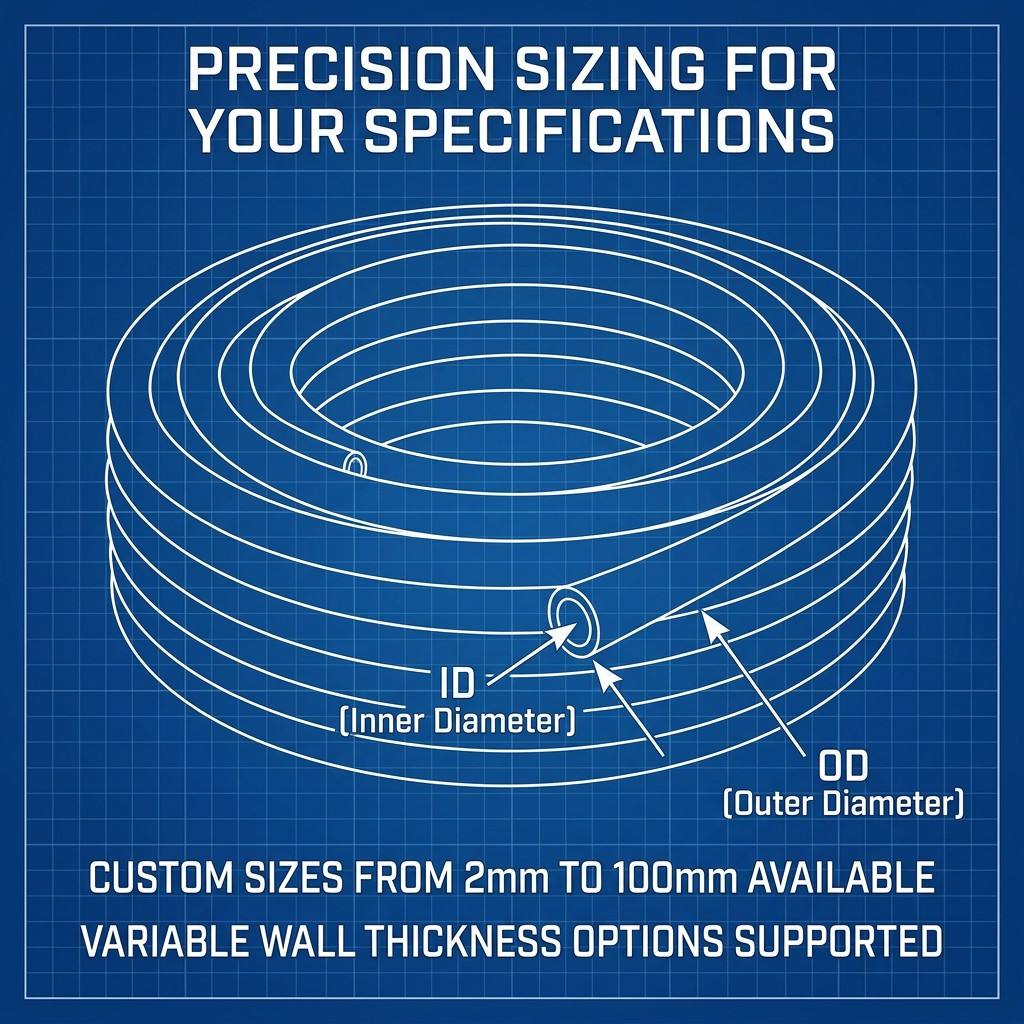
Inside diameter sets flow; outside diameter sets whether it fits your clamp and clearance. Always specify both, plus a tolerance. Undersized ID throttles flow and drives pump load; oversized ID wastes material and space.
Step 2 — Match wall thickness to working pressure
Thinner walls flex more easily and cost less; thicker walls resist higher pressure, collapse and abrasion. For gravity drain and low-pressure water, a thin wall is right. For pumped or reinforced pressure lines, wall thickness is the main variable you control.
Step 3 — Decide on reinforcement
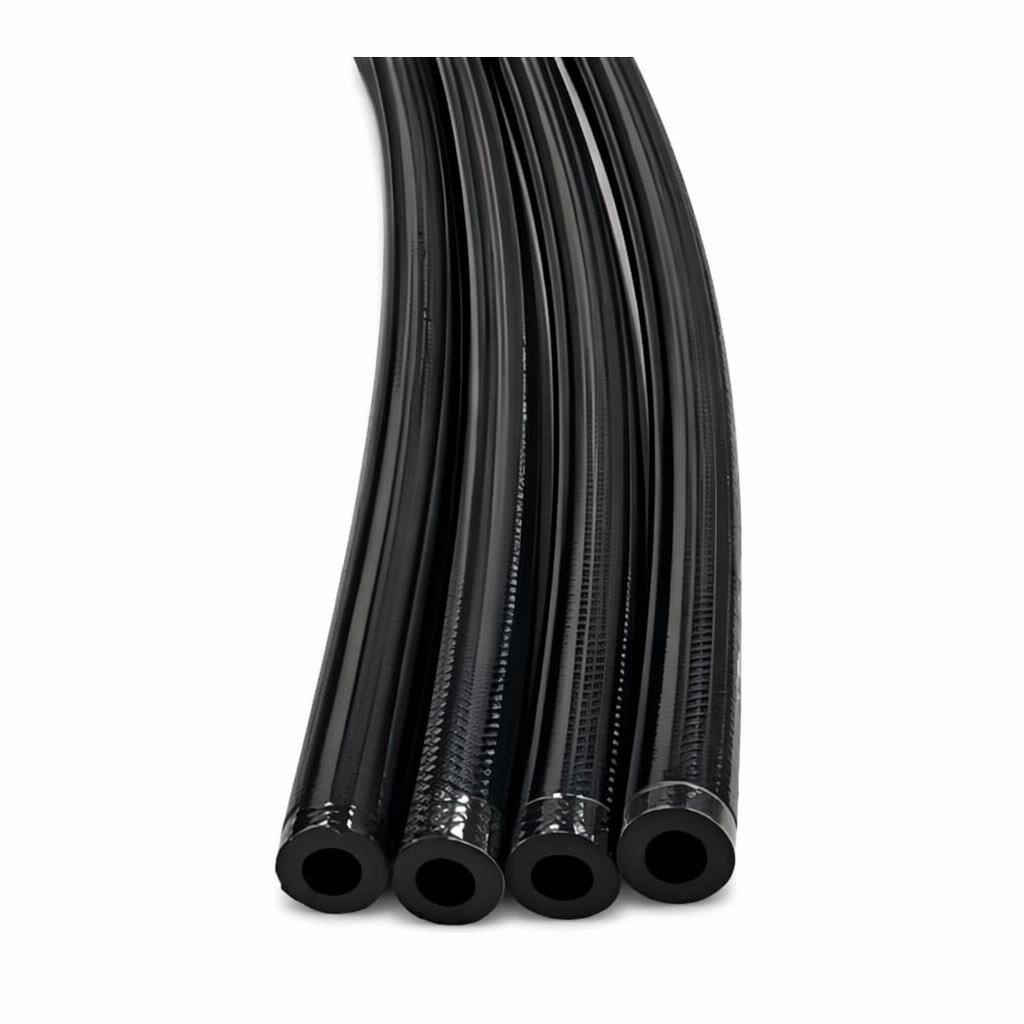
Unreinforced EPDM suits low-pressure and drain duty. Textile braiding adds burst pressure with moderate flexibility. Spiral (helix) reinforcement resists vacuum collapse — the standard choice for suction lines and kinked engine-bay routing.
Step 4 — Confirm the medium and temperature together
Check fluid, concentration and both continuous and peak temperature. A hose can pass a fluid test at room temperature and still fail at +110 °C.
When EPDM Is the Wrong Choice
Knowing the failure modes prevents returns. EPDM performs poorly with:
- Petroleum oils, fuels and greases — EPDM swells badly; specify NBR instead
- Aromatic and chlorinated solvents — benzene, toluene, xylene and similar
- Ketones, esters and ethers — acetone, MEK, ethyl acetate
- Concentrated oxidising acids and some industrial solvents
- Sustained service above roughly +150 °C — move to silicone
- High-abrasion slurry duty — where tear strength, not weather resistance, governs life
For oil and fuel duty, NBR hose is the correct specification. For saturated high temperature, silicone hose. For a mixed oil-plus-high-temperature duty, FKM (Viton) is usually the only material that survives both.
EPDM Rubber Hose: Frequently Asked Questions
What does EPDM stand for?
EPDM stands for ethylene propylene diene monomer. It is a saturated M-class synthetic rubber, and saturation is what gives it exceptional resistance to ozone, UV light and weathering.
What is EPDM hose used for?
EPDM hose is used for automotive cooling and heater lines, appliance water and drain hose, industrial water, air and coolant transfer, PC liquid cooling loops, solar and HVAC connections, and FDA or NSF-61 grade food and potable water lines.
What is the temperature range of EPDM hose?
Typically −40 °C to +120 °C continuous service. Many compounds accept short excursions to +150 °C. For sustained operation above +150 °C, specify silicone hose instead.
Can EPDM hose carry oil or fuel?
No. EPDM is not oil resistant and will swell and degrade in contact with petroleum oils, fuels and greases. Use NBR (nitrile) hose for oil and fuel, or FKM for combined oil and high-temperature duty.
Which is better for a coolant hose, EPDM or silicone?
Both work. EPDM is the lower-cost, longer-established choice for OEM coolant lines and handles glycol coolant well. Silicone costs more but tolerates higher peaks and stays flexible in extreme cold, which is why performance and motorsport builds often use silicone.
Is EPDM hose food grade?
Only specific compounds. Food and potable water duty requires an EPDM formulation cured to comply with FDA 21 CFR 177.2600 or NSF/ANSI 61, using low-extraction raw materials. Always state the standard you need when requesting a quote.
How long does EPDM hose last outdoors?
Because of its saturated backbone, EPDM resists ozone and UV degradation far longer than NBR, SBR or natural rubber. Real service life depends on temperature, medium and pressure cycling, so specify the duty cycle with your supplier rather than assuming a fixed number of years.
Custom EPDM Rubber Hose from RESRUB
RESRUB manufactures EPDM, silicone and NBR rubber hose and extruded rubber profiles for OEM, ODM and private-label programmes. Because we compound, extrude and vulcanise in house, the material recipe can be tuned to your fluid, temperature and standard rather than picked off a shelf.
What you can specify:
- Material: EPDM, silicone, NBR, PVC, TPV and TPE compounds
- Inside and outside diameter with tolerance, wall thickness
- Construction: smooth bore, braided or spiral reinforced
- Hardness from 50 to 90 Shore A; black or custom colours
- FDA / NSF-61 food and potable water grades on request
- Cut lengths, coil lengths, printing and private-label packaging
Send us your drawing, fluid, temperature and annual volume — we reply within 24 hours with a sample plan and price. Contact RESRUB →
Customised rubber solutions · Materials and process capabilities · Browse EPDM products