












Understanding Rubber Tubing Technology for Liquids, Gases, and Solids Transfer
As an expert in fluid transfer systems, I'm here to illuminate the world of rubber tubing technology, an indispensable component in countless industrial, agricultural, and domestic applications. Understanding which type of rubber tubing is best suited for liquids, gases, or solids transfer is crucial for performance and safety. Let's explore this essential technology together.
Key Takeaways
This article provides a comprehensive look into the world of rubber tubing, a component that is crucial in a vast number of applications. Here are the key points we will cover:
Core Concepts: We'll begin by defining what rubber tubing is, exploring its fundamental purpose as a flexible conduit for transferring materials like liquids, gases, and solids. You'll also learn about its engineered structure, which often consists of multiple layers—an inner tube, a reinforcement layer, and an outer cover—each designed for specific performance characteristics.
Material Diversity: The guide will delve into the wide range of rubber materials used for tubing, from natural rubber to a host of synthetics like EPDM, Nitrile, Silicone, and Viton. Each material possesses unique properties regarding temperature resistance, chemical compatibility, flexibility, and durability, making material selection a critical decision.
Significant Advantages: We will highlight the primary benefits of using rubber tubing, such as its exceptional flexibility, durability against abrasion and tearing, resilience to temperature extremes, and ability to absorb vibrations. These advantages often make it a superior choice over rigid pipes or other types of flexible conduits.
Real-World Applications: The versatility of rubber tubing will be demonstrated through its widespread use across various sectors. From critical automotive systems like fuel and coolant lines to sterile medical applications and food and beverage processing, rubber tubing is a silent workhorse in modern technology.
Practical Guidance: To make this knowledge actionable, we'll provide answers to frequently asked questions. This includes how to distinguish between a "tube" and a "hose," factors to consider when selecting the right tubing for your needs, and signs of wear to watch for to ensure safety and prevent system failure.
By the end of this article, you will have a thorough understanding of rubber tubing technology, empowering you to make informed decisions for any application, ensuring efficiency, safety, and reliability.
Understanding Rubber Tubing: Its Core Structure and Purpose
At first glance, a rubber tube may seem like a simple component. However, this unassuming product is a highly engineered solution, vital for the safe and efficient transfer of a vast array of substances. Its design and material composition are the results of extensive material science and engineering, tailored to meet the rigorous demands of countless applications.
What is Rubber Tubing?
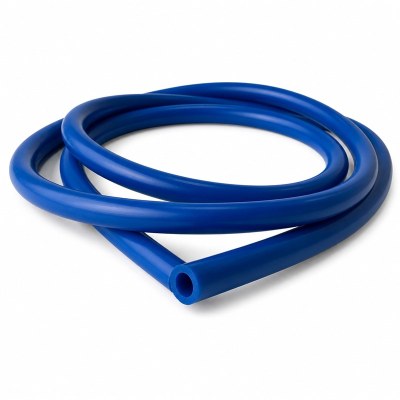
Rubber tubing is a hollow, cylindrical material made from either natural or synthetic rubber, designed to transport and circulate liquids and gases. Also known as a rubber hose or piping, it is valued for its inherent flexibility, durability, and resilience. Unlike rigid pipes made of metal or plastic, rubber tubing's elasticity allows it to be routed around obstacles, absorb vibrations, and accommodate movement between components without failing.
This combination of properties makes rubber tubing an essential component across a spectrum of environments, from complex industrial machinery and automotive engines to sterile medical devices and everyday household appliances. Its primary function is to provide a reliable and leak-proof conduit, ensuring that materials—whether it's fuel in a car, a sterile solution in a hospital, or water in a garden—are moved from one point to another safely and efficiently.
The Engineered Structure of Rubber Tubing
While the simplest form of tubing might be a single-layer extrusion, most industrial rubber hoses are complex, multi-layered structures engineered for performance and safety. The anatomy of a typical high-performance rubber hose consists of three distinct layers, each with a specific role
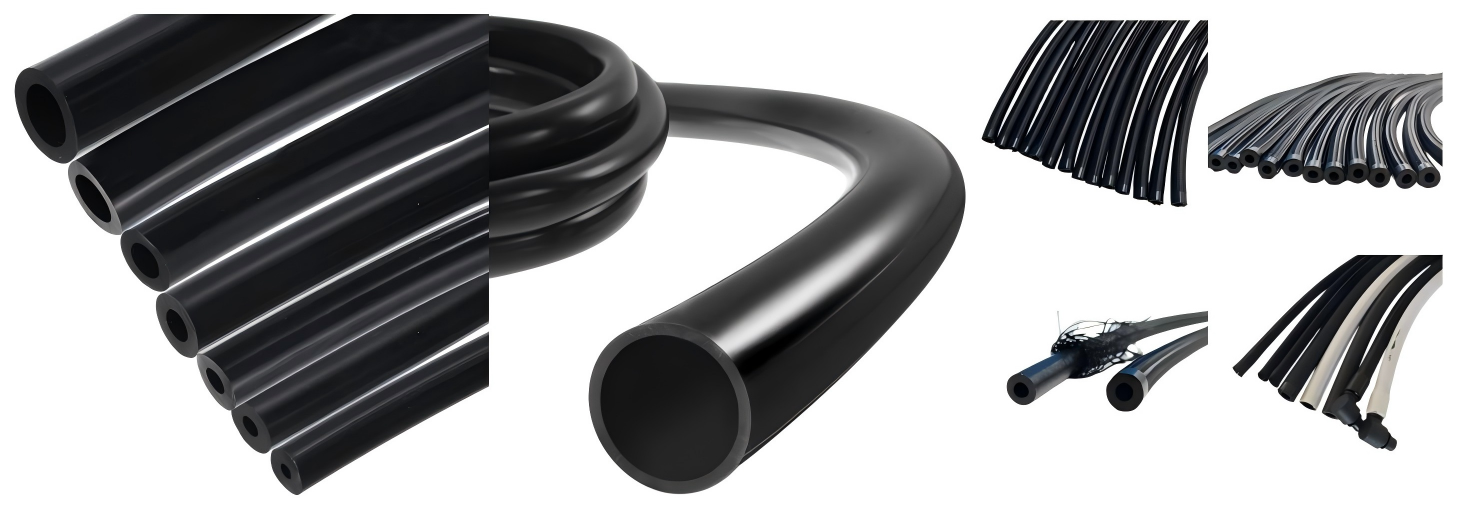
The Inner Tube (or Core): This is the innermost layer that comes into direct contact with the material being transferred. Its primary role is to contain the fluid, gas, or solid and resist any chemical or abrasive effects. The material for this layer is chosen based on its compatibility with the substance it will carry. For example, a tube designed for fuel transfer will use a material that doesn't degrade when exposed to petroleum products.
The Reinforcement Layer (or Carcass): Wrapped around the inner tube, this layer provides the hose with its strength and pressure resistance. It is what prevents the tube from bursting under high pressure or collapsing under a vacuum. Materials for reinforcement can include braided, spiraled, or knitted synthetic fibers (like polyester), steel wire, or other textiles. The type and number of reinforcement layers determine the hose's pressure rating.
The Outer Cover: This is the outermost layer, designed to protect the inner components from the external environment. The cover shields the reinforcement layer from abrasion, weathering, ozone, UV radiation, chemicals, and physical damage. It can also be color-coded for easy identification or formulated to be flame-retardant, depending on the application's safety requirements.
This composite construction allows rubber tubing to achieve a balance of flexibility, strength, and durability that would be impossible with a single material.
Diverse Rubber Tubing Types for Specialized Needs
The effectiveness of rubber tubing hinges on selecting the right material for the job. The choice is vast, with both natural rubber and a wide array of synthetic elastomers available, each offering a unique profile of properties. The selection process involves a careful analysis of the application's demands, including the temperature, pressure, and chemical environment.
By Application and Material
Rubber tubing materials are broadly classified as either natural or synthetic. Natural rubber, derived from the latex of trees, is known for its excellent elasticity and tear resistance but is vulnerable to oils and ozone. Synthetic rubbers, primarily derived from petrochemicals, were developed to overcome these limitations and provide enhanced properties for specific applications.
Below is a detailed comparison of common rubber tubing materials and their typical applications:
| Material Type | Common Names | Key Properties | Common Applications & Industries |
|---|---|---|---|
| Natural Rubber | Gum Rubber, Latex | High elasticity, excellent tensile strength, good abrasion resistance. Poor resistance to oils, fuel, and ozone. | Laboratory use, peristaltic pumps, applications requiring high flexibility. |
| EPDM | Ethylene Propylene Diene Monomer | Excellent resistance to weather, ozone, UV, heat, and steam. Good chemical resistance. Not suitable for petroleum products. | Automotive cooling systems, outdoor water and drainage lines, HVAC tubing, solar panel heat collectors. |
| Nitrile (NBR) | Buna-N, Nitrile Rubber | Superior resistance to petroleum-based oils, fuels, and greases. Good abrasion and tear resistance. | Fuel lines, hydraulic hoses, oil and gas transfer, automotive seals and gaskets. |
| Silicone | Excellent high- and low-temperature range, very flexible, non-toxic, and odorless. Low tensile strength. | Medical (catheters, drains), food and beverage processing, pharmaceutical, high-temperature seals. | |
| Neoprene | Polychloroprene | Moderate resistance to oils and chemicals, excellent weather and ozone resistance, flame retardant. | Refrigeration hoses, general industrial applications, automotive parts, marine environments. |
| Viton® (FKM) | Fluoroelastomer | Exceptional resistance to high temperatures, chemicals, oils, and fuels. Less flexible than other elastomers, especially at low temperatures. | Aerospace, automotive fuel systems, chemical processing, and applications with aggressive media. |
| Styrene-Butadiene (SBR) | SBR | Good abrasion resistance and tensile strength. A cost-effective alternative to natural rubber, but with lower overall performance. | General-purpose air and water hoses, automotive hydraulic lines where cost is a primary factor. |
| Butyl (IIR) | Very low gas permeability, making it excellent for holding air. Good resistance to heat, weathering, and chemicals. | Inner tubes for tires, air and carbon dioxide transfer hoses, protective linings, shock absorption. |
Specialty Considerations:
- Food & Medical Grade: For applications in food processing, beverage transfer, or healthcare, tubing must meet stringent regulatory standards. Materials like platinum-cured silicone are often used because they are non-toxic, tasteless, odorless, and do not impart any substances into the media being transferred. These products must comply with standards from bodies like the FDA (e.g., 21 CFR 177.2600) and USP (e.g., Class VI), which ensure they are safe for contact with food or human tissue.
- Abrasion Resistance: For transferring solids like grains, powders, or slurries, the inner tube must be highly resistant to abrasion. Materials like natural rubber or specially formulated synthetic compounds are often used for such demanding applications.
The Unbeatable Benefits I Discern in Rubber Tubing Technology
In the world of fluid and gas transfer, options abound—from rigid metal and plastic pipes to various types of flexible conduits. Yet, rubber tubing consistently stands out due to a unique combination of advantages that make it the ideal choice for a multitude of dynamic and demanding applications.
Key Advantages
The inherent properties of elastomers give rubber tubing a distinct edge. Here are the primary benefits that I consistently observe in practice:
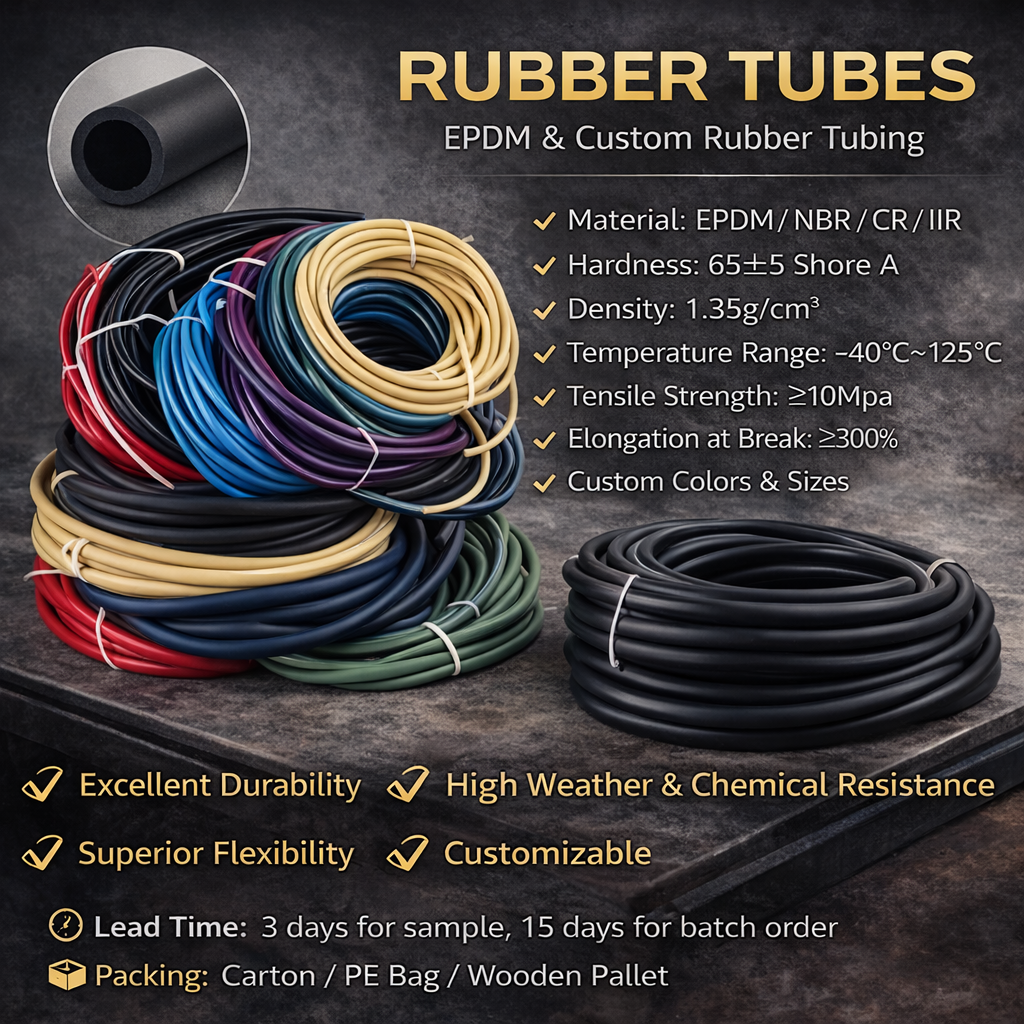
Exceptional Flexibility: This is perhaps the most significant advantage. Rubber tubing can be easily bent and routed around obstacles, making installation in tight or complex spaces far simpler than with rigid piping. This flexibility allows it to absorb movement and misalignment between components, which is critical in machinery and vehicles.
Outstanding Durability and Resilience: Rubber is inherently tough. It resists tearing, cracking, and abrasion, ensuring a long service life even in rugged conditions. Unlike some plastics, natural rubber stays pliable and doesn't become brittle over time. This durability makes it reliable for applications involving constant use and physical stress.
Vibration and Noise Dampening: The elastic nature of rubber is excellent at absorbing vibrations and noise generated by pumps, engines, and other machinery. This not only protects sensitive components from damage caused by vibration but also contributes to a quieter and smoother operating environment. This is a key reason for its extensive use in automotive systems.
Excellent Sealing Capabilities: Rubber's soft and pliable nature allows it to create a tight seal when clamped onto fittings. This significantly reduces the risk of leaks, which is crucial for systems handling hazardous chemicals, high-pressure fluids, or valuable products.
Wide Temperature Range: Different rubber compounds are engineered to perform reliably across a vast spectrum of temperatures. Silicone tubing, for instance, can remain flexible at extremely low temperatures and stable at very high temperatures, a range that many plastics cannot tolerate. EPDM also exhibits excellent performance in both hot and cold conditions.
Chemical and Environmental Resistance: Synthetic rubbers have been developed to handle an extensive list of chemicals, oils, fuels, and solvents. Materials like Viton® offer unparalleled chemical resistance even at elevated temperatures, while EPDM provides exceptional resistance to weathering, ozone, and UV light, making it perfect for outdoor applications.
Cost-Effectiveness: While highly specialized tubing can be expensive, many standard rubber hoses offer an excellent performance-to-cost ratio. Their durability and long service life reduce replacement frequency, and the ease of installation can lower labor costs compared to fabricating and installing rigid pipe systems, leading to a lower total cost of ownership.
Where I See Rubber Tubing in Action: Real-World Applications
Thanks to its versatility and wide range of material options, rubber tubing is a fundamental component woven into the fabric of nearly every major industry. Its adaptability allows it to perform critical functions in environments ranging from the high-pressure, high-temperature world of automotive engines to the sterile, controlled settings of medical facilities.
Broad Application Across Sectors
Rubber tubing's ability to safely and efficiently transport liquids, gases, and even solids makes it an indispensable tool. Here is a look at its application across various key sectors:
Automotive Industry: This is one of the largest consumers of rubber tubing. It's used everywhere in a vehicle, from fuel lines and brake system hoses that must handle high pressure and corrosive fluids, to radiator and heater hoses designed for high-temperature coolants. It also serves in HVAC systems, vacuum lines, and air intake systems, contributing to performance, safety, and comfort.
Medical and Pharmaceutical: In healthcare, hygiene and biocompatibility are paramount. Medical-grade silicone tubing is widely used for fluid transfer in IV administrations, dialysis machines, and surgical drains. It's also integral to peristaltic pumps for precise dosing and in biopharmaceutical processing, where purity must be maintained. These tubes must meet stringent standards like USP Class VI to ensure they are non-toxic and do not react with biological fluids.
Food and Beverage Industry: Tubing used here must be food-grade to ensure it doesn't contaminate the product. It is commonly used for transferring liquids like milk, beer, juice, and water, as well as for cleaning-in-place (CIP) systems that use hot water and chemicals. Silicone and special formulations of EPDM are popular choices, as they are non-toxic and don't impart any taste or odor.
Industrial and Manufacturing: Industrial settings rely on robust hoses for countless processes. This includes transferring chemicals, handling hydraulic fluids for machinery, moving abrasive materials like cement or grain, and providing compressed air for pneumatic tools. The aility to withstand high pressures, temperatures, and aggressive chemicals is critical.
Agriculture: In agriculture, rubber tubing is essential for irrigation systems, distributing water and fertilizers to crops. It is also used on machinery for fuel lines and hydraulic systems, and for transferring materials like grain or feed. Its durability and weather resistance are key advantages in this outdoor environment.
Aerospace: The aerospace industry demands the highest level of reliability. Rubber tubing is used for fuel and hydraulic lines, where it must withstand extreme temperature variations and high pressures while remaining lightweight and durable.
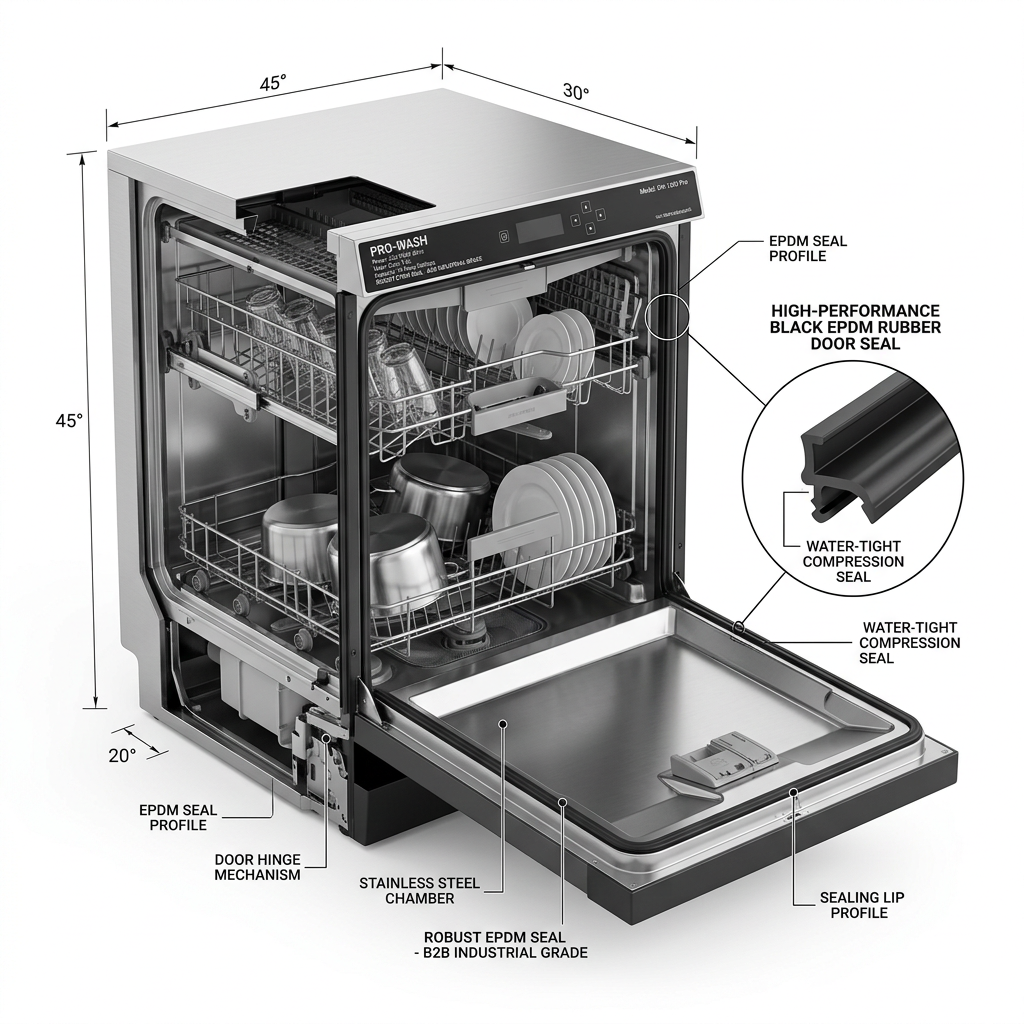
Household and Domestic Use: Even in our homes, rubber tubing is everywhere—from the washing machine and dishwasher hoses to garden hoses and small appliance components.
Frequently Asked Questions (FAQ)
Navigating the specifics of rubber tubing can bring up many practical questions. Here are answers to some of the most common queries to help clarify key concepts and guide your selection process.
What is the technical difference between a "tube" and a "hose"?
While the terms are often used interchangeably in casual conversation, in an industrial context, there is a critical distinction. A tube is typically a single-layer, unreinforced extrusion of material. Because it lacks reinforcement, it is generally used for low-pressure applications, gravity flow, or for structural purposes. A hose, on the other hand, is a more complex, multi-layer structure that includes a reinforcement layer (or "carcass") made of braided or spiraled fibers or wire. This reinforcement gives the hose the strength to handle high pressures, making it suitable for demanding hydraulic and pneumatic systems.
How do I choose the right size of rubber tubing?
Selecting the correct size is crucial for both performance and safety. You need to consider three key dimensions:
- Inside Diameter (ID): This determines the flow capacity. The ID must be large enough to accommodate the required flow rate without causing excessive pressure drops, but not so large that flow becomes inefficient. When using fittings, the ID must match the fitting's barb size for a secure seal.
- Outside Diameter (OD): This is important for ensuring the tube fits within clamps, brackets, or specific routing paths in your system.
- Wall Thickness: This is the difference between the OD and ID and relates to the tube's strength, flexibility, and pressure rating. A thicker wall generally provides higher pressure resistance but may be less flexible.
What are the common signs of rubber hose failure I should watch for?
Regular inspection is key to preventing unexpected leaks or bursts. Look for the following signs of wear and tear:
- Cracking or Hardening: The outer cover may show cracks, especially in areas that are bent or exposed to high heat or ozone. The hose may also feel hard and brittle instead of flexible.
- Blistering or Swelling: Bubbles or soft, swollen spots on the outer cover can indicate that the inner layer has failed and fluid is penetrating the reinforcement layers. This is a sign of an impending burst.
- Kinks or Damage: Kinks can restrict flow and create weak points in the hose wall. Also, look for any cuts, abrasions, or areas where the outer cover has worn away to expose the reinforcement.
- Leaking at the Fittings: Dampness, drips, or signs of corrosion around the clamps or crimped fittings indicate that the seal is compromised. This could be due to improper clamping or the hose material degrading over time.
How should I clean and maintain industrial rubber hoses?
Proper maintenance extends the life of your hoses and ensures operational safety.
- Cleaning: The cleaning method depends on the application. For general-purpose hoses, flushing with water is often sufficient. For food-grade or pharmaceutical applications, follow specific sanitization protocols, which may involve flushing with approved cleaning agents, hot water, or steam. Always ensure the cleaning agents are compatible with the hose's inner tube material.
- Storage: Store hoses in a cool, dark, and dry place away from direct sunlight, electric motors (which produce ozone), and extreme temperatures. Avoid stacking heavy objects on them that could cause kinking or crushing. If possible, store them flat or in large coils rather than hanging them from a single point.
- Inspection: Implement a regular inspection schedule. Check for the signs of failure listed above and replace any hose that appears damaged or excessively worn.
In conclusion, as I've shown, rubber tubing technology is far more intricate and vital than it often appears, offering tailored solutions for nearly every fluid, gas, or solid transfer challenge. The engineering behind its multi-layered structure and the advanced material science that goes into each specific compound are what allow these flexible conduits to perform reliably under extreme pressure, temperature, and chemical exposure.
From the rigorous demands of industry and the critical safety requirements of automotive systems to the sterile needs of healthcare and the simplicity of everyday tasks, the right rubber tubing ensures reliability, efficiency, and safety. Understanding its diverse forms and the importance of matching the material to the mission—whether it's choosing chemical-resistant Viton for aggressive fuels or pure, platinum-cured silicone for medical applications—empowers engineers, technicians, and even DIY enthusiasts to build better, safer, and more durable systems.