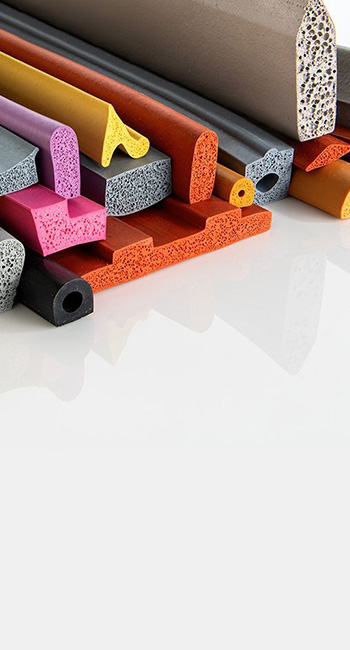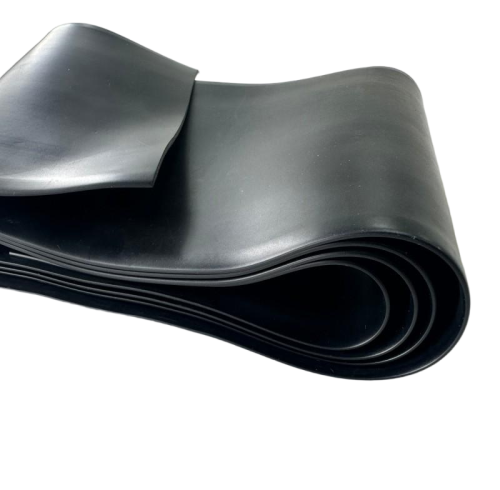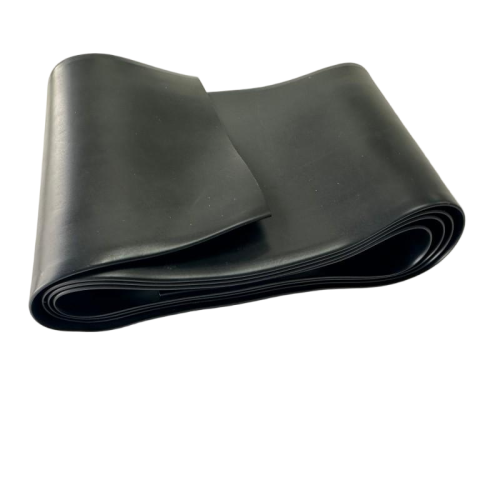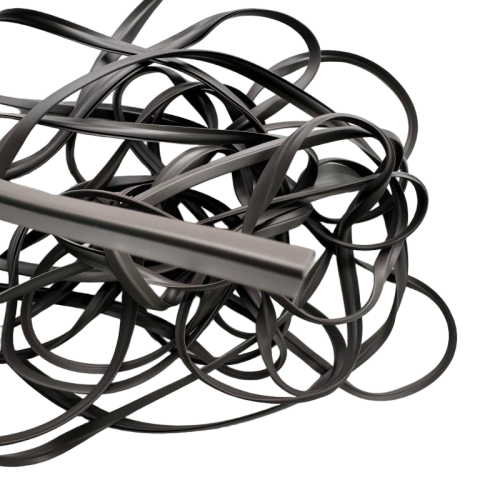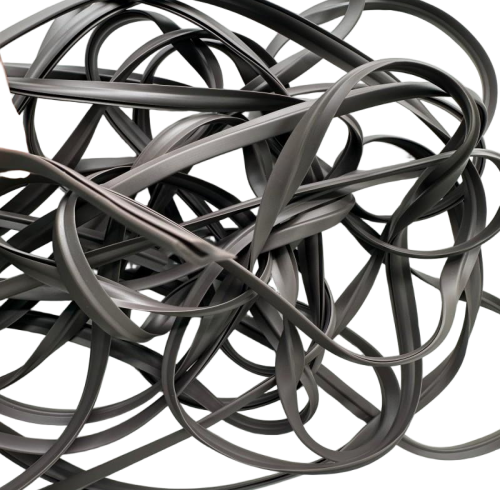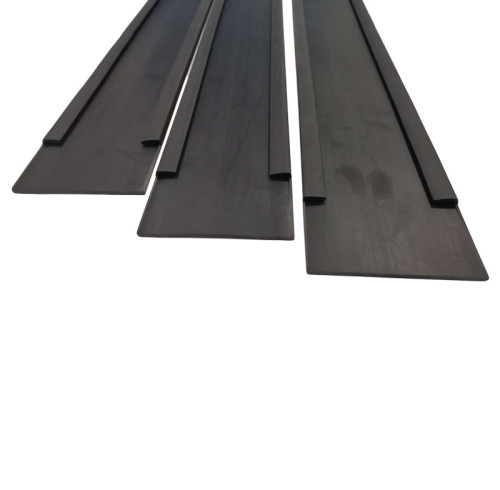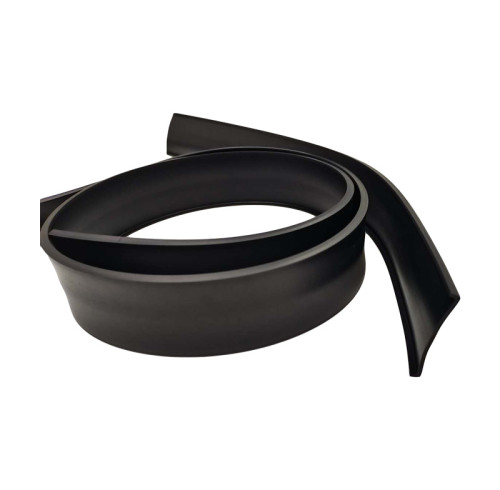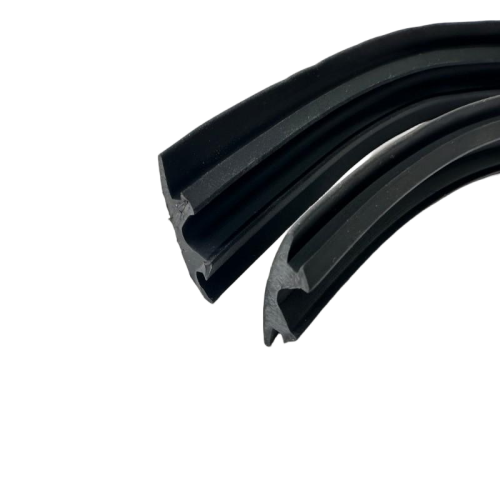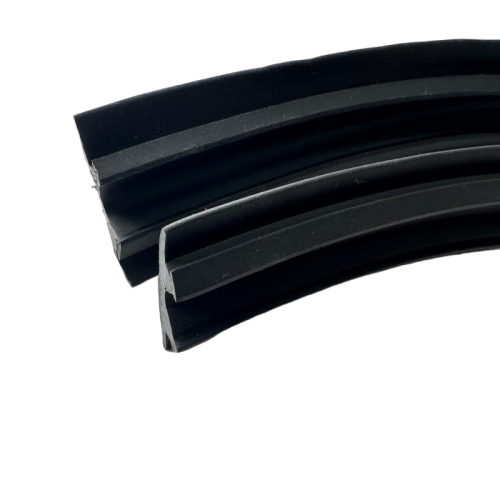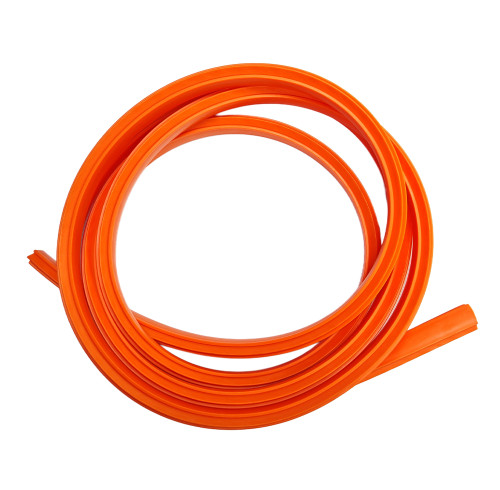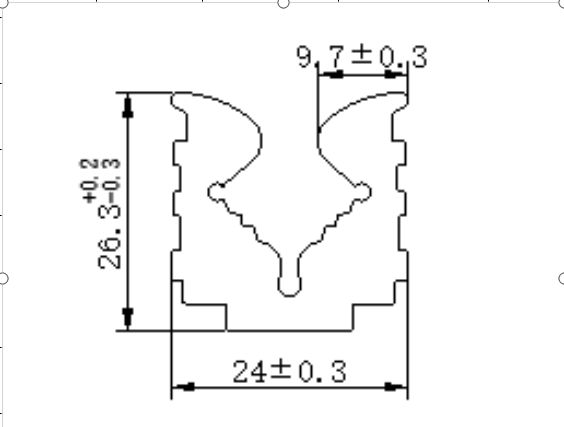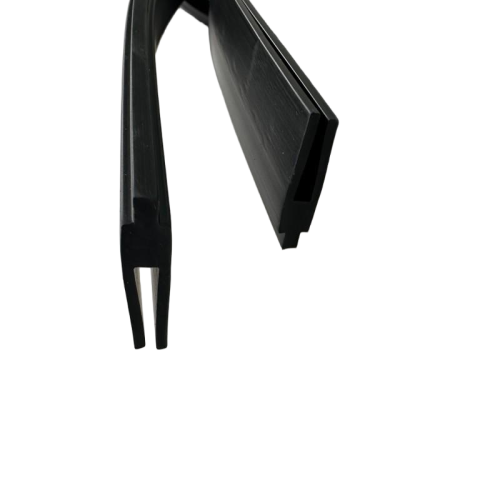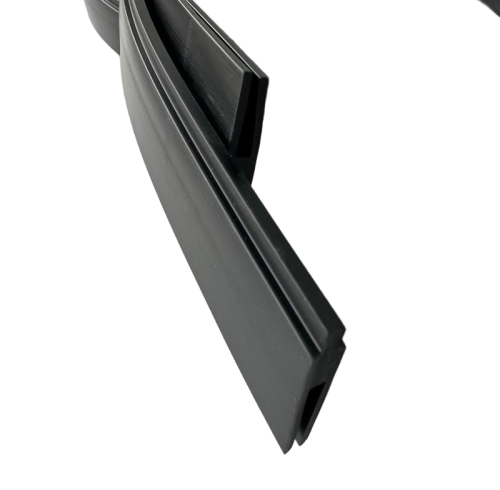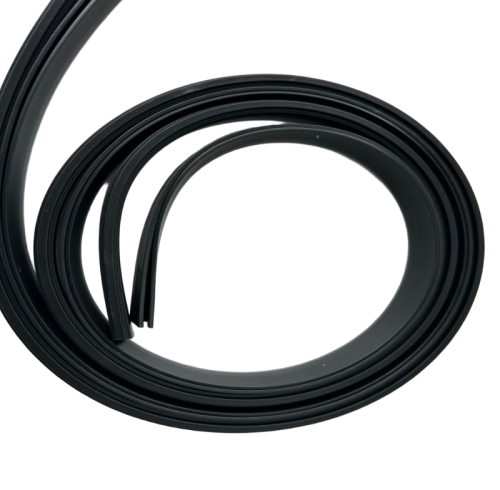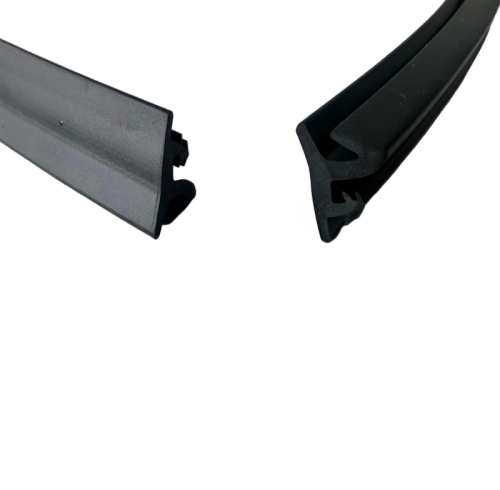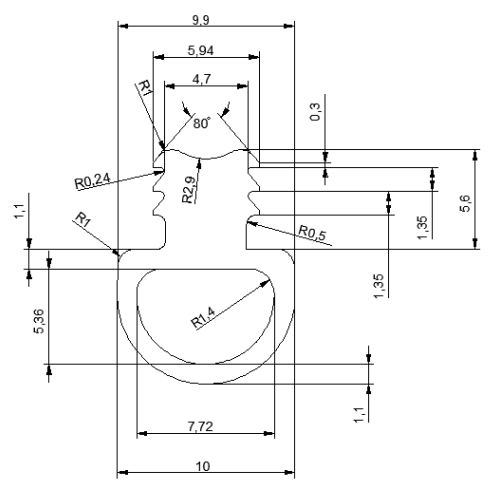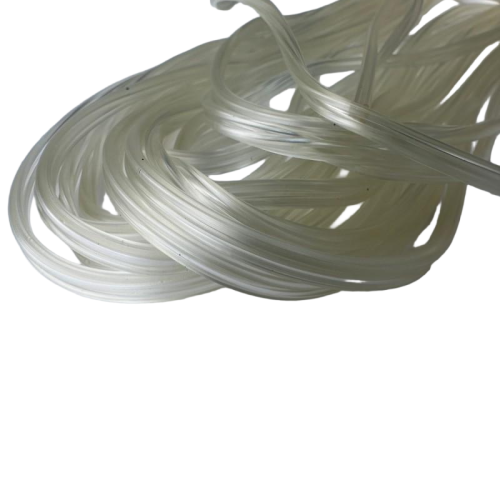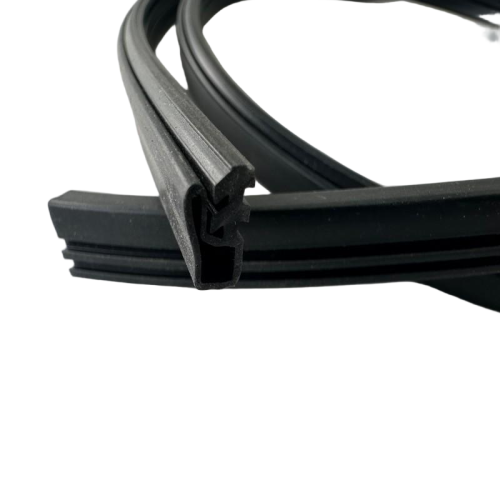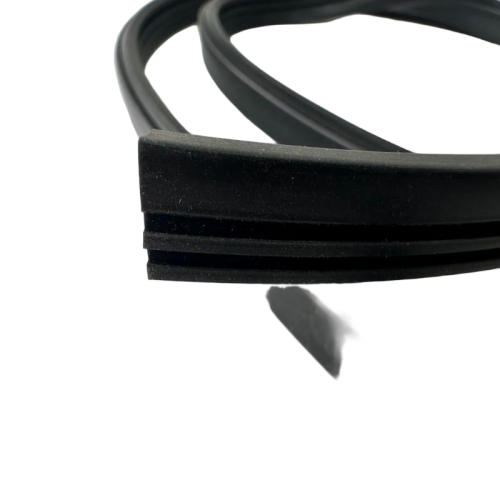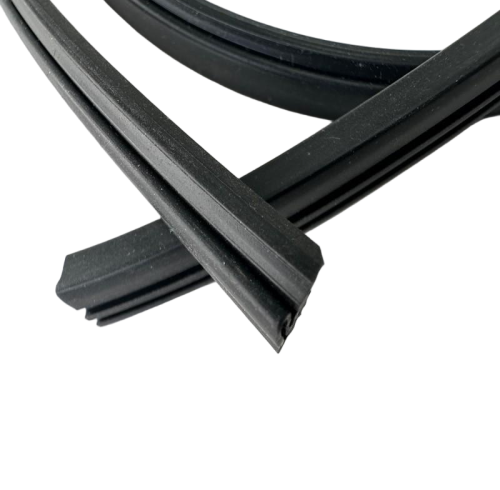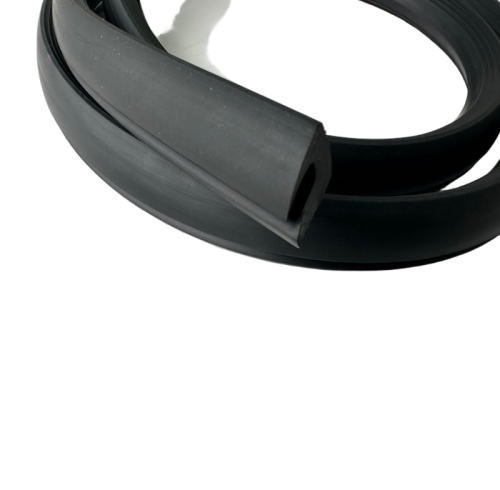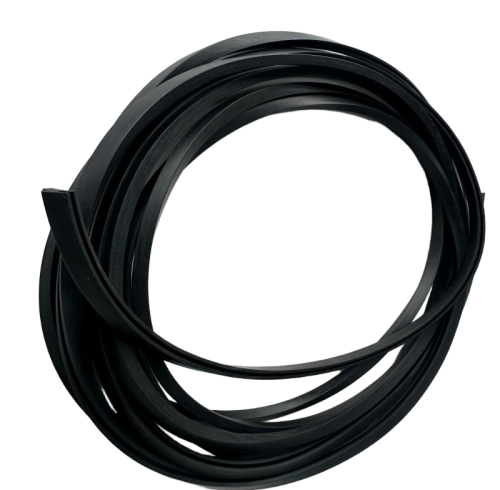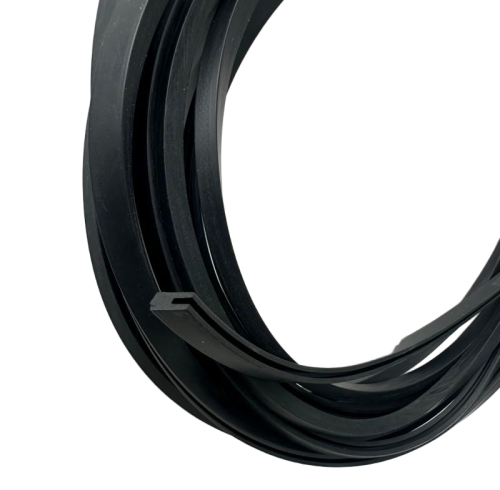




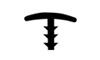


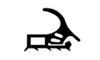

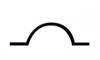


Rubber and plastic extruded profiles and sealing strips are specially designed components used for sealing, insulation, and protection. These profiles are manufactured through extrusion processes, ensuring precise shapes and consistent quality.
Materials: Common materials include EPDM, silicone, PVC, and TPE, offering durability, flexibility, and resistance to weather, chemicals, and temperature variations.
Applications: Widely used in automotive, construction, electronics, machinery, and appliance industries for sealing doors, windows, cabinets, and enclosures.
Functions: Provide waterproofing, dust-proofing, noise reduction, shock absorption, and thermal insulation to enhance product performance and longevity.
With customizable designs and excellent sealing properties, extruded profiles and sealing strips are essential components for industrial and commercial applications.
Rubber Seal Strip for Automotive Steel Plate
A rubber seal strip for automotive steel plates is a durable, high-performance sealing component designed to provide vibration damping, corrosion prevention, and noise reduction between metal panels in vehicles. It is commonly used in doors, hoods, trunks, and chassis assemblies to ensure airtight and watertight protection.
Key Features & Benefits
✔ Anti-Corrosion Barrier – Prevents galvanic corrosion between dissimilar metals (e.g., steel-aluminum contact).
✔ Vibration & Noise Control – Absorbs road/engine vibrations, reducing cabin noise (NVH reduction).
✔ Weather & Chemical Resistant – EPDM or Nitrile rubber withstands oils, road salts, and extreme temps (-40°C to 120°C / -40°F to 248°F).
✔ Compression-Resistant – Maintains seal integrity under constant pressure.
✔ Easy Installation – Self-adhesive backing or clip-on design for quick assembly.
Common Applications
Door & Hood Seals – Between steel frames and outer panels.
Chassis & Underbody – Protects joints from water/salt splash.
Battery Trays – Insulates steel brackets in EVs/hybrids.
Fender Liners – Reduces road debris rattling.
Material Options
Material Best For Limitations
EPDM Weather resistance (UV/ozone) Weak against oils
Nitrile (NBR) Oil/fuel exposure Less flexible in cold temps
Silicone High-temp areas (exhaust shields) Higher cost
Installation & Maintenance
Surface Prep – Clean steel with alcohol to ensure adhesion.
Alignment – Press firmly along the entire contact surface.
Inspection – Check for peeling or hardening during servicing.
A TPE (Thermoplastic Elastomer) profile for car pedals is a high-performance, slip-resistant cover designed to enhance grip, durability, and safety on accelerator, brake, and clutch pedals. It combines the flexibility of rubber with the strength of plastics for optimal pedal control.
Key Features & Benefits
✔ Anti-Slip Surface – Textured or ribbed design ensures firm foot grip, even in wet conditions.
✔ Weather & Wear Resistant – Withstands UV rays, temperature extremes (-40°C to 90°C / -40°F to 194°F), and repeated abrasion.
✔ Lightweight & Durable – More impact-resistant than rubber, with no cracking or hardening over time.
✔ Easy Installation – Snap-on or adhesive-backed for quick retrofit on metal/rubber pedals.
✔ Customizable – Available in colors (black/red/silver) and logos (sport/SUV variants).
Material Advantages vs. Rubber
Property TPE Traditional Rubber
Weight 20-30% lighter Heavier
Abrasion Resistance Higher Wears faster
Oil Resistance Excellent Moderate
Applications
Performance Vehicles – Enhances pedal feel for racing/sports cars.
Electric Vehicles – Compatible with drive-by-wire pedal systems.
Commercial Trucks – Reinforced versions for heavy-duty use.
Installation Tips
Clean pedal surface with alcohol before applying adhesive types.
For snap-on designs, ensure full engagement with pedal edges.
Replace if tread pattern becomes smooth (typically 5+ years).
A PVC bumper strip is a flexible, impact-resistant molding designed to protect vehicle bumpers, doors, and edges from scratches, dings, and minor collisions. Made from durable polyvinyl chloride (PVC), it combines affordability with long-lasting performance.
Key Features & Benefits
✔ Scratch & Impact Protection – Absorbs minor impacts from parking bumps, shopping carts, and road debris.
✔ Weather & UV Resistant – Does not crack or fade in sunlight, rain, or snow (-30°C to 70°C / -22°F to 158°F).
✔ Easy Installation – Self-adhesive backing or clip-on design for tool-free application.
✔ Customizable – Available in colors (black, gray, chrome) and lengths (pre-cut or roll-form).
✔ Low Maintenance – Wipe clean with soap/water; no polishing required.
Common Applications
Car Door Edges – Prevents paint chips when opening doors.
Bumper Guards – Protects front/rear bumpers from parking damage.
Industrial Equipment – Shields machinery edges from collisions.
Material Comparison
Feature PVC Bumper Strip Rubber Bumper Strip
Cost Lower Higher
Flexibility Semi-rigid More elastic
UV Resistance Excellent Good (varies by rubber)
Installation Tips
Clean the surface with alcohol before applying adhesive strips.
For curved surfaces, use a heat gun (low setting) to improve flexibility.
Replace if adhesive weakens or the strip becomes brittle.
A water barrier strip is a waterproof sealing component designed to block moisture infiltration in construction, automotive, and industrial applications. Made from durable elastomers or composite materials, it prevents leaks, corrosion, and structural damage caused by water exposure.
Key Features & Benefits
✔ Watertight Seal – Creates an impermeable barrier against rain, humidity, and splashes.
✔ Flexible & Durable – Resists cracking, UV rays, and temperature swings (-40°C to 120°C / -40°F to 248°F).
✔ Easy Installation – Self-adhesive backing, press-fit, or mechanical fastening options.
✔ Material Options – EPDM, PVC, silicone, or TPE for different environmental needs.
✔ Multi-Purpose – Used in roofs, doors, windows, and electrical enclosures.
Common Applications
Construction – Seals joints in roofs, foundations, and concrete expansion gaps.
Automotive – Protects door seams, sunroofs, and trunk lids from water leaks.
Electronics – Prevents moisture damage in outdoor cabinets or control panels.
Installation Tips
Surface Prep – Clean and dry the area before application.
Alignment – Ensure full contact with no gaps for maximum protection.
Maintenance – Check periodically for wear or adhesion failure.
A rubber sleeve for automotive clamps is a protective covering designed to enhance grip, reduce vibration, and prevent damage to hoses, pipes, or wiring secured by clamps. Made from durable elastomers, it ensures a tight, noise-free hold while protecting surfaces from abrasion and corrosion.
Key Features & Benefits
✔ Vibration Damping – Absorbs engine/road vibrations to prevent loosening or rattling.
✔ Abrasion Resistance – Shields hoses/pipes from clamp-induced wear.
✔ Weatherproof – Resists oil, coolant, and extreme temps (-40°C to 150°C / -40°F to 302°F).
✔ Non-Slip Grip – Textured surface improves clamp traction.
✔ Easy Installation – Slides over clamps or hoses before tightening.
Material Options
Material Best For
EPDM Coolant/heater hoses
Silicone High-temp turbo lines
Nitrile (NBR) Fuel/oil systems
Common Applications
Radiator & Heater Hoses – Prevents hose degradation from metal clamps.
Turbocharger Piping – Reduces heat transfer to adjacent components.
Wiring Harnesses – Protects cables from sharp clamp edges.
Installation Tips
Choose a sleeve with inner diameter matching the clamp/hose.
For high-pressure lines, ensure sleeves are rated for system PSI.
Replace if cracks, swelling, or hardness changes occur.
A TPV (Thermoplastic Vulcanizate) seal strip for roof racks is a high-performance sealing component designed to provide weatherproofing, noise reduction, and vibration damping between roof racks and vehicle surfaces. It ensures a secure, rattle-free fit while protecting the car’s paint from scratches and water damage.
Key Features & Benefits
✔ Superior Weather Resistance – Withstands UV rays, rain, snow, and extreme temperatures (-40°C to 120°C / -40°F to 248°F).
✔ Noise & Vibration Control – Reduces wind noise and rattling at high speeds.
✔ Paint Protection – Soft, non-abrasive surface prevents scratches and corrosion.
✔ Durable & Flexible – TPV material offers better aging resistance than EPDM or rubber, with no hardening or cracking over time.
✔ Easy Installation – Self-adhesive backing or groove-mount design for quick assembly.
Material Advantages
Property TPV Seal Strip Traditional Rubber Strip
UV Resistance Excellent (no degradation) Good, but may harden over time
Weight Lightweight Slightly heavier
Flexibility Retains elasticity in cold temps Can stiffen in freezing conditions
Applications
SUV/Cross Roof Racks – Seals mounting points for cargo carriers or bike racks.
Aftermarket Roof Rails – Provides a clean, OEM-like fit.
Commercial Van Racks – Ensures long-term durability in fleet vehicles.
Installation & Maintenance
Clean Surface – Use alcohol to remove dirt/oil before applying adhesive strips.
Align Properly – Ensure full contact along the roof rack base.
Check Periodically – Inspect for peeling or wear, especially after off-road use.
A TPE (Thermoplastic Elastomer) profile for diving suits is a flexible, watertight sealing component designed to enhance the comfort, durability, and thermal insulation of wetsuits and drysuits. It provides secure closures at critical joints (neck, wrists, and ankles) while resisting saltwater, UV exposure, and repeated stretching.
Key Features & Benefits
✔ Watertight Seal – Prevents water ingress in drysuits .
✔ Cold Resistance – Maintains flexibility in 0°C to 40°C (32°F to 104°F) temperatures.
✔ Abrasion-Resistant – Withstands friction from dive gear and rocky surfaces.
✔ Soft & Skin-Safe – Hypoallergenic and non-irritating for prolonged wear.
✔ Easy Integration – Can be bonded or sewn into neoprene suits.
Material Advantages
Property TPE Neoprene (Traditional)
Flexibility Superior in cold water Stiffens at low temps
Weight 15-20% lighter Heavier
Eco-Friendliness Recyclable Non-recyclable
Applications
Neck/Wrist Seals – Critical for drysuit waterproofing.
Zipper Flaps – Reduces zipper corrosion and leakage.
Reinforced Edges – Protects high-wear areas (knees, elbows).
Maintenance Tips
Rinse with fresh water after saltwater use.
Store flat to avoid permanent creasing.
Inspect for microtears before deep dives.
PVC profiles for golf club fixtures are custom-engineered plastic channels or guards designed to protect and organize golf clubs in bags, carts, or storage systems. Made from durable polyvinyl chloride (PVC), they prevent club chatter, scratches, and damage while ensuring easy access and longevity.
Key Features & Benefits
✔ Scratch & Impact Protection – Cushions club shafts and heads from collisions during transport.
✔ Lightweight & Durable – Resists UV rays, moisture, and wear without adding bulk.
✔ Custom Fit – Available in individual dividers, full-length tubes, or modular inserts for any bag/cart design.
✔ Non-Slip Grip – Textured interiors keep clubs securely in place.
✔ Easy Installation – Snap-in, adhesive-backed, or screw-mounted options.
Common Applications
Golf Bag Dividers – Prevents tangled clubs and shaft abrasion.
Cart/Storage Racks – Protects clubs in transit or display units.
Travel Cases – Reinforced profiles for airline baggage handling.
Material Advantages
Feature PVC Nylon (Alternative)
Cost Lower Higher
UV Resistance Excellent Good
Flexibility Semi-rigid More rigid
Installation & Care
Clean Surfaces – Wipe bag slots before inserting profiles.
Trim to Fit – Use a hacksaw for custom lengths (smooth edges with sandpaper).
Maintenance – Rinse with water to remove dirt/debris.
A PVC profile for luggage edges is a protective molding designed to reinforce and safeguard the corners and edges of suitcases, travel bags, and hard-shell luggage. Made from flexible yet durable polyvinyl chloride (PVC), it absorbs impacts, resists abrasion, and extends the lifespan of luggage by preventing damage during transit.
Key Features & Benefits
✔ Impact Protection – Shields luggage corners from drops, bumps, and rough handling.
✔ Abrasion Resistance – Prevents scuffs and scratches from conveyor belts or stacking.
✔ Lightweight & Flexible – Adds minimal weight while conforming to curved edges.
✔ Weatherproof – Resists water, UV rays, and temperature extremes (-20°C to 60°C / -4°F to 140°F).
✔ Easy Installation – Self-adhesive backing or snap-on design for quick attachment.
Common Applications
Hard-Shell Suitcases – Reinforces vulnerable corners and seams.
Travel Backpacks/Duffels – Protects base and side edges from wear.
Industrial Cases – Used in protective equipment cases for tools or instruments.
Material Advantages
Feature PVC Edge Profile Rubber Edge Guard
Weight Lighter Slightly heavier
Cost More affordable Higher cost
Maintenance Easy to clean May attract dust
Installation & Care
Clean Surface – Wipe luggage edges with alcohol before applying adhesive strips.
Align Carefully – Press firmly along the edge for full adhesion.
Inspect Regularly – Check for peeling or damage after heavy use.
A rubber sealing strip is a versatile, flexible gasket designed to create airtight, watertight, and dustproof seals in automotive, industrial, construction, and household applications. Made from durable elastomers like EPDM, silicone, or neoprene, it ensures long-lasting protection against environmental elements and mechanical wear.
Key Features & Benefits
✔ Weather & UV Resistant – Withstands extreme temperatures (-50°C to 150°C / -58°F to 302°F) and ozone exposure.
✔ Flexible & Durable – Maintains elasticity under compression, vibration, and repeated use.
✔ Noise Reduction – Dampens sound and vibrations in vehicles/machinery.
✔ Easy Installation – Available with self-adhesive backing, clip-on, or press-fit designs.
✔ Chemical Resistance – Resists oils, acids, and solvents (material-dependent).
Common Applications
Automotive: Door/window seals, trunk lids, sunroofs.
Construction: Window/door weatherstripping, HVAC systems.
Electronics: Enclosure gaskets for dust/water protection (IP ratings).
Appliances: Refrigerator/freezer door seals.
Material Options
Type Best For Limitations
EPDM Weather sealing (cars/outdoor) Poor oil resistance
Silicone High-temp/food-grade uses Higher cost
Neoprene Oil/fuel exposure Stiffens in cold temps
Installation Tips
Clean surfaces thoroughly before applying adhesive strips.
For corner joints, cut at 45° angles for seamless fits.
Replace if cracks, hardening, or permanent deformation occurs.
An outdoor appliance lid seal is a weather-resistant gasket designed to create an airtight and watertight barrier on grills, generators, HVAC units, and other outdoor equipment. It prevents moisture, dust, and pests from entering while ensuring proper insulation and durability in harsh environments.
Key Features & Benefits
✔ Extreme Weather Resistance – Withstands UV rays, rain, snow, and temperatures from -40°C to 120°C (-40°F to 248°F).
✔ Durable Material – Made from EPDM, silicone, or TPV for long-term flexibility and crack resistance.
✔ Secure Seal – Compresses tightly to block wind, debris, and insects.
✔ Easy Installation – Self-adhesive backing or groove-fit design for quick replacement.
✔ Chemical Resistance – Resists oils, cleaning agents, and oxidation.
Common Applications
Grills & Smokers – Seals lids to retain heat and smoke.
Generators & Power Boxes – Protects electrical components from humidity.
Outdoor HVAC Units – Improves energy efficiency by preventing air leaks.
Garden Equipment – Weatherproofs storage compartments.
Material Comparison
Material Best For Lifespan
EPDM General weatherproofing 5–10 years
Silicone High-temperature lids 7–12 years
TPV Heavy-duty/high-flex areas 8–15 years
Installation & Maintenance
Clean Surface – Remove dirt/grease with alcohol before applying.
Press Firmly – Ensure full adhesion along the lid’s edge.
Inspect Annually – Check for gaps or wear, especially after winter.
A PVC seal is a flexible, durable gasket made from polyvinyl chloride (PVC), designed to provide waterproof, dustproof, and weather-resistant sealing in construction, automotive, and industrial applications. It offers a cost-effective alternative to rubber seals while maintaining reliable performance in moderate conditions.
Key Features & Benefits
✔ Weather & UV Resistant – Withstands sunlight, rain, and temperatures from -20°C to 70°C (-4°F to 158°F).
✔ Chemical Resistance – Resists mild acids, alkalis, and oils (not suitable for strong solvents).
✔ Lightweight & Flexible – Easy to install in tight spaces without cracking.
✔ Flame Retardant – Meets UL94 HB/V0 standards (optional).
✔ Customizable – Available in strips, cords, or molded shapes.
Material Comparison
Property PVC Seal Rubber Seal (EPDM)
Cost Lower Higher
Flexibility Good (stiffens in cold) Excellent
Lifespan 5–10 years 10–20 years
Applications
Windows & Doors – Weatherstripping for homes/offices.
Electrical Enclosures – Seals control panels and junction boxes.
Automotive Trims – Edge protection for doors and hoods.
Installation Tips
Clean surfaces before applying adhesive-backed seals.
For hollow profiles, ensure even compression to avoid gaps.
Replace if discolored, brittle, or deformed.
A rubber waterproof seal is a flexible, resilient gasket designed to block water, dust, and air infiltration in industrial, automotive, marine, and construction applications. Made from high-performance elastomers, it ensures long-lasting protection against leaks and environmental damage.
Key Features & Benefits
✔ 100% Waterproof – Provides IP67/IP68-rated sealing for submersion resistance.
✔ Weather & UV Resistant – Performs in -50°C to 150°C (-58°F to 302°F) and harsh sunlight.
✔ High Compression Recovery – Maintains seal integrity under pressure/vibration.
✔ Chemical Resistance – Withstands oils, saltwater, and acids (material-dependent).
✔ Easy Installation – Self-adhesive, press-fit, or bolt-on designs.
Material Options
Type Best For Limitations
EPDM Outdoor/automotive (best UV resistance) Avoid petroleum oils
Silicone Food/medical (non-toxic) Lower tear strength
Neoprene Marine/oil exposure Stiffens in cold temps
Applications
Automotive: Sunroofs, door seals, LED light housings.
Construction: Window/door weatherstripping, expansion joints.
Marine: Hatch seals, bilge pump covers.
Electronics: Enclosures for outdoor sensors/cameras.
Installation Tips
Clean surfaces with isopropyl alcohol before adhesion.
For corners, miter-cut ends at 45° for seamless joins.
Replace if permanent deformation >15% or cracks appear.
A rubber pad for golf cart windshield clips is a durable, vibration-dampening cushion designed to secure and protect the windshield mounting system. It prevents scratches, reduces rattling, and ensures a tight, stable fit between the clip and the windshield frame.
Key Features & Benefits
✔ Shock & Vibration Absorption – Minimizes noise and movement during driving.
✔ Non-Slip Grip – High-friction surface keeps the windshield securely in place.
✔ Weatherproof – Resists UV rays, rain, and temperature swings (-30°C to 90°C / -22°F to 194°F).
✔ Scratch Protection – Soft rubber prevents metal-to-glass contact.
✔ Easy Installation – Peel-and-stick adhesive or press-fit design.
Material Options
EPDM: Best for all-weather durability.
Silicone: Ideal for high-temperature resistance.
Neoprene: Good for oil/fuel exposure (gas-powered carts).
Installation & Maintenance
Clean the clip surface with alcohol before applying.
Press firmly for 30 seconds to ensure adhesion.
Replace if pads harden, crack, or lose grip.
A TPV (Thermoplastic Vulcanizate) square seal strip is an advanced vibration-dampening gasket designed to reduce noise, absorb shocks, and seal gaps in industrial machinery, automotive components, and HVAC systems. Its square profile ensures uniform compression and long-term resilience under dynamic loads.
Key Features & Benefits
✔ Superior Vibration Absorption – Reduces noise and fatigue in high-motion parts (e.g., engines, compressors).
✔ Weather & Chemical Resistant – Withstands oils, UV rays, and temps from -40°C to 135°C (-40°F to 275°F).
✔ Compression Recovery – Retains shape after repeated compression (better than EPDM).
✔ Easy Installation – Self-adhesive backing or press-fit into grooves.
✔ Recyclable – Eco-friendly alternative to thermoset rubber.
Material Advantages
Property TPV Traditional Rubber
Oil Resistance Excellent Poor (EPDM)
Weight 20% lighter Heavier
Processing Faster production Slower vulcanization
Applications
Automotive: Door seals, engine mounts.
Industrial: Pump housings, conveyor systems.
Electronics: Enclosure damping.
Installation Tips
Clean surfaces with alcohol for adhesive types.
Ensure 15–30% compression for optimal performance.
Replace if hardening or cracks appear.