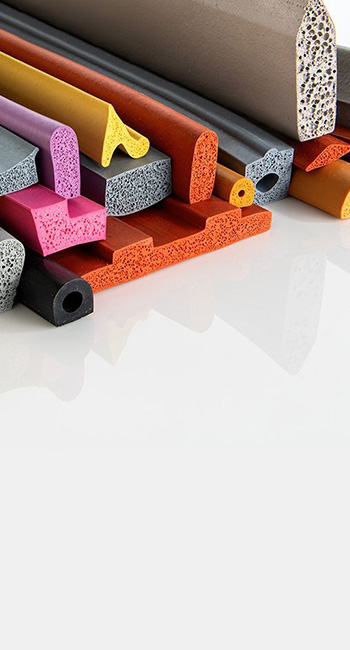






Rubber and plastic molding parts are custom-shaped components produced through molding processes such as injection molding, compression molding, and extrusion. These parts are widely used in automotive, electronics, medical, food, industrial, and consumer goods industries due to their durability, flexibility, and resistance to heat, chemicals, and wear.
Rubber molding parts provide excellent sealing, shock absorption, and elasticity, making them ideal for gaskets, seals, O-rings, and vibration dampers. Plastic molding parts offer lightweight strength, corrosion resistance, and design versatility, commonly found in housings, connectors, and structural components.
With advanced molding techniques, manufacturers can create high-precision, cost-effective solutions tailored to specific industry needs.
TPV Gasket
A TPV (Thermoplastic Vulcanizate) gasket is a high-performance sealing component that combines the elasticity of rubber with the processing advantages of plastics. Designed for weatherproofing, vibration damping, and chemical resistance, it is widely used in automotive, industrial, and appliance applications where durability and environmental resilience are critical.
Key Features & Benefits
✔ Superior Elasticity & Recovery – Maintains seal integrity under compression (better than EPDM).
✔ Weather & UV Resistant – Withstands extreme temps (-50°C to 135°C / -58°F to 275°F) and ozone.
✔ Chemical Resistance – Resists oils, coolants, and mild acids (unlike standard EPDM).
✔ Lightweight & Recyclable – Eco-friendly alternative to thermoset rubber.
✔ Easy Installation – Available as extruded strips, molded shapes, or adhesive-backed forms.
Material Advantages vs. EPDM
Property TPV EPDM
Oil Resistance Excellent Poor
Compression Set Lower (better recovery) Higher
Processing Faster production Slower curing
Common Applications
Automotive: Sunroof seals, door weatherstrips, engine covers.
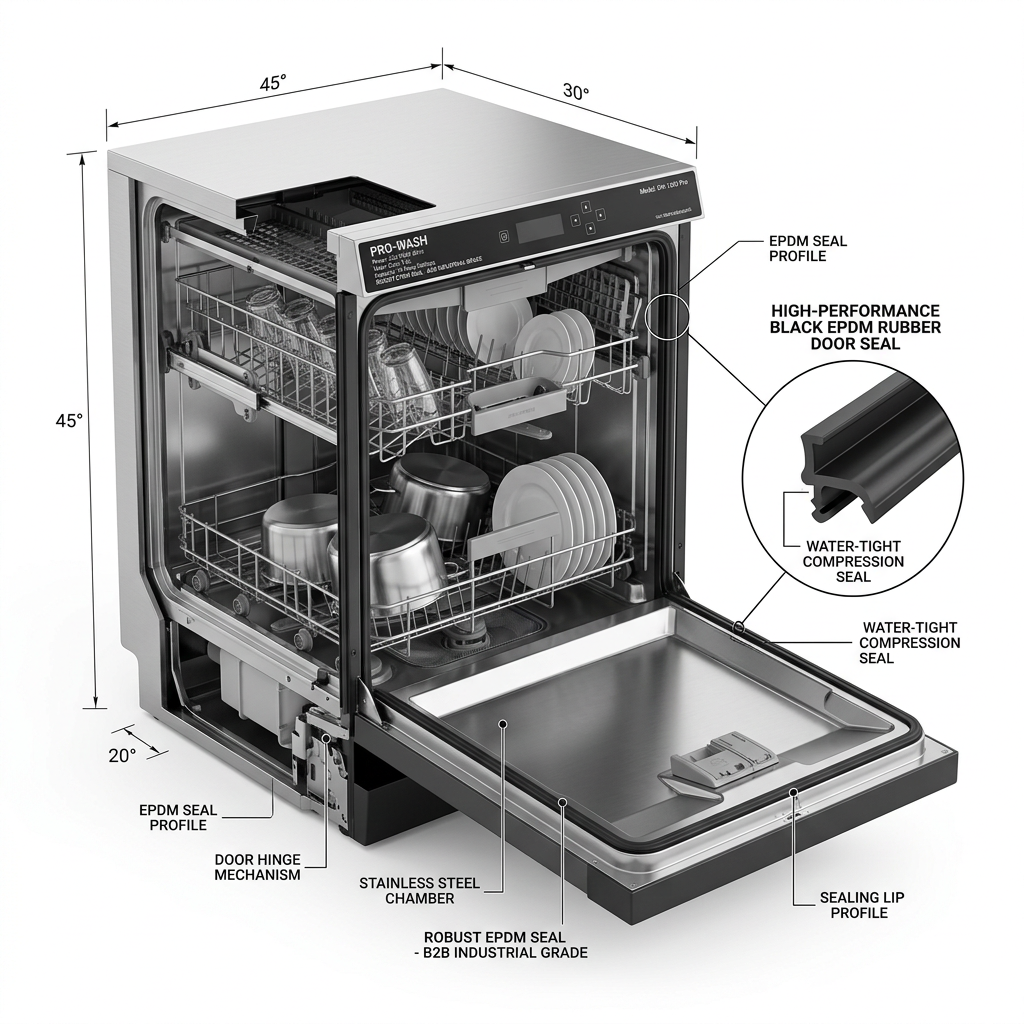
Appliances: Dishwasher/dryer door gaskets.
Industrial: Electrical enclosures, HVAC systems.
Installation Tips
Clean mating surfaces with isopropyl alcohol.
For adhesive types, apply firm pressure for 30 seconds.
Replace if hardening or cracks appear.
A rubber gasket is a flexible sealing component used to prevent leaks, block contaminants, and absorb vibrations between two mating surfaces. Made from elastomers like EPDM, Nitrile (NBR), Silicone, or Neoprene, it ensures airtight, watertight, or chemical-resistant seals in industrial, automotive, and household applications.
Key Features & Benefits
✔ Leak Prevention – Creates secure seals against fluids, gases, and dust.
✔ Vibration Damping – Reduces noise and mechanical wear.
✔ Temperature & Chemical Resistance – Performance ranges from -60°C to 300°C (-76°F to 572°F), depending on material.
✔ Customizable – Available as O-rings, sheets, or molded shapes.
✔ Cost-Effective – Durable and easy to install/replace.
Material Comparison
Type Best For Limits
EPDM Weather/steam resistance Poor oil resistance
Nitrile (NBR) Fuel/oil applications Limited high-temp use
Silicone Food/medical (non-toxic) Lower tear strength
Neoprene Outdoor/ozone exposure Stiffens in cold temps
Applications
Automotive: Engine gaskets, fluid seals.
Plumbing: Pipe joints, faucets.
Electronics: Enclosure sealing.
Industrial: Pumps, compressors.
Installation Tips
Clean surfaces before placement.
Avoid over-tightening to prevent deformation.
Replace if cracked, flattened, or brittle.