










Colored Silicone Foam Cord & Sealing Strip: How Cell Structure, Density and Color Are Controlled in Extrusion
Colored Silicone Foam Cord & Sealing Strip: How Cell Structure, Density and Color Are Controlled in Extrusion
A gap that lets in light, dust, water or vibration is a gap that fails the product. Ask any assembly engineer what went wrong with a foam seal and the answer is rarely "the wrong color." It is that the cells collapsed, the density drifted, the strip took a permanent set, or the color did not match the approved sample on the second production lot. Quality in colored silicone foam cord and sealing strip is made in the compounding and extrusion process — and verified lot by lot, not promised on a catalog page.
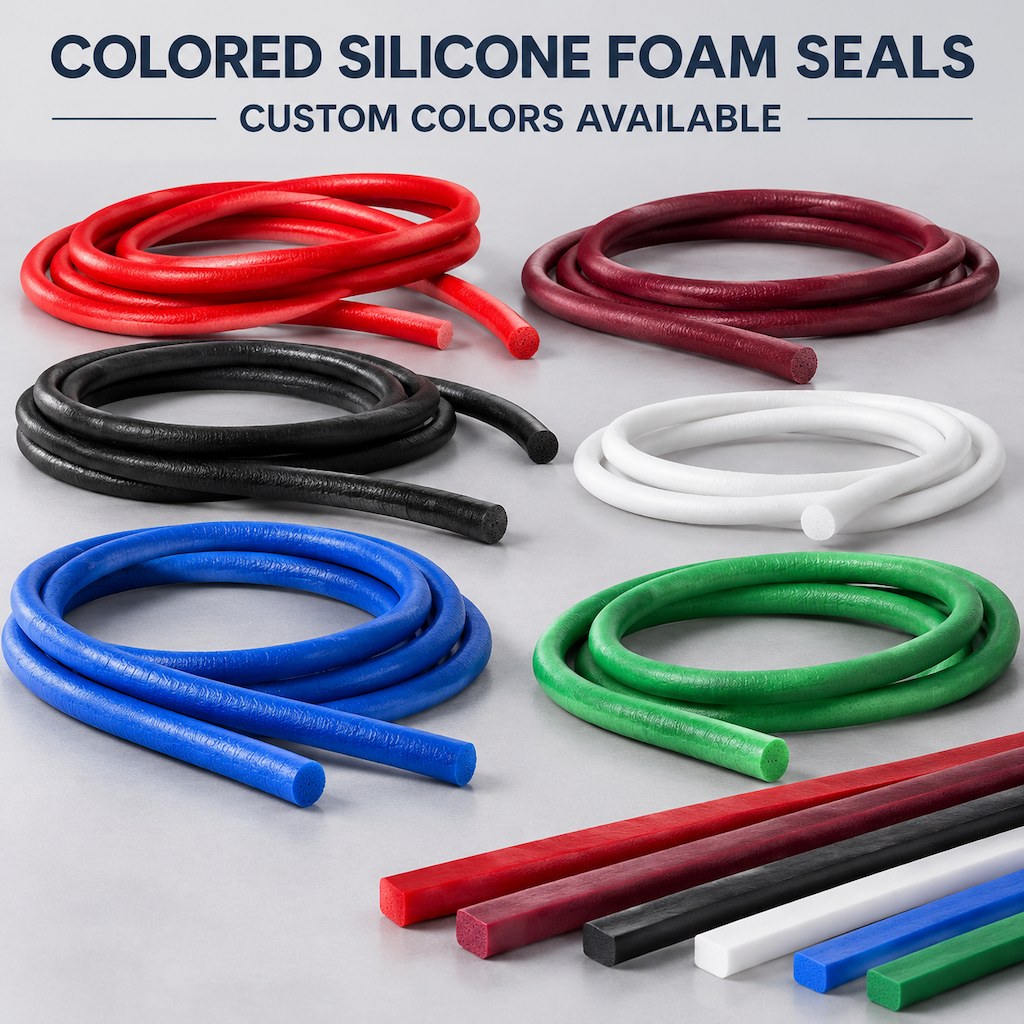
Why a foam seal fails: it is the cell structure, not the color
Foam silicone is silicone rubber with a controlled population of gas cells. Those cells let a cord compress into an irregular gap at low closure force and then spring back when the door or panel opens. If the cells are open when they should be closed, or coarse and uneven when they should be fine and uniform, the seal absorbs moisture, compresses unevenly, or bottoms out permanently. Published guidance distinguishes closed-cell foam — sealed cells, impermeable to air and moisture, higher density and better sealing — from open-cell foam, which is breathable, lighter and better at absorbing sound [5]. Closed-cell silicone grades are commonly specified around 0.25–0.85 g/cm³ [4]. Cell structure is set in compounding and cure, not by a pigment choice.
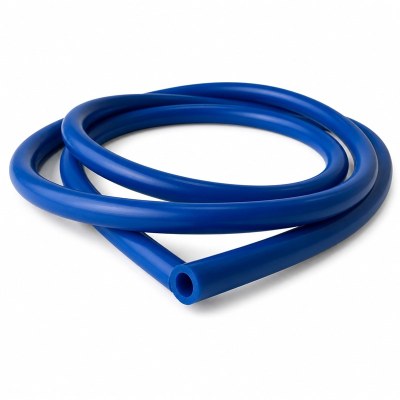
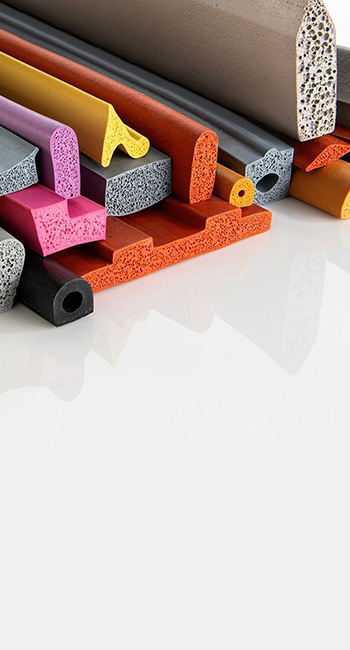
That is why the first question on a foam-seal drawing should be about the cells and the recovery, with color as a separate specification. RESRUB extrudes colored silicone foam cord and strip with a uniform cell structure and clean cut ends that seat into channels, grooves and flange lines without gaps; EPDM foam is available as an outdoor-weather alternative where the operating environment calls for it.
The four parameters that decide whether your seal keeps sealing
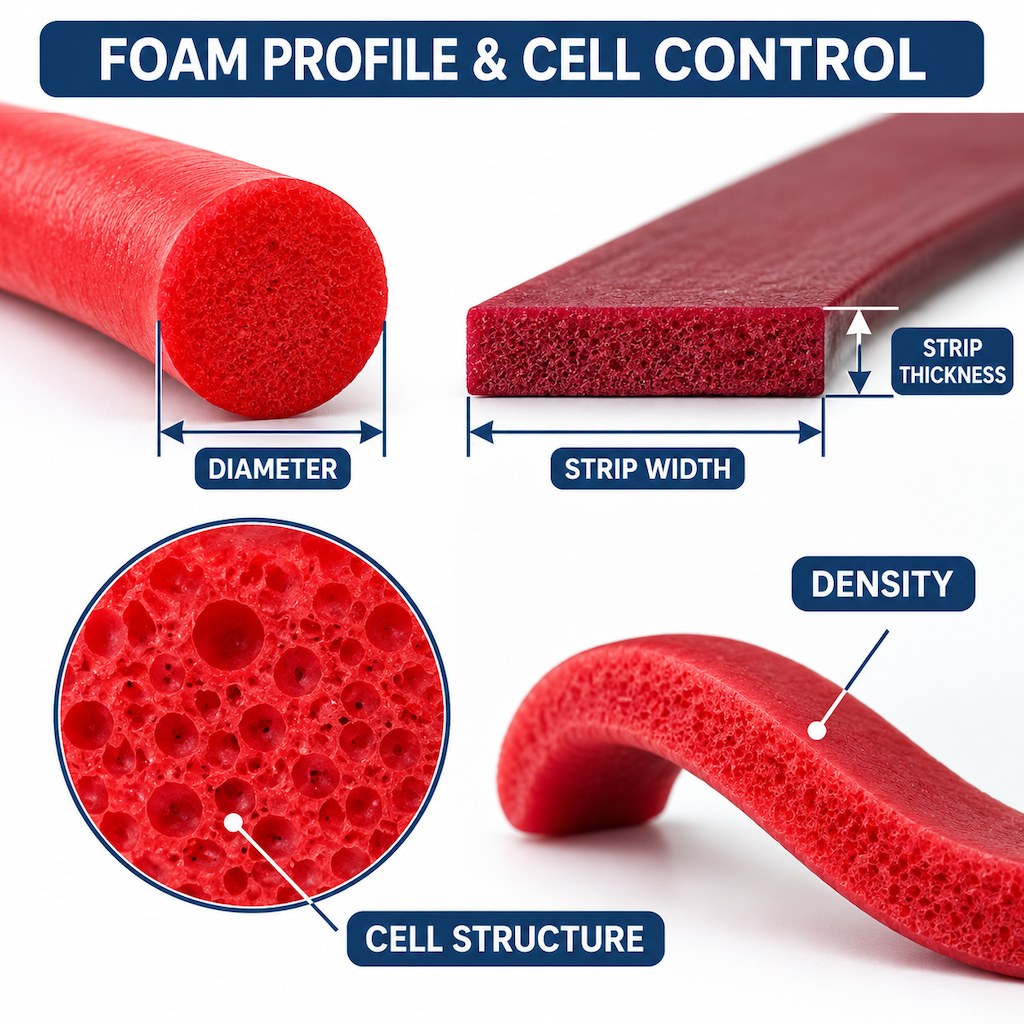
When we review a foam-cord drawing at RESRUB, we translate it into four controllable features. Every one of them is checked during the run, not just on the first sample:
- Density. Sets how soft the seal feels and how much force it takes to compress. Our typical window is 0.5–0.9 g/cm³ depending on compound; published closed-cell silicone data commonly spans 0.25–0.85 g/cm³ [4][5]. Ask for the density of the actual grade, measured to a stated method.
- Cell structure. Closed cells block water, dust and air; open cells breathe and absorb. Confirm which one your application needs — a splash-proof electronics gasket and a breathable cushion are different parts.
- Compression set / recovery. The seal must return to thickness after long compression. Reference grades cite compression set below 1% after 22 h at 100 °C (ASTM D1056) for high-recovery foam [2], while general sponge specifications accept limits that vary by grade and density [5]. The number to defend is the one on your lot.
- Dimensions and tolerance. Round cord from Ø1–20 mm, strip per drawing or sample. Silicone shrinks roughly 2–4% during cure, so tooling compensates and finished dimensions — not die dimensions — are what get inspected [1]. Extrusion tolerances are commonly agreed to ISO 3302-1 classes, with tubes and cords held tighter than complex profiles [1].
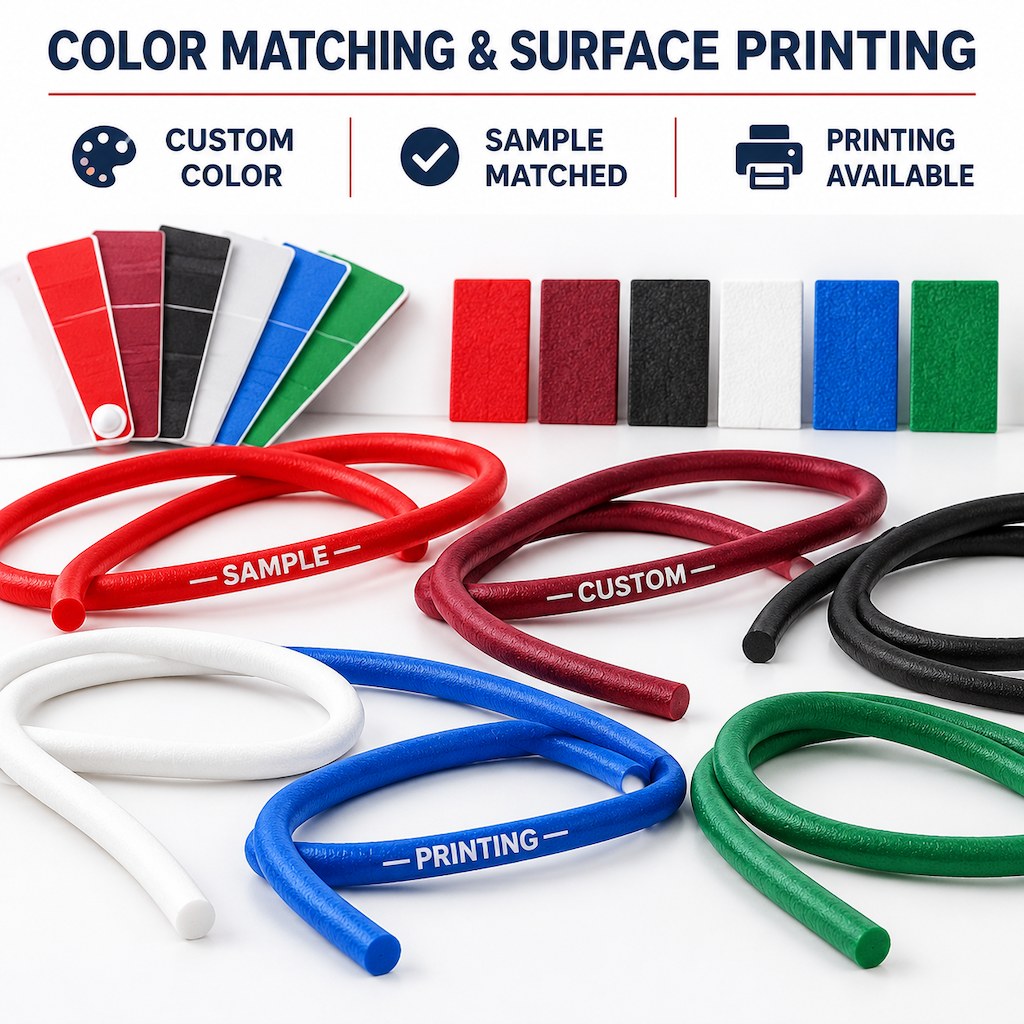
Color and printing are quality decisions, not decoration
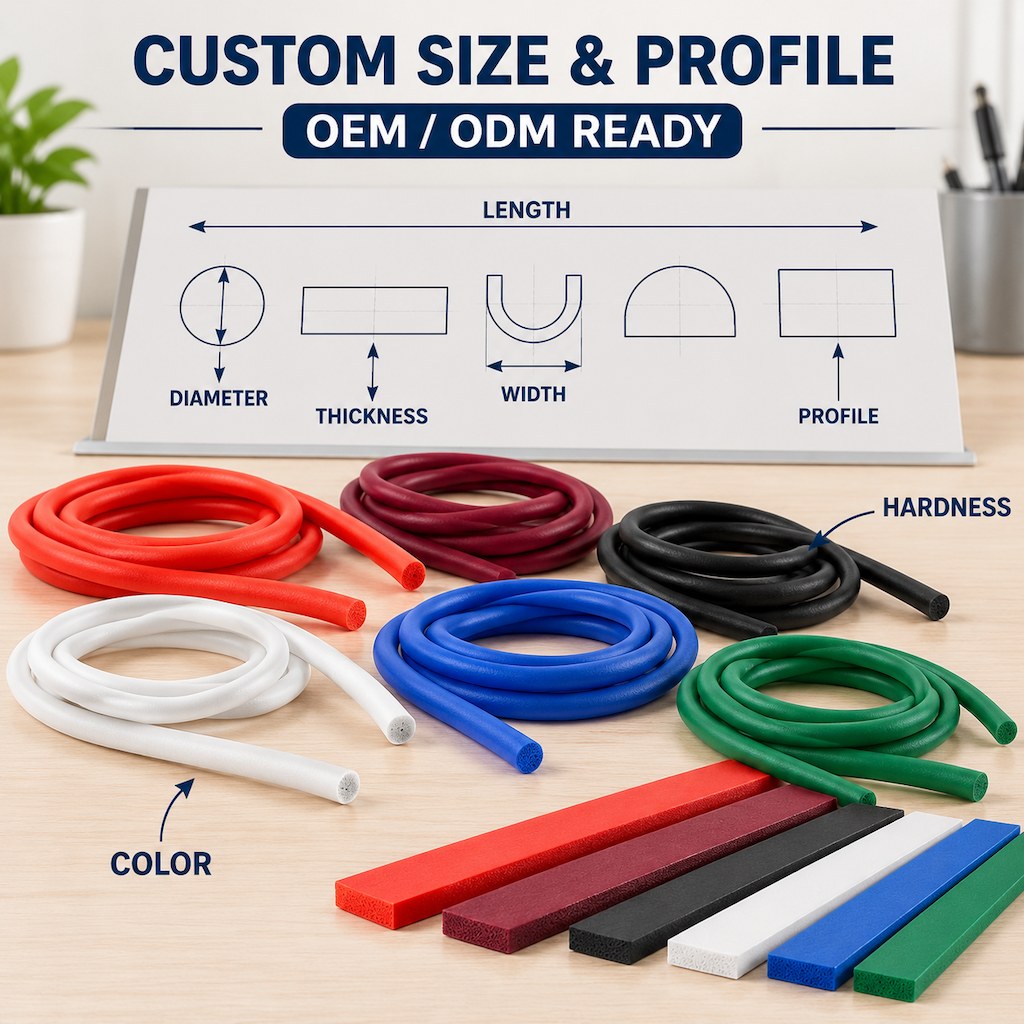
A colored foam seal often does two jobs at once: seal the gap and identify the part. That makes color a functional spec. Pigments are dosed into the compound before extrusion, so color consistency, foam density and cure all come from the same controlled mix. Market practice is to match to Pantone or RAL references, with translucent or opaque options and surface printing for identification or branding [1][4]. UV-stable pigments and colorfastness checks matter where the part sees light over its service life.
At RESRUB we match color to your brand or coding scheme and cut the cross-section to your drawing — any Pantone/RAL color, round, square, D, P, U or custom profile, with optional printing. Material and color are matched to the approved sample before bulk extrusion, so the second lot looks like the first.
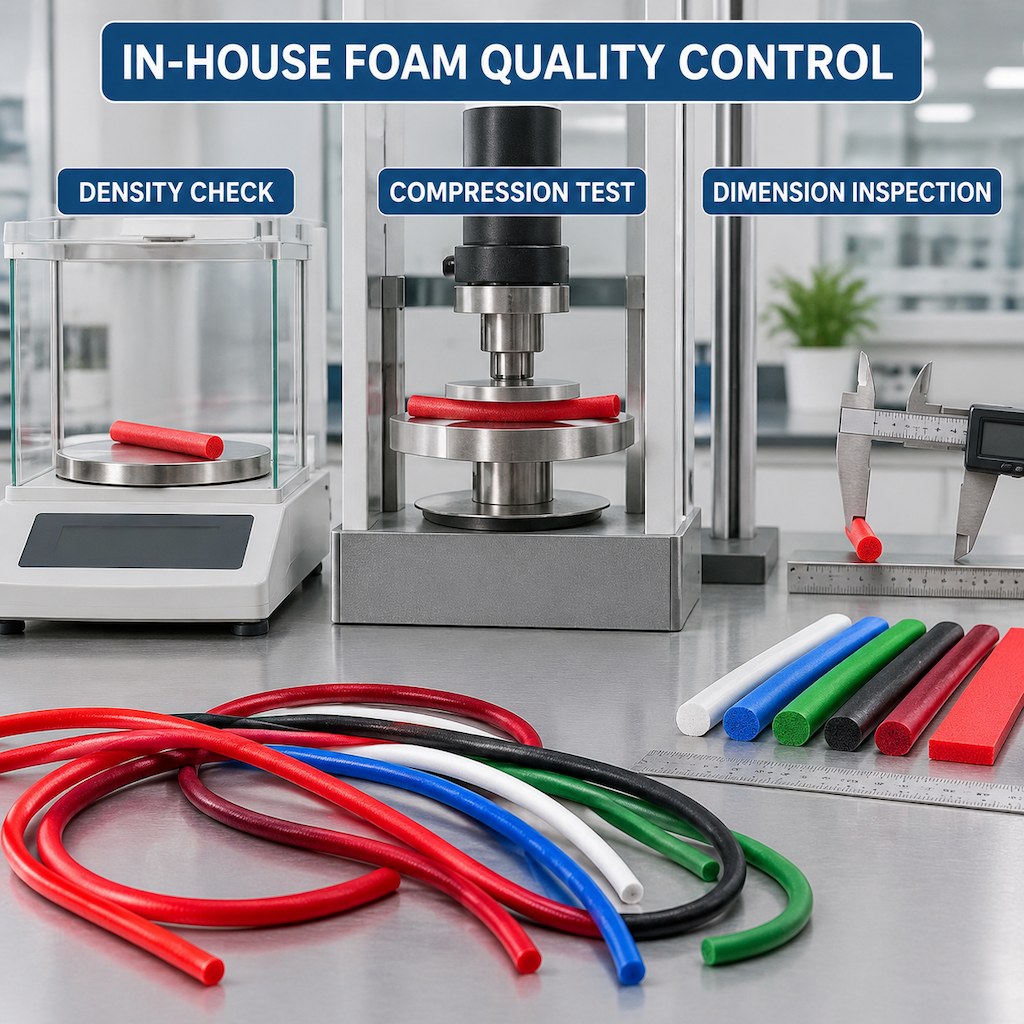
What "quality control" should actually mean on a foam-cord order
A certificate on the first sample proves very little. Repeatability comes from in-process control plus a defined test battery on production lots. At our Dongguan plant, each lot is checked in an in-house laboratory for dimension, density, compression and recovery, with fit and appearance inspected before shipment and full traceability under IATF 16949 / ISO 9001 controls. The site also holds ISO 14001, with REACH and RoHS compliance.
Foam manufacturing guidance uses a consistent test set under standards such as ASTM D1056: density, compression-deflection and compression set, water absorption for closed-cell grades, plus visual checks of cell uniformity, surface finish and color consistency [2][5]. Two checks deserve special attention in precision sealing work:
- Recovery after heat and time. Silicone sponge is specified across wide temperature ranges — one published grade runs from −40 °C to +200 °C continuous with a brittle point near −80 °C [3] — so ask for compression-set data at a temperature and duration close to your real service, not just room temperature.
- Traceability to the approved sample. Material and color matched to the signed sample, with a lot record you can tie back to. Under an IATF/ISO system that record should be routine, not a special request.
Engineered for the gaps that matter
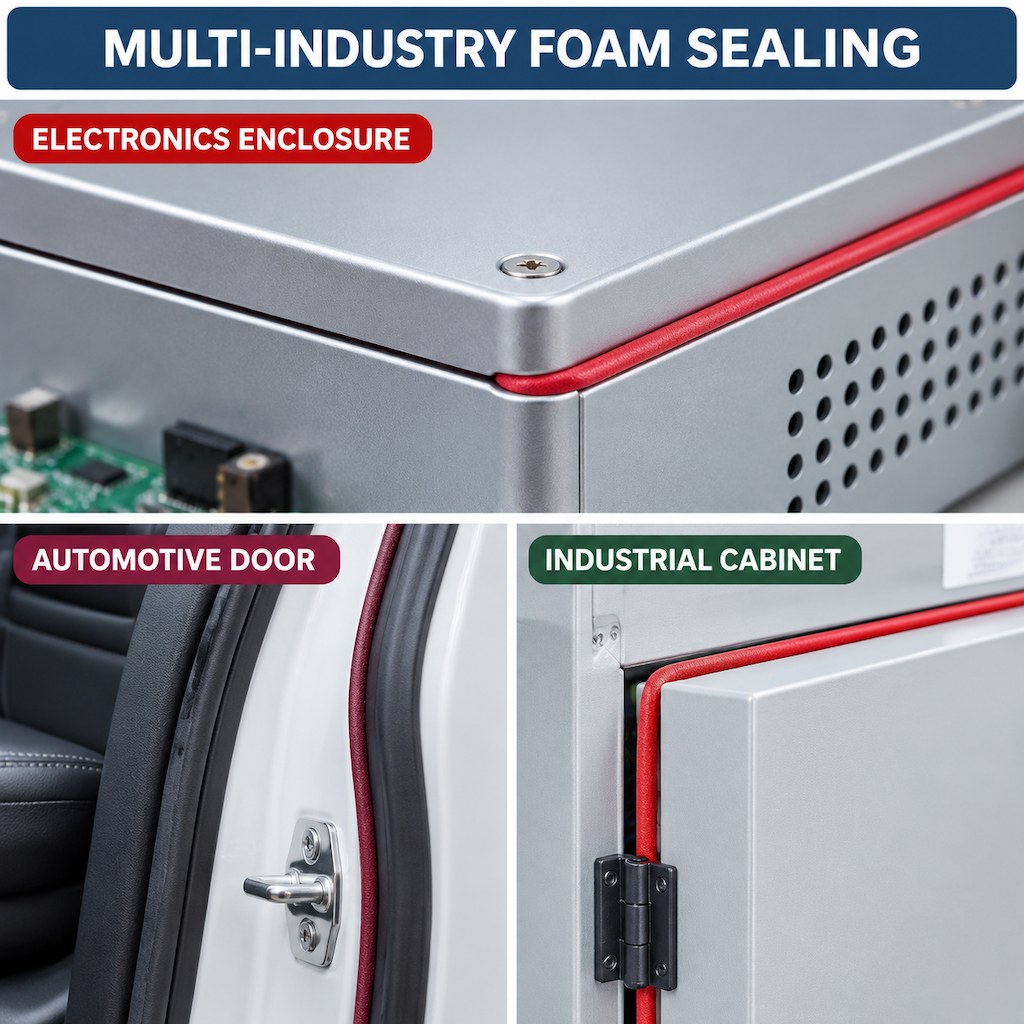
The same soft, recoverable barrier solves very different problems. In electronics and lighting, closed-cell foam works as a dust- and splash-proof gasket for enclosures, displays and LED fixtures where a non-marring seal matters. In automotive and transport, it seals doors, hatches and trim against heat, UV and washer fluid over the vehicle's life. In industrial equipment, it damps vibration and seals cabinets, HVAC and access panels against weather. Color coding adds a second function — identifying circuits, assemblies or brands at a glance. If your process is a fluid path rather than a gap, the tolerance discipline in our companion article on small-diameter silicone tubing for precision applications covers the same "verify on the lot" principle for bore and cure chemistry.
Buyer's acceptance checklist for colored silicone foam cord
| Check | What to request | Reference point |
|---|---|---|
| Cell structure | Closed vs open, stated in writing; microscope check on the lot | Closed cell ~0.25–0.85 g/cm³ [4] |
| Density | Target value, test method and tolerance on the drawing | 0.25–0.85 g/cm³ range [4]; 80–400 kg/m³ sponge [5] |
| Compression set | Test at service temperature and duration, not room temp only | <1% @22 h/100 °C high-recovery grade [2] |
| Dimensions | Finished cord Ø / strip section and tolerance on the drawing | ISO 3302-1; ~2–4% cure shrink [1] |
| Color & printing | Pantone/RAL reference, translucent or opaque, colorfastness to your light exposure | Pantone/RAL matching [1][4] |
| Traceability | Lot record and retained sample matched to the approved sample | IATF 16949 / ISO 9001 lot records (RESRUB) |
References and further reading
- Viking Extrusions — Silicone Extrusions: sponge density 150–500 kg/m³, continuous hot-air cure 200–400 °C, ~2–4% cure shrinkage, ISO 3302-1 tolerances (tubes E1 / strips & cords E2 / profiles E3), custom RAL / Pantone colour matching.
- National Silicone — NS-140 Firm Silicone Foam: ASTM D1056 2D2 closed-cell, compression set <1% (22 h @100 °C), −55 °C to +200 °C, tensile 400 kPa, UL 94 V-0, 21 CFR 177.2600.
- MacLellan Rubber — Silicone Sponge Data Sheet: brittle point −80 °C (ASTM D746), density 250 kg/m³ (ISO 845), working −40 °C to +200 °C, compression stress/strain 25% = 6.4 psi (ASTM D1056), suitable up to IP65.
- Moonus Tech — Silicone Foam Tubes / Profiles / Extrusions / Cords: closed-cell microcellular structure, density 0.25–0.85 g/cm³, Shore 00 15–70, −60 °C to +200 °C, RoHS / REACH / FDA 21 CFR 177.2600 / UL94 V-0 options.
- Universal Gaskets — Sponge & Cellular Rubber: sponge density 80–400 kg/m³ (ASTM D1056), temperature range −60 °C to +230 °C depending on polymer, closed-cell water absorption <5% by volume, open- vs closed-cell behaviour.
Send your cross-section, color, density and quantity — or just a sample. Our engineers return a manufacturability review, a prototype and a quote — MOQ from one piece, 2-hour rapid tooling and free design support.
View Colored Silicone Foam Cord and Sealing Strip - Custom Size Printing OEM/ODM · Materials & process capabilities · Contact RESRUB