










EPDM vs NBR vs Silicone Rubber Tubing: The Complete Material Selection Guide for US Industrial Buyers
EPDM vs NBR vs Silicone Rubber Tubing: The Complete Material Selection Guide for US Industrial Buyers
1. Why Material Choice Matters in Rubber Tubing Procurement
When sourcing rubber tubing for industrial applications, the single most important decision you will make is material selection. Choose the right compound, and your system performs reliably for years. Choose wrong, and you face premature failure, costly downtime, and potential safety hazards.
For US procurement engineers and OEM buyers, the three most commonly specified rubber materials are EPDM (ethylene propylene diene monomer), NBR (nitrile butadiene rubber), and silicone rubber (VMQ). While they may look similar at first glance — all black, all flexible — their chemical structures give them vastly different performance profiles.
This guide breaks down each material's strengths, limitations, and ideal use cases so you can confidently specify the right tubing for your next project.
2. EPDM Rubber Tubing — The Outdoor & Weathering Champion
What Is EPDM?
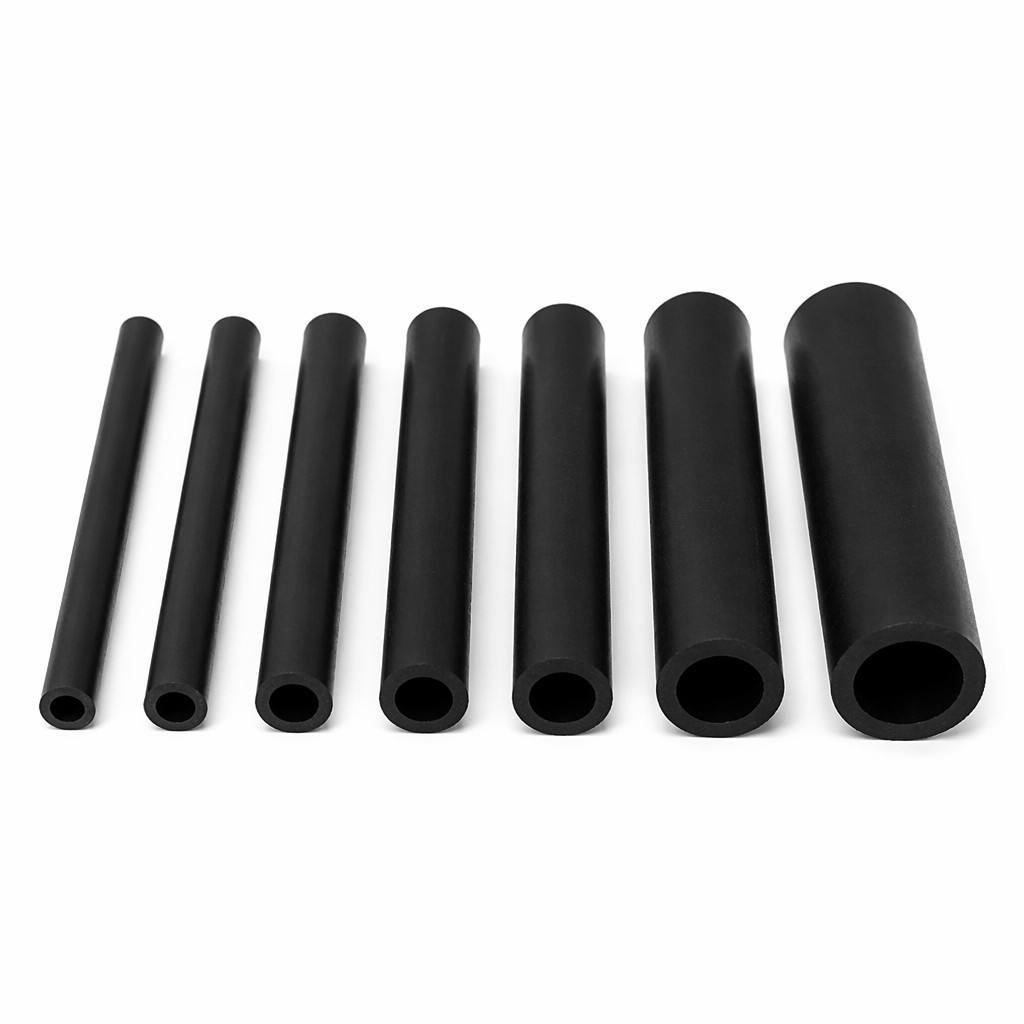
EPDM (Ethylene Propylene Diene Monomer) is a synthetic rubber with a saturated backbone, making it exceptionally resistant to heat, ozone, UV radiation, and weathering. It is the most widely specified rubber for general-purpose industrial tubing that must survive outdoors or in high-temperature environments. Available in custom ID/OD sizes, EPDM tubing can be precision-extruded to match your exact specifications.
Key Performance Properties
- Temperature range: -40°F to +300°F (-40°C to +150°C) continuous use; up to +350°F (+175°C) for short periods
- Weather & UV resistance: Excellent — EPDM is the gold standard for outdoor applications
- Water & steam resistance: Excellent; compatible with hot water, steam, and many coolants
- Chemical compatibility: Good with polar fluids (water, dilute acids, alkalis, ketones, alcohols); poor with oils, fuels, and hydrocarbons
- Flexibility: Maintains flexibility from -40°F upward; remains pliable in cold environments
- Hardness range: Typically 40–90 Shore A
Ideal Applications
Outdoor irrigation and water transfer systems
Automotive cooling system hoses (radiator, heater, water pump)
Solar water heater connectors
HVAC and air conditioning drain and coolant lines
Industrial water and cooling circulation systems
Roofing and construction sealing profiles
Food-grade water tubing (with appropriate FDA/NSF certification)
Limitations
- Not compatible with petroleum-based fluids: EPDM swells and degrades rapidly in contact with oils, fuels, and most hydrocarbons. If your system handles oil or fuel, choose NBR instead.
- Moderate tensile strength: While adequate for most applications, EPDM is not the strongest choice for high-pressure hydraulic systems.
3. NBR Rubber Tubing — The Oil & Fuel Specialist
What Is NBR?
NBR (Nitrile Butadiene Rubber), also known as Buna-N, is a synthetic rubber copolymer of acrylonitrile and butadiene. Its defining characteristic is exceptional resistance to petroleum-based oils, fuels, and greases. The higher the acrylonitrile content, the better the oil resistance — but the lower the low-temperature flexibility.
Key Performance Properties
Temperature range: -30°F to +250°F (-34°C to +120°C) continuous use
Oil & fuel resistance: Excellent — the primary reason to choose NBR over EPDM
Abrasion resistance: Good to excellent; tougher than EPDM in dynamic applications
Tensile strength: Higher than EPDM; typically 1,500–2,500 psi
Chemical compatibility: Excellent with oils, fuels, hydraulic fluids, and greases; poor with polar solvents (ketones, ozone, sunlight without protection)
Hardness range: Typically 40–95 Shore A
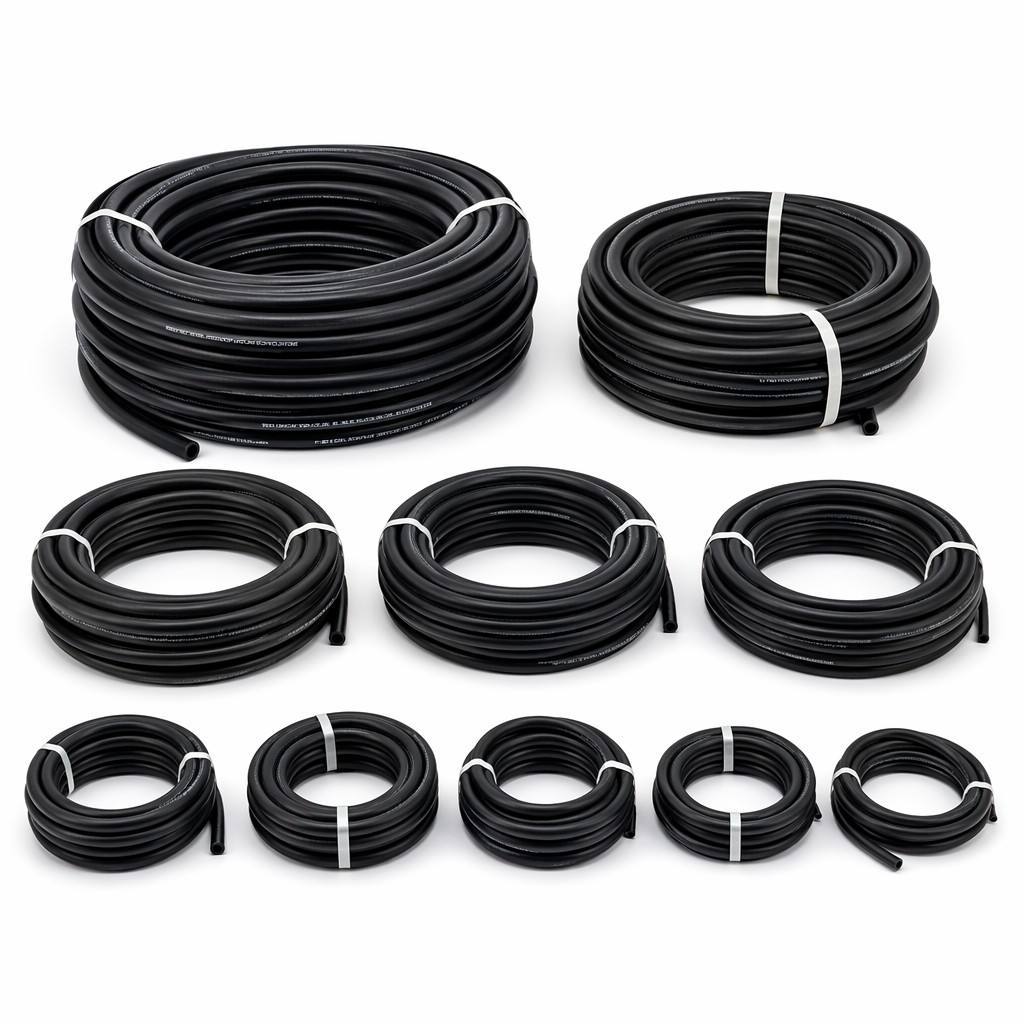
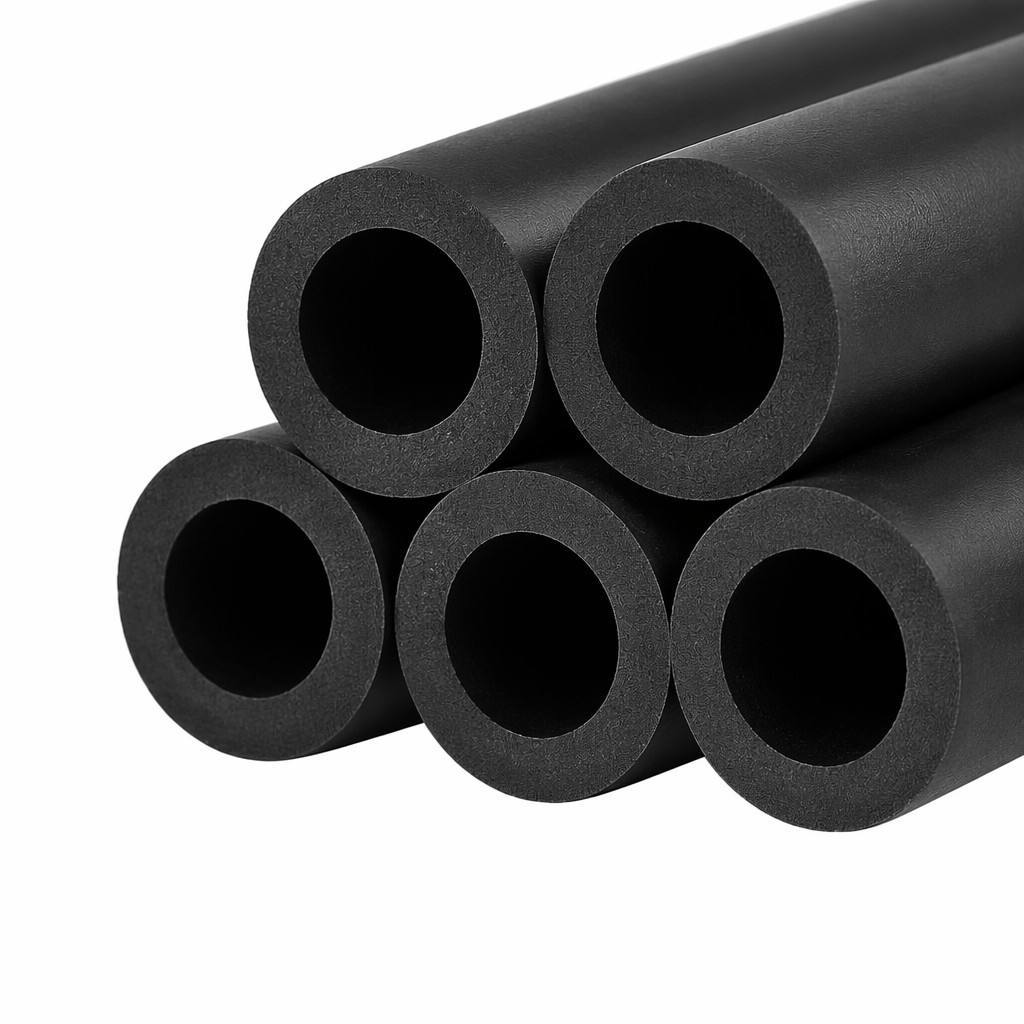 NBR rubber tubing with ASTM-specified compound marking — factory-stamped for traceability and quality assurance. NBR is the go-to material for oil and fuel applications.
Ideal Applications
Automotive fuel lines and oil return hoses
Hydraulic system tubing
Industrial machinery lubricant lines
Fuel dispensing and transfer systems
Oil-resistant seals and gaskets
Pneumatic system tubes exposed to oil mist
Limitations
Poor weathering resistance: NBR degrades under direct UV exposure and ozone. It requires protective additives or jacketing for outdoor use.
Lower heat tolerance: Max continuous use at ~250°F — well below EPDM and silicone.
Poor cold flexibility: At low temperatures, NBR stiffens more than EPDM or silicone.
4. Silicone Rubber Tubing — The High-Temperature Performer
What Is Silicone Rubber?
Silicone rubber (VMQ) is a synthetic elastomer with a silicon-oxygen backbone, giving it exceptional thermal stability over a very wide temperature range. It is the material of choice when extreme temperatures, purity, or flexibility requirements rule out EPDM and NBR.
Key Performance Properties
Temperature range: -80°F to +450°F (-62°C to +230°C) continuous; up to +575°F (+300°C) for short periods with specialized compounds
Flexibility at extreme temperatures: Unmatched — remains flexible at -80°F and stable at +450°F
Chemical inertness: Excellent; odorless, tasteless, and non-toxic — ideal for food, medical, and pharmaceutical use
UV & ozone resistance: Excellent; similar to EPDM
Compression set: Generally higher (worse) than EPDM and NBR at elevated temperatures
Tensile strength: Lower than EPDM and NBR; typically 800–1,500 psi
Hardness range: Typically 30–80 Shore A
Ideal Applications
High-temperature oven and furnace seals
Food and beverage processing (with FDA certification)
Medical device tubing (biocompatible, sterilizable)
Laboratory and pharmaceutical fluid transfer
Automotive turbocharger and intake hoses (heat-resistant)
Bus windshield washer silicone tubing — premium silicone tube for reliable washer fluid delivery
Brewery and dairy processing tubing
Cold environment sealing and tubing
Limitations
Lower mechanical strength: Silicone tears and abrades more easily than EPDM or NBR.
Higher cost: Typically 2–3× more expensive than EPDM.
Poor oil & fuel resistance: Like EPDM, silicone is not recommended for petroleum-based fluids unless specially formulated.
5. Head-to-Head Comparison Table
| Property | EPDM | NBR (Nitrile) | Silicone (VMQ) |
|---|---|---|---|
| Temperature Range (Continuous) | -40°F to +300°F | -30°F to +250°F | -80°F to +450°F |
| Oil & Fuel Resistance | Poor ✗ | Excellent ✓ | Poor ✗ |
| Weather & UV Resistance | Excellent ✓ | Fair ◐ | Excellent ✓ |
| Water & Steam Resistance | Excellent ✓ | Good ◐ | Good ◐ |
| Abrasion Resistance | Good ◐ | Excellent ✓ | Fair ◐ |
| Flexibility at Low Temp | Excellent ✓ | Good ◐ | Excellent ✓ |
| Tensile Strength | Good (1,200–2,000 psi) | Excellent (1,500–2,500 psi) | Fair (800–1,500 psi) |
| Compression Set Resistance | Excellent ✓ | Good ◐ | Fair ◐ |
| Food-Grade Certification | Available (FDA/NSF) | Limited | Available (FDA/USP Class VI) |
| Relative Cost | $ (Baseline) | $$ (1.3–1.8×) | $$$ (2–3×) |
| Custom Extrusion Available | Yes ✓ | Yes ✓ | Yes ✓ |
6. How to Choose the Right Material for Your Application
- Follow this simple decision framework when specifying rubber tubing for your next project:
- Identify the fluid or media: Will the tubing carry water, coolant, air, oil, fuel, chemicals, or food? EPDM handles water and coolant well. NBR is required for oil and fuel. Silicone excels with food and high-purity applications.
- Determine the temperature range: Both operating temperature and ambient extremes matter. For continuous use above 300°F, choose silicone. For most outdoor and hot-water applications, EPDM is sufficient.
- Assess the environment: Will the tubing be exposed to direct sunlight, ozone, salt spray, or chemicals? EPDM and silicone are weather-resistant; NBR requires protection.
- Consider mechanical demands: Does the tubing need to withstand abrasion, pressure spikes, or repeated flexing? NBR offers the best mechanical toughness; silicone is the most flexible but least durable.
- Review regulatory requirements: If your application requires NSF/ANSI 61 (drinking water), FDA (food contact), or USP Class VI (medical), verify that the supplier's compound has the appropriate certification.
Choose NBR if: Your tubing will contact oils, fuels, or hydraulic fluids — or if mechanical toughness is the top priority.
Choose Silicone if: You need extreme temperature performance (above 300°F or below -40°F), food-grade purity, or exceptional flexibility in harsh environments.
7. Custom Manufacturing: Why One Size Does Not Fit All
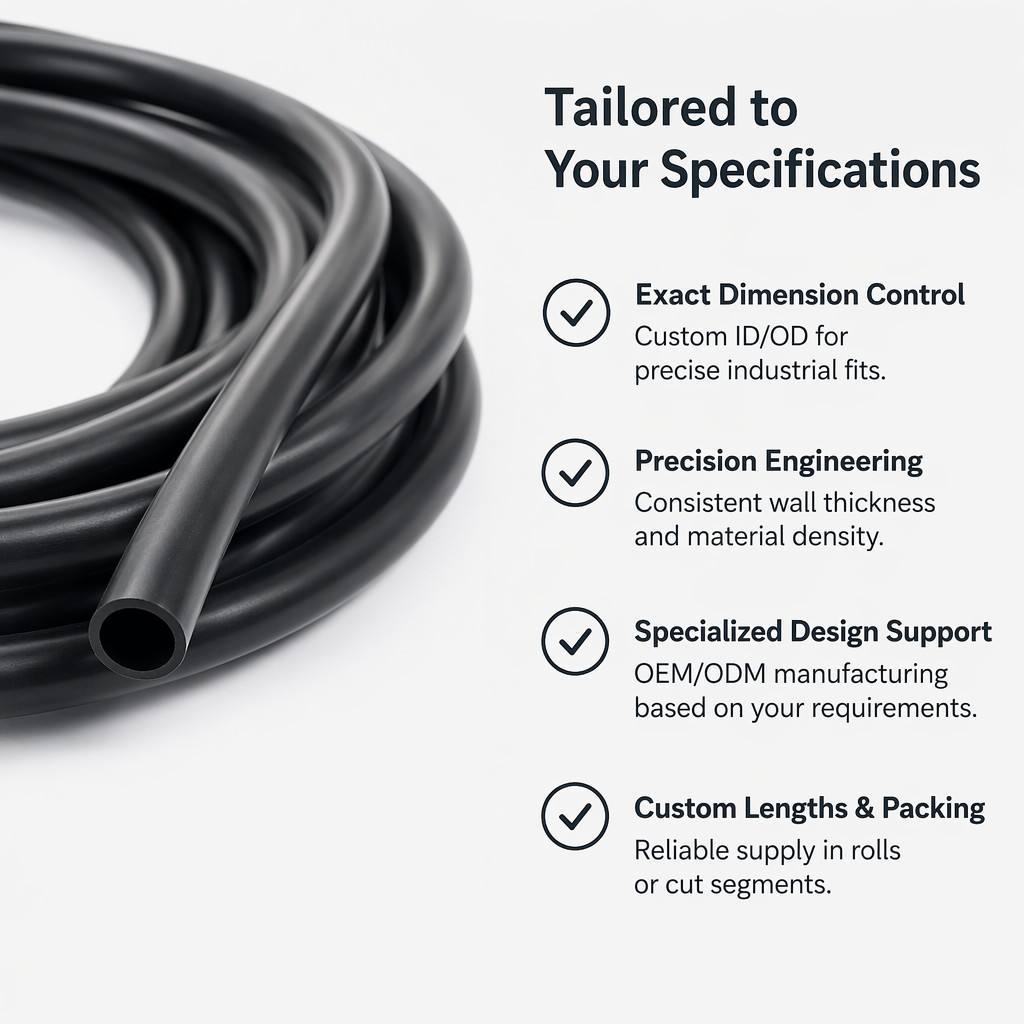
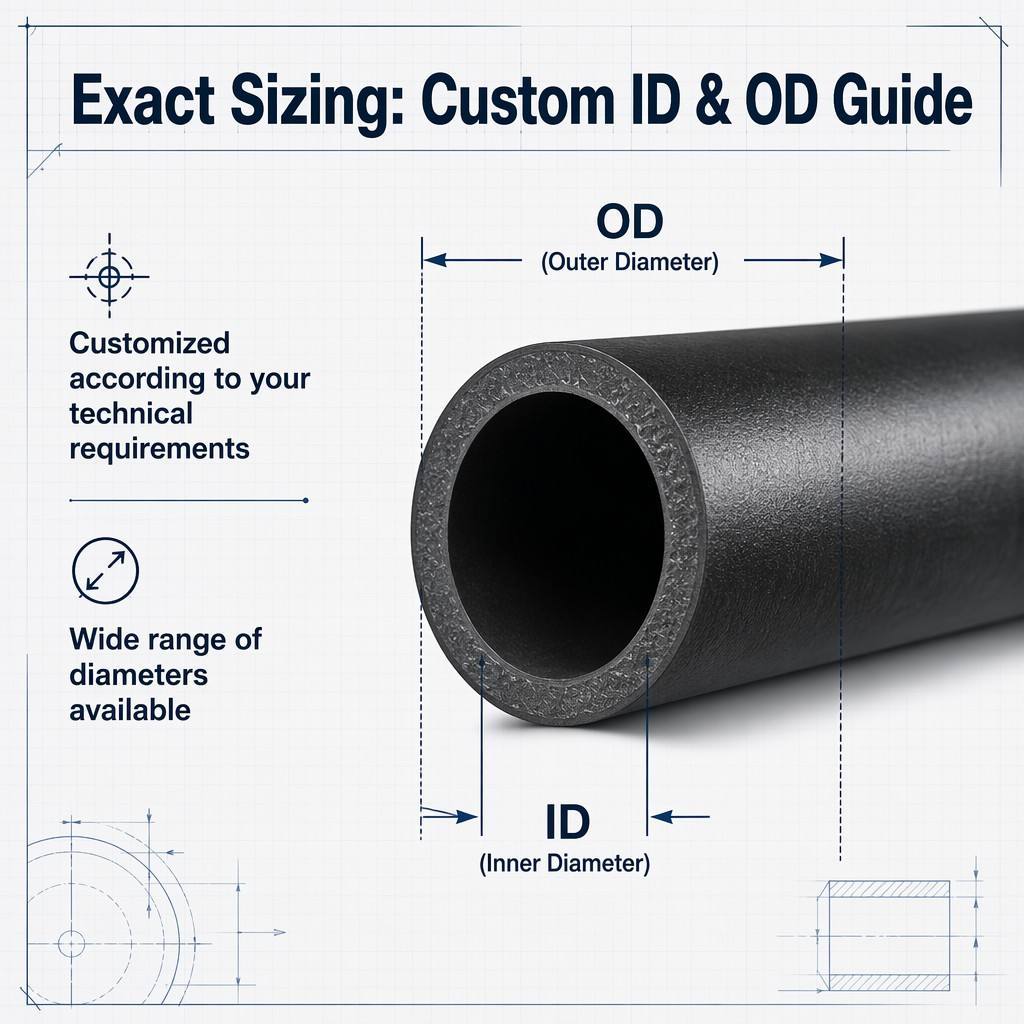
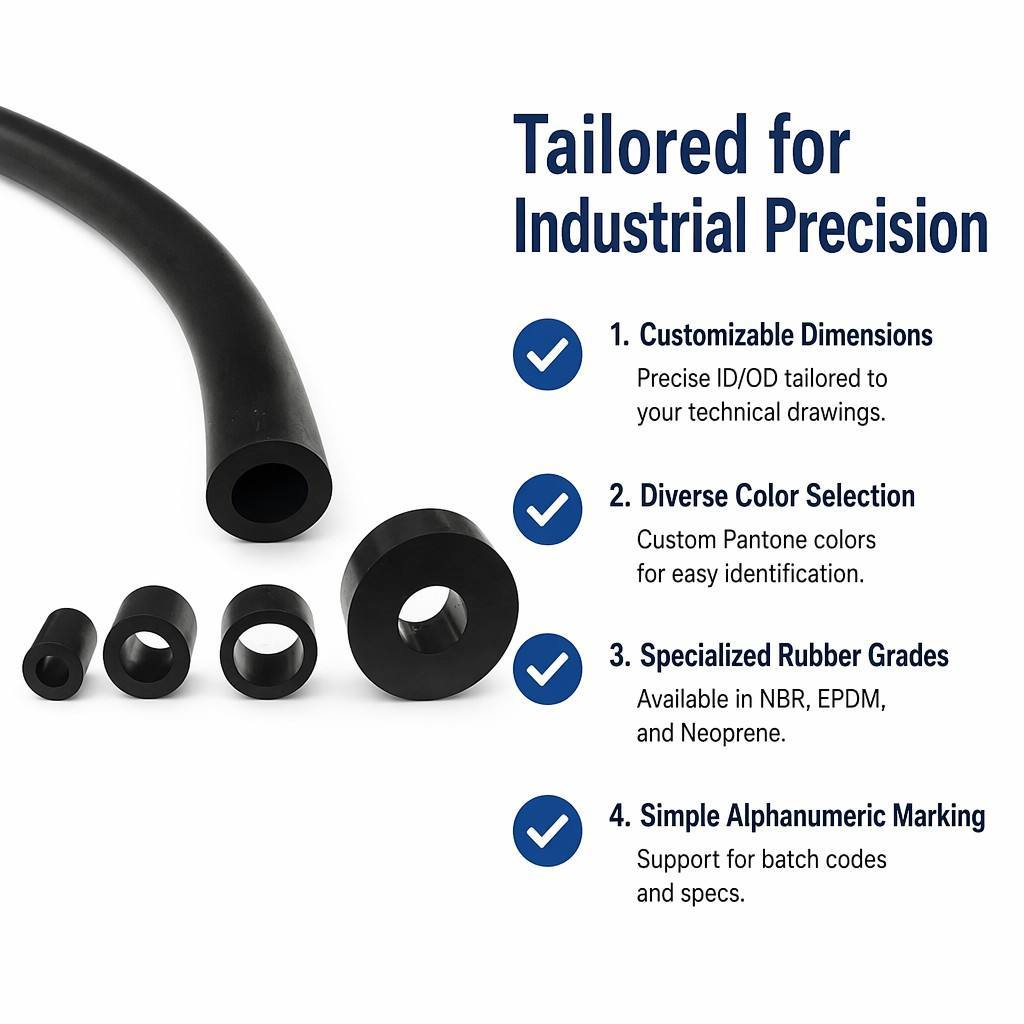
Off-the-shelf rubber tubing rarely meets the exact specifications of industrial equipment. That is why US OEMs increasingly turn to custom-extruded rubber tubing to achieve precise ID/OD dimensions, specific material grades, and application-matched performance.
What Can Be Customized?
| Parameter | Customization Options | Typical Range |
|---|---|---|
| Inner Diameter (ID) | Precisely matched to your fitting or flow requirements | 1.0 mm – 60 mm+ |
| Outer Diameter (OD) | Custom wall thickness for pressure/temperature demands | 3.0 mm – 100 mm+ |
| Wall Thickness | Uniform or tapered cross-section | 0.5 mm – 8.0 mm |
| Material Compound | EPDM, NBR, Neoprene, Silicone, or custom blends | 40–90 Shore A |
| Color | Custom Pantone-matched colors | Any solid color |
| Marking | Alphanumeric printing (specs, batch, date codes) | As required |
| Packaging | Cut lengths, coils, spools, or kitted assemblies | As required |
The Custom Manufacturing Process
When you work with an experienced extrusion manufacturer, the process from inquiry to delivery typically follows this proven workflow:

- Inquiry & Technical Discussion — Share your drawings, specifications, and performance requirements
- Material Selection & Compound Formulation — The right material is selected or custom-compounded for your application
- Tooling Design & Prototype — Precision die tooling is created; samples are produced for your approval
- Quality Approval — Dimensional and performance testing against your specifications
- Production Run — Consistent, repeatable extrusion with in-process quality monitoring
- Global Delivery — Packaged and shipped to your facility, with full documentation
8. Frequently Asked Questions
Can EPDM rubber tubing be used for oil applications?
No. EPDM is not compatible with petroleum-based oils, fuels, or greases. The material will swell, soften, and degrade rapidly. For oil contact, specify NBR (nitrile) rubber tubing instead.
What is the maximum temperature for continuous use of EPDM tubing?
Standard EPDM compounds are rated for continuous service up to 300°F (150°C). Specialized high-temperature compounds can extend this to approximately 350°F (175°C) for short durations.
How long does EPDM rubber tubing last outdoors?
EPDM is one of the most weather-resistant rubber materials available. Under normal outdoor conditions (UV exposure, rain, temperature cycling), EPDM tubing can last 10–15 years or more before showing signs of surface degradation.
Is silicone rubber tubing food-grade?
Standard silicone rubber is generally recognized as safe and can be formulated to meet FDA 21 CFR 177.2600 (food contact) and USP Class VI (medical/biocompatibility) standards. Always verify certification documentation with your supplier.
What is the minimum order quantity (MOQ) for custom extruded rubber tubing?
MOQ varies by supplier and depends on the complexity of the tooling, material type, and tubing dimensions. Many specialized manufacturers offer low MOQ options for prototyping and small production runs, scaling up for volume orders. Contact your supplier directly for a quote based on your specific requirements.
How does NBR (nitrile) tubing compare to EPDM for fuel lines?
NBR is the preferred material for fuel line applications due to its excellent resistance to gasoline, diesel, and other petroleum fuels. EPDM should not be used in fuel systems. For extreme fuel resistance, specialized high-acrylonitrile NBR compounds offer the best performance.
Need Custom Rubber Tubing for Your Application?
We specialize in precision-extruded EPDM, NBR, and silicone rubber tubing for US OEMs and industrial buyers. From prototyping to full production runs, our factory delivers consistent quality, competitive pricing, and on-time delivery.
Tell us your requirements. We will recommend the right material and provide a custom quote within 48 hours.
Request a Quote & Technical Consultation →✓ Custom ID/OD dimensions | ✓ ISO 9001 quality | ✓ FDA/NSF options | ✓ OEM/ODM support
About the Manufacturer: We are an ISO-compliant manufacturer of precision-extruded rubber tubing, serving US and global industrial customers. Our product range includes EPDM, NBR, Neoprene, and silicone rubber tubing with custom ID/OD sizing and marking services. Factory-direct supply with full quality documentation.